
By Amah
Kindly share:
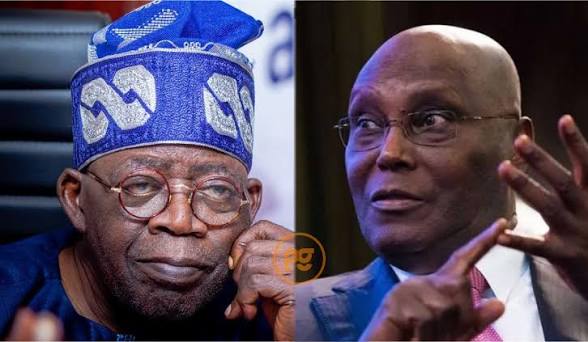
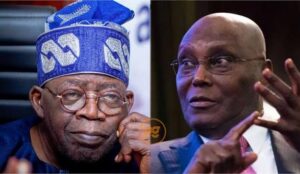
Former Vice President and African Democratic Congress (ADC) presidential candidate, Atiku Abubakar, has taken his challenge to President Bola Ahmed Tinubu’s eligibility for the 2027 presidential election to the Federal High Court in Abuja, asking the court to determine whether Tinubu and the All Progressives Congress (APC) should be disqualified from the contest.
The suit, filed on Friday, August 14, 2026, places a long-running controversy over President Tinubu’s academic and National Youth Service Corps (NYSC) records at the centre of Nigeria’s emerging 2027 presidential battle. Atiku personally deposed to an affidavit in support of the case.
Atiku and the ADC are challenging Tinubu, the APC and the Independent National Electoral Commission (INEC), relying on provisions of the 1999 Constitution, as amended, and the Electoral Act, 2026.
At the heart of the case is Section 137(1)(j) of the Constitution, which provides that a person is not qualified for election as President if the person has presented a forged certificate to INEC.
According to Atiku’s affidavit, an NYSC discharge certificate submitted to INEC in connection with Tinubu allegedly bears the name “Tinubu Bola Adekunle”, rather than “Bola Ahmed Tinubu.” The plaintiffs argue that the disputed document was not obtained by Tinubu and that the alleged discrepancy raises questions about his eligibility to contest the 2027 presidential election.
These are allegations before the court, not established findings of fact. The Federal High Court will ultimately have to determine whether the claims are legally and factually sustainable.
A significant aspect of the case is Atiku’s request that INEC produce President Tinubu’s Form CF001 submitted for the 2023 and 2027 presidential elections.
The affidavit states that Atiku had previously applied for certified true copies of the relevant documents but had not received a response before the suit was prepared.
That request could become important if the court proceeds to examine what documents were actually submitted to INEC, when they were submitted and whether the disputed NYSC certificate formed part of Tinubu’s qualification documents.
The latest legal action does not arise in isolation. Questions surrounding Tinubu’s educational credentials and NYSC documentation have featured prominently in political and legal disputes since the 2023 presidential election.
During the 2023 presidential election litigation, documents relating to Tinubu’s Chicago State University education and an NYSC discharge certificate bearing the name “Tinubu Bola Adekunle” were tendered before the Presidential Election Petitions Court.
The certificate controversy subsequently became part of a broader public debate over Tinubu’s educational history and the documents he submitted to INEC.
However, the historical controversy has produced competing interpretations. In 2023, Chicago State University’s registrar testified that the Bola Tinubu who attended the institution was a male student and that the university recognised him as the person who graduated from the institution.
The BBC’s Global Disinformation Team also reported in 2023 that it found no evidence that the Chicago State University diploma submitted by Tinubu to INEC was forged, although it identified discrepancies in some of the records concerning his date of birth and secondary-school history.
The renewed NYSC dispute therefore places an old controversy in a new political and legal context.
The case goes beyond the disputed certificate.
Atiku and the ADC are also challenging aspects of the Electoral Act, 2026, arguing that statutory provisions restricting pre-election challenges cannot be used to prevent Nigerians from enforcing an express constitutional requirement concerning presidential qualification.
Their argument is essentially that ordinary legislation cannot override the Constitution.
The plaintiffs are asking the Federal High Court to determine whether the restrictions contained in the new electoral law can prevent them from relying on Section 137(1)(j) of the Constitution.
If the court accepts their substantive case, Atiku is seeking an order disqualifying Tinubu and the APC from participating in the 2027 presidential election.
The lawsuit adds another potentially consequential dimension to an already fiercely contested 2027 political landscape.
Atiku, now running on the African Democratic Congress platform, is seeking to challenge Tinubu not only politically but through a judicial determination of his constitutional eligibility.
For Tinubu and the APC, the case presents another legal battle over issues that have followed the President since the 2023 election cycle.
For Atiku, it represents a renewed attempt to place candidate qualification at the centre of the presidential contest.
But the political significance of the case should not be confused with its legal outcome. Filing a suit does not establish that a certificate was forged, that Tinubu is constitutionally disqualified, or that he will be barred from the 2027 election. Those questions now belong to the courts.
The case could nevertheless become one of the defining legal battles of the 2027 presidential election, particularly if the Federal High Court is asked to interpret the relationship between constitutional qualification requirements, the Electoral Act 2026 and the powers of political candidates to challenge the eligibility of their opponents.
With the 2027 election approaching, the battle for Nigeria’s presidency is, therefore, expanding beyond campaign rallies and political alliances into the courtroom.