
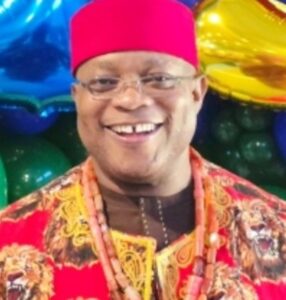
By Anthony Iwuoma
There are moments in politics when an idea that initially sounds strange begins, slowly and almost imperceptibly, to acquire political meaning.
The idea of an “Okigwe Peoples Party”, OPP, appeared to be one of those ideas.
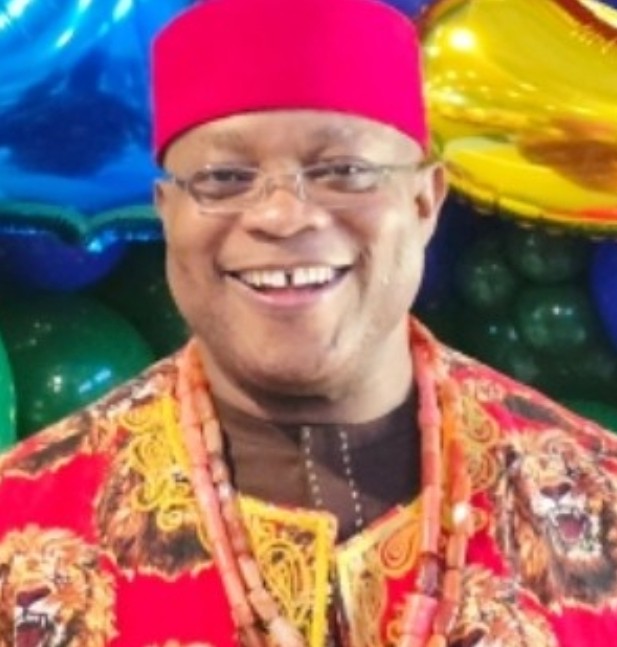
Long before the phrase “Rainbow Coalition” became part of the national political vocabulary through the political realignment associated with Nyesom Wike, Minister of the Federal Capital Territory, Attorney Charles Onyirimba had been advancing his own proposition in Okigwe Zone: that the ultimate political interest of the people should transcend the political party through which a candidate seeks office.
People laughed at it. Some sneered. Others regarded it as political romanticism, an attractive phrase with little chance of surviving the brutal realities of Nigerian party politics. But political ideas are sometimes judged too quickly.
Today, as eveents unfold, it’s been proven that Onyirimba, the man with foresight, is having the last laugh. With his consultations spread across the six local government areas of Okigwe Zone, the OPP concept has acquired a new relevance. Whether one agrees with him or not, the political conversation around his candidacy increasingly appears to be asking a question that goes beyond the familiar contest between party structures.
What if Okigwe itself becomes the political party? Not literally, of course.
The “Okigwe Peoples Party” is not being presented as a registered political party competing on the ballot. Onyirimba has explained it as a political philosophy: the idea that an Okigwe voter should regard Okigwe as the ultimate political interest. Party logos may change. Political alliances may shift. Political godfathers may come and go. But Okigwe remains. That proposition acquires particular significance in a political environment where party identities have increasingly become fluid.
Wike’s Rainbow Coalition offers an interesting contemporary parallel, although the two concepts should not be treated as identical. Wike has described the Rainbow Coalition as a cross-party platform for mobilising support for President Bola Tinubu’s 2027 re-election, while insisting that political parties can continue to contest other elections independently.
The Rivers arrangement has subsequently involved political actors from different backgrounds and has been presented as a mechanism for cooperation across conventional party boundaries.
However, Onyirimba’s OPP proposition starts from a different point. Its starting point is not primarily the political alliance. It is the constituency. The question is not merely: Which party are you supporting? It is: What is Okigwe getting from the person you are supporting?
That may sound simple. Yet it potentially represents a significant departure from the traditional political calculation.
For decades, Nigerian politics has often been organised around structures: party machinery, influential politicians, political networks, godfathers, money, alliances and the ability to mobilise large numbers of supporters.
These things remain important. No serious political campaign can wish them away. But Onyirimba’s OPP philosophy introduces another variable into the calculation: the possibility that voters can belong to different political parties while sharing a common constituency interest.
An APC supporter can be an Okigwe person. A PDP supporter can be an Okigwe person. An LP supporter can be an Okigwe person. An ADP supporter can be an Okigwe person. The party becomes the vehicle. Okigwe becomes the destination. That is the intellectual attraction of the OPP proposition. And it may explain why the concept is beginning to resonate with a campaign that has deliberately taken its consultations beyond conventional party meetings.
Across Okigwe, Onuimo, Isiala Mbano, Ehime Mbano, Ihitte-Uboma and Obowo, the Onyirimba campaign has engaged party coordinators, ward structures, youth groups, political associations, traders, transport workers, traditional institutions, community stakeholders and other interest groups.
The significance is not simply that people are meeting a candidate. It is that the campaign is attempting to create conversations across political and social boundaries.
In Isiala Mbano, for instance, the campaign has engaged traders and transport workers as well as political stakeholders. At Amarakunna, the engagement took on a cultural dimension, while other groups and political actors have separately visited Onyirimba at his residence. In Obowo, the opening of a Transformation Agenda Group office attracted a crowd that reportedly overflowed the hall and additional canopy.
These developments provide a window into a political experiment: can a candidate build a constituency conversation that is wider than the formal structure of his party? That is where OPP becomes more than a slogan. It becomes a test. Can political identity be temporarily subordinated to constituency interest? Can voters examine candidates according to capacity, preparation, accessibility, policy and accountability rather than simply asking which political machine stands behind them? Can a Senate election become a referendum on representation rather than merely a contest between structures?
Those questions may explain why some of the old assumptions surrounding Okigwe politics appear increasingly unsettled. Those who scoffed at tge idea initially are no longer laughing.
But it would be premature to declare that the old political order has collapsed. It has not. That is not even tge mission of OPP.
Political structures remain powerful. Established politicians remain influential. Party organisations remain indispensable. And the 2027 election is still far away from its final verdict. But something else is happening. The political conversation itself appears to be changing.
Candidates are increasingly being asked what they know about the Senate, what they intend to do with legislative power, how they will pursue constituency interests and how they will remain accountable after election.
That is precisely where Onyirimba’s own argument enters the picture. His campaign has sought to place his legal training, legislative understanding, political experience and international exposure at the centre of the debate. The strategy reveals something about the candidate.
Onyirimba appears to understand that defeating an established political structure cannot be accomplished merely by attacking the structure. An alternative political idea is required. OPP is that idea.
Its central proposition is deceptively simple: political power should ultimately answer to the people who own the constituency, not to the machinery that helped produce the representative. That proposition also explains why the language of “godfatherism” has featured so prominently in the wider political discussion around the campaign.
The issue is not whether political leaders should have influence. Influence is part of politics. The deeper question is where the representative’s primary loyalty lies after the election. With the people? With the party? With the political network? With the individual who financed or facilitated the victory? Or with some combination of all four?
The OPP philosophy attempts to answer that question before the ballot is cast. It says, in effect: whatever the route to the Senate, the destination must be Okigwe.
There is something else worth considering.
Perhaps, Onyirimba’s most interesting political characteristic is not simply that he is challenging established structures. It is that he appears to be trying to change the language through which the challenge is understood.
A conventional insurgent candidate says: “I can defeat them.” A candidate advancing a political philosophy says something different: “We need to change the way we choose them.”
That is a much bigger proposition. It shifts the focus from personalities to political behaviour. It asks voters to become less interested in who can assemble the biggest crowd and more interested in who can deliver the strongest representation. It asks them to distinguish mobilisation from governance. It asks them to distinguish popularity from preparation. And, most importantly, it asks them to recognise that a political mandate is not a private possession. It belongs to the electorate.
Perhaps, that is why the emergence of OPP is worth revisiting now. When Onyirimba first advanced the concept, it was easily dismissed as political idealism. But the subsequent evolution of Nigerian politics has demonstrated that party identities and alliances are not necessarily permanent political boundaries. Wike’s Rainbow Coalition, for example, has brought cross-party cooperation to the centre of the current 2027 conversation, even as the precise nature and durability of that arrangement remain contested.
The comparison, therefore, raises an intriguing question.
Was Onyirimba simply ahead of his time in Okigwe? Or was he identifying a political reality that others would eventually discover in their own way?
There is no objective basis yet for declaring him the architect of a broader political trend. But there is enough evidence to say that his OPP proposition anticipated an important question now appearing with increasing frequency in Nigerian politics: can political actors cooperate across party boundaries when they believe they share a larger interest?
In Okigwe, Onyirimba’s answer was to make the larger interest the people themselves. That is the real meaning of OPP. And if the idea is now beginning to influence the way people discuss the 2027 senatorial contest, then its significance may extend beyond the fortunes of Attorney Charles Onyirimba.
The real disruption would occur if voters begin to see every political party as merely a vehicle and Okigwe as the permanent constituency. At that point, the political calculation changes.
The entrenched political behemoth is no longer confronted simply by another behemoth. It is confronted by a different way of thinking. And, perhaps, that is the most interesting story emerging from Okigwe 2027.
Not yet who will win. Not yet who is ahead. But whether a political idea once mocked and dismissed is gradually becoming a new lens through which the people of Okigwe examine political power.
If that happens, the manifestation of OPP will not simply be the rise of another campaign. It will be the emergence of a new political question: When all the parties have finished fighting for the mandate, who does the mandate actually belong to? The answer, if OPP has its way, is neither party nor godfather.
It is Okigwe. That is exactly what Attorney Charles Onyirimba is about.
Anthony Iwuoma is a newspaper editor and columnist. He wrote from Owerri, Imo State.