
By Amah
Kindly share:
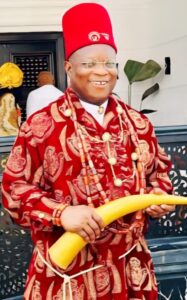
In a political environment often shaped by powerful interests and entrenched structures, the senatorial ambition of Attorney Charles Onyirimba has sparked fresh conversations across Okigwe Zone. Is this truly a break from the old order, or simply another variation of it? In this interview, Josiah Eboh, a respected stakeholder from the zone, shares candid insights on Onyirimba’s emergence, the stakes for the electorate, and the deeper question of whether Okigwe is ready for a new political culture.
There’s growing talk about Charles Onyirimba’s senatorial ambition being different from the norm. From your vantage point, what sets him apart?
What stands out immediately is his independence. In a system where many candidates are products of godfatherism and political machinery, Onyirimba appears to be charting his course without those familiar crutches. That alone is significant. It suggests a candidacy rooted more in personal conviction and connection with the people than in negotiated endorsements behind closed doors.
Some would argue that structure and backing are necessary realities in politics. Can a candidate truly succeed without them?
Structure is important, no doubt. But we must interrogate what kind of structure we are talking about. The traditional model, built on patronage and elite consensus, has not always delivered the kind of representation our people deserve. Onyirimba seems to be attempting a different model: one built on trust, accessibility, and grassroots engagement. It may not be as loud or as immediate, but it has the potential to be more sincere and enduring.
Do you see his candidacy as a response to the current political climate in Okigwe?
Absolutely. There is a growing fatigue with politics as usual, where elections are reduced to contests of influence rather than ideas. People are beginning to ask deeper questions: Who truly understands our challenges? Who is genuinely committed to addressing them? Onyirimba’s emergence taps into that sentiment. It shifts the conversation from personalities and rivalries to purpose and problem-solving.
Critics might say every candidate claims to be for the people. Why should voters believe this is different?
That’s a fair concern. Politics is full of fine words. But credibility is built over time, not during campaigns alone. What many observers see in Onyirimba is consistency, a professional track record, a reputation for competence, and a level of engagement that predates his ambition. He is not just appearing at election time with rehearsed promises; there is a sense that his connection to the people is organic.
You’ve mentioned an “egalitarian spirit” around his ambition. Can you expand on that?
Yes, it’s the idea that leadership should not be monopolized by a select few who are endorsed by powerful interests. Democracy, in its truest sense, should allow room for merit, vision, and sincerity to compete fairly. Onyirimba’s candidacy represents that possibility, a pushback against the quiet oligarchies that often determine outcomes before the people even vote.
What does this moment demand from the electorate?
It demands maturity and discernment. The people must decide whether they want to continue along a familiar path or take a chance on something different. It’s easy to be swayed by established names, financial inducements, or political pressure. But real progress requires courage, the courage to choose substance over spectacle, independence over inducement.
Do you believe Okigwe is ready for such a shift?
That is the defining question. The candidate may be ready, but the ultimate decision lies with the people. If voters are willing to rise above old patterns and vote with clarity of purpose, then yes, a shift is possible. But if they remain tied to the same influences that have shaped past outcomes, then the cycle will simply repeat itself.
Finally, what is your message to the electorate as the political season intensifies?
My message is simple but urgent: be vigilant. This is the season when words are cheap and promises are plentiful. Do not be carried away by eloquence without evidence. There are politicians whose greatest talent lies in saying what people want to hear, not in doing what the people need.
Okigwe must not be deceived again. The future of the zone is too important to be traded for empty assurances and polished rhetoric. Let the people look beyond the noise, examine character, and choose wisely. Because in the end, it is not the loudest voice that matters; it is the most truthful and the most committed.
Onyirimba’s political party remains undisclosed at this stage. Some argue that this creates an impression of indecisiveness and could be a disadvantage. Do you see it that way?
Ordinarily, yes; clarity of platform is advisable in most political contests. Voters and stakeholders like to know early where a candidate is anchored, and political structure often plays a decisive role in mobilisation and perception. In a conventional setting, delaying that disclosure could be interpreted as uncertainty. However, politics is not always conventional.
In this particular context, the silence may be more strategic than accidental. It creates a deliberate cloud of suspense that does not only preserve flexibility for the candidate but also unsettles the political environment around him. It forces opponents to speculate, second-guess, and prepare for multiple possibilities rather than a clearly defined target. In that sense, what may appear as ambiguity is actually controlled uncertainty.
It can be a tactical device, meant to discomfit opponents who are left wondering where, when, and how he will eventually align. In competitive politics, that psychological uncertainty can be an advantage. It disrupts early positioning and prevents rivals from fully consolidating their assumptions about his base, structure, or alliances.
So, while clarity is generally advisable, in this instance, the suspense may be serving a strategic purpose: keeping the field unsettled and ensuring that attention remains on him without prematurely revealing all his cards. One thing is sure, Onyirimba definitely knows what he’s doing and where he’s headed.