

By Anthony Iwuoma
Every society eventually reaches a moment when the cost of continuing along a familiar path becomes greater than the courage required to change direction. For Okigwe Zone, that moment is now.
As the 2027 senatorial election approaches, the question confronting the people of Okigwe is not simply who will occupy the Senate seat, but who can give the office renewed purpose, restore the dignity of representation and reposition the zone for meaningful development. After years of persistent developmental challenges and unfulfilled expectations, Okigwe cannot afford to confuse political familiarity with competence, campaign noise with capacity, or personal ambition with the collective aspirations of its people.
The real contest is between continuity without sufficient progress and the possibility of a new political direction. Attorney Charles Onyirimba, the ADP senatorial candidate, is making a case for the latter.
His candidacy raises a fundamental question of political philosophy: What is the purpose of power if it does not improve the condition of the people over whom it is exercised?
Public office is not a reward for political loyalty, a trophy for personal achievement or an inheritance to be negotiated among powerful interests. It is a public trust, conferred by the people and justified by service to them.
That is the foundation upon which Onyirimba’s road map for Okigwe’s redemption must be understood.
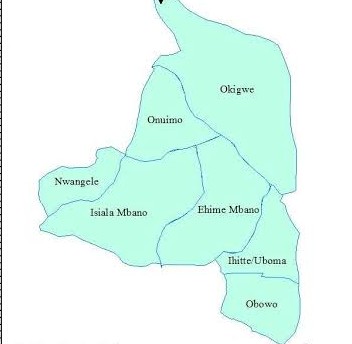
The crisis confronting Okigwe is not merely underdevelopment; it is also a crisis of representation. The six local government areas: Okigwe, Onuimo, Isiala Mbano, Ehime Mbano, Ihitte-Uboma and Obowo, possess human capital, commercial potential, cultural vitality and a substantial stake in Imo State’s future. Yet the zone continues to confront concerns over infrastructure, employment, healthcare, education, security and economic opportunity.
The tragedy is not simply that these problems exist. No responsible society can eliminate every challenge overnight. The deeper concern is whether the political system consistently produces the quality of leadership, institutional pressure and strategic representation required to confront them.
Development does not happen merely because a representative occupies an important office. It happens when that office is used intelligently, persistently and accountably to advance the public interest.
A senator cannot independently construct every road, employ every graduate or equip every hospital. Those responsibilities are distributed across different levels of government. But an effective senator can influence legislation, scrutinise public expenditure, pursue constituency priorities, engage relevant ministries, advocate fair resource allocation and mobilise partnerships around development.
The distinction between occupying office and making office count is fundamental. Okigwe needs a senator who understands that the Senate is not a marketplace for political patronage or a ceremonial platform for distributing favours. It is an institution where knowledge, judgment, negotiation and persistence must be converted into public value.
The case for Onyirimba begins with the kind of representation he seeks to offer. His legal training, international exposure and reported record of community and Diaspora engagement provide a foundation for making a distinctive contribution to legislative service.
A lawyer entering the legislature brings professional grounding relevant to statutory interpretation, constitutional questions, policy scrutiny and the examination of government action. Combined with sound political judgment, this background can be useful in a chamber where legislation affects millions of people.
His experience in the United States and involvement in community initiatives also offer opportunities for broader engagement. In an interconnected world, effective representation requires more than familiarity with local political structures. It requires the ability to identify opportunities, build relationships and connect local aspirations with wider possibilities.
Onyirimba’s central proposition is that the people must reclaim ownership of their mandate. A senator should be answerable to the electorate, not beholden to political patrons whose interests differ from those of the communities they claim to serve.
In political philosophy, legitimacy is not sustained by the mere possession of power; it is strengthened by the consent, confidence and welfare of the people. The ballot is, therefore, more than a voting instrument. It is the people’s peaceful means of rewarding responsible leadership, rejecting failure and redefining their political future.
For Okigwe, this principle offers an opportunity to break free from the assumption that its political destiny must always be determined by the calculations of a privileged few.
But redemption must be more than an emotionally appealing campaign expression. It must be a disciplined programme of priorities, legislative action, strategic engagement and transparent evaluation.
First, Onyirimba promises to make purposeful legislation and accountable representation the cornerstone of his mandate. This means supporting laws that advance economic opportunity and social welfare, scrutinising national expenditure, demanding accountability for public projects and ensuring that Okigwe’s concerns receive sustained attention in national debates. Regular constituency consultations and public reports should enable citizens to assess his performance.
Second, he intends to champion infrastructure as an instrument of economic freedom. Roads are not merely stretches of asphalt; they are arteries through which commerce, healthcare, education and opportunity flow. Poor connectivity raises business costs, restricts access to essential services and isolates communities. Onyirimba should pursue the inclusion of critical projects in relevant budgets and engage responsible agencies to promote their implementation. The objective must be to connect communities to markets, services and opportunity.
Third, his plan is to help turn the youth population into an economic asset. A society that educates its young people without creating pathways to productive engagement risks converting hope into frustration. Okigwe needs a senator who will advocate vocational training, entrepreneurship, digital skills, agriculture, small businesses and investment. The goal is not to promise every young person a government job, but to help build an environment in which enterprise can thrive and honest work can provide a dignified livelihood.
Fourth, Onyirimba believes that security must be treated as the foundation of development. No community can prosper when fear constrains farming, trading, movement and education. Through legislative oversight, engagement with security institutions and cooperation with community stakeholders, Onyirimba would advocate stronger intelligence capabilities, responsive policing and preventive interventions that respect citizens’ rights. Security must protect life and property while restoring public confidence.
Fifth, championing human development beyond political statistics is one of his priorities. The quality of a society is reflected in the conditions of its most vulnerable citizens. Okigwe needs sustained advocacy for accessible healthcare, stronger educational institutions, women’s economic participation, support for farmers and artisans, and social protection for the elderly and disadvantaged. Development is not measured exclusively by buildings and budget figures; it must also be measured by whether ordinary people live healthier, safer and more dignified lives.
Sixth, Onyirimba would pursue strategic investment and external partnerships. Okigwe cannot afford to treat its economic future as a closed local affair. Its sons and daughters in the Diaspora, private investors, professional associations and development organisations represent potential sources of knowledge, capital and partnerships. He hopes to deploy his networks and broader exposure to promote credible investment opportunities while advocating a transparent and enabling environment. Connections matter only when they produce demonstrable benefits.
Finally, padt of Onyirimba’s focus is to champion unity across the six local government areas. A senatorial constituency is a political community, not a collection of competing fiefdoms. The needs of one local government should not be sacrificed to the ambitions of another. To this end, Onyirimba intends to embrace an inclusive approach that recognises the interests and contributions of every part of the zone. The senator belongs to all six LGAs, including citizens who may not support his candidacy.
These priorities have been organised into a practical legislative agenda with measurable objectives, clear reporting mechanisms and regular public reviews. That is how vision acquires substance, promises acquire credibility and representation becomes accountable.
In a crowded political field, candidates are distinguished not merely by their desire for office but by the quality of the alternatives they place before the electorate.
Onyirimba’s strongest selling point is the combination of legal training, an outward-looking perspective and a campaign narrative centred on political renewal. He offers voters an opportunity to consider representation beyond inherited loyalties, familiar political arrangements and transactional relationships that reduce elections to contests over access to power.
His ADP platform provides an alternative political vehicle through which he can advance that proposition. For citizens dissatisfied with established patterns, the attraction lies in the possibility of a fresh direction; one that places competence, commitment and public interest at the centre of representation.
Yet the claim to leadership must withstand scrutiny. A credible lead rests on public confidence, the substance of a candidate’s proposals, the strength of his engagement across the constituency and his capacity to persuade voters that he understands their problems.
That is exactly what makes Onyirimba different. He makes his case through evidence, consistency and an inclusive campaign. His opponents, equally, deserve to be assessed by the same standards. What do their records demonstrate? What understanding do they possess of legislative responsibilities? How will they protect the people’s interests when those interests conflict with the demands of political benefactors?
These are the questions Okigwe must ask. The electorate should not allow party identity, clan sentiment, financial inducement or political endorsements to substitute for independent judgment. Democracy becomes impoverished when voters choose the person who promises the most rather than the person who offers the most credible path to results.
*
For Okigwe Zone, the urgency of change lies not merely in who occupies the Senate seat in 2027, but in whether the zone is prepared to break with political practices that have hindered accountability, weakened public trust and subordinated collective interests to personal ambition.
Okigwe must, therefore, confront an uncomfortable but necessary question: can it continue with familiar political arrangements and reasonably expect a different outcome?
Replacing one senator with another, without changing the underlying culture of patronage, personality worship, impunity and weak accountability, risks reproducing the same disappointments under a different name. Genuine transformation requires citizens who regard their votes as sacred, leaders who understand that public office is a temporary responsibility rather than a personal possession, and institutions that place the collective good above private ambition.
This is why the demand for change must go beyond personalities and party labels. It must be about redefining representation, restoring public accountability and insisting that political authority produces tangible value for the people.
History rarely rewards societies that repeatedly encounter the same problems but refuse to question the systems that sustain them. When a political culture continually disappoints, changing its occupants without changing its values may simply prolong the cycle. Okigwe’s opportunity in 2027 is to make change mean more than a new name on the ballot: it is an opportunity to demand a new relationship between leadership and responsibility, power and service, promises and performance.
The ultimate question is not merely who will become senator. It is what kind of political culture Okigwe wants its next senator to represent and what standards its people are prepared to enforce.
Godfathers cannot sustain political dominance without willing beneficiaries. Vote merchants cannot succeed without citizens prepared to exchange their long-term interests for immediate inducements.
Equally, no reform-minded candidate can transform a constituency sustainably without an electorate willing to demand results and defend the principles that brought him to office.
The responsibility is shared. Onyirimba has demonstrated that he is prepared to serve; Okigwe must demonstrate that it is prepared to insist on service. The 2027 senatorial election presents Okigwe Zone with an opportunity to continue to measure leadership by campaign spectacle and the influence of political patrons, or insist on competence, accountability, inclusiveness and a demonstrable commitment to development.
Onyirimba has placed himself before the electorate as a candidate for a new direction. His professional background, broader exposure and message of political renewal provide grounds for serious consideration. But the ultimate verdict must rest on the credibility of his road map, the quality of his engagement and his willingness to be held accountable.
Redemption is not something a candidate can deliver to a passive people. It is a collective undertaking in which leadership provides direction and citizens exercise vigilance.
The Senate seat belongs neither to Onyirimba nor to any other candidate or godfather. It belongs to the people of Okigwe Zone, who must decide what kind of future they desire and what kind of leadership they are prepared to support.
The fundamental question is not whether Onyirimba deserves applause. It is whether his candidacy offers Okigwe a credible opportunity to turn political representation into purposeful service.
In 2027, the people must choose with tomorrow in mind. They must look beyond the seduction of promises to the substance of character, competence and commitment.
For Okigwe, redemption must cease to be a campaign slogan and become a public covenant. The time to get it right is now. So, Let’s Get It Right!
Anthony Iwuoma is a newspaper columnist and public commentator