
By Amah
Kindly share:
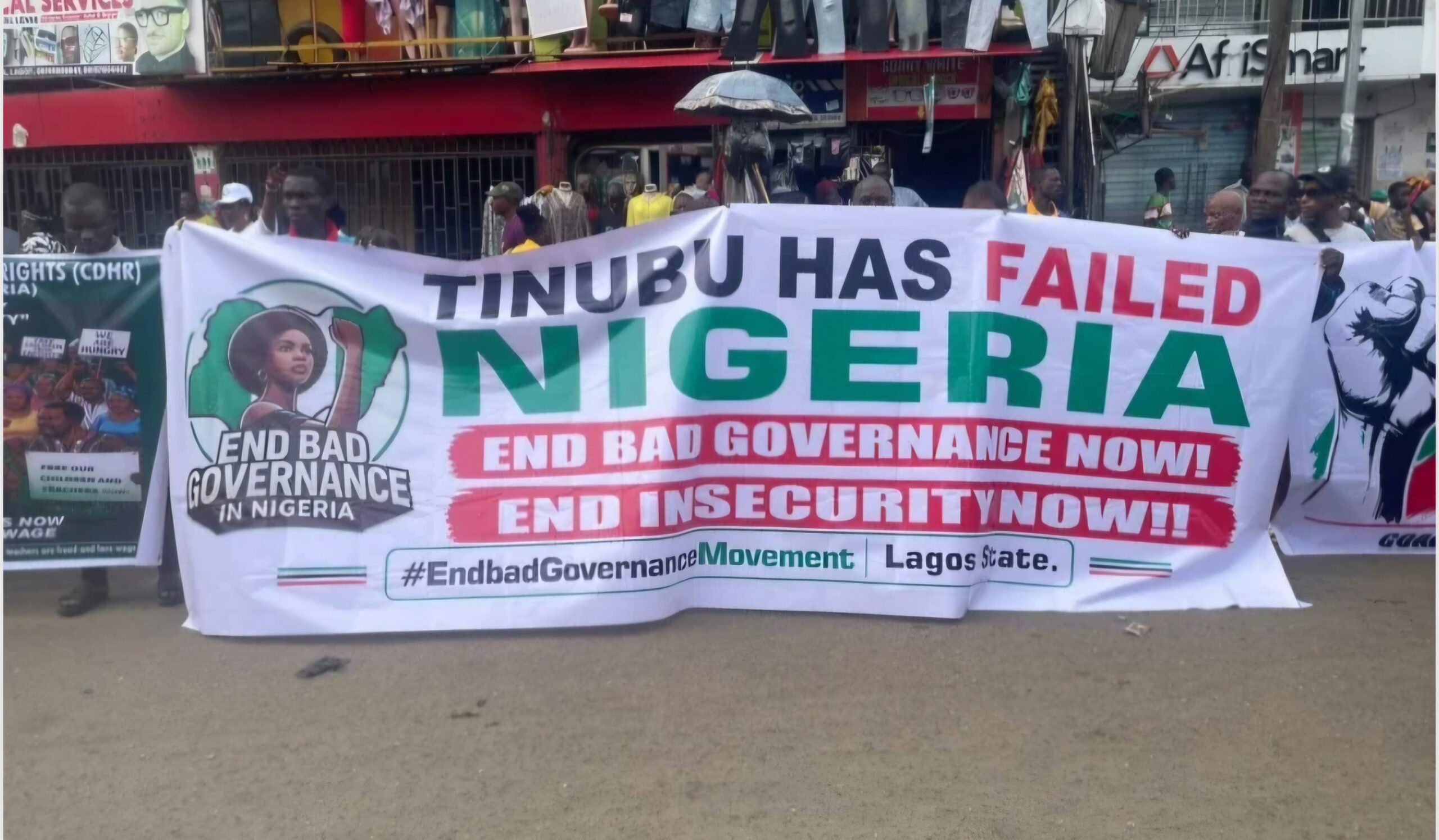
What should have been a period of national reflection on the gains of democracy became an occasion for public dissent on Friday as hundreds of Nigerians took to the streets of Lagos to protest worsening economic hardship and persistent insecurity across the country.
The demonstration, organised by a coalition of civil society organisations, labour groups, youth movements, community associations, and faith-based bodies, underscored the widening gap between the promises of democratic governance and the daily realities confronting millions of citizens.
Converging at the Ikeja Under Bridge, one of Lagos’ busiest civic gathering points, the protesters marched peacefully while voicing concerns over rising hunger, inflation, unemployment, and growing insecurity.
Their message was simple but unmistakable: democracy must translate into better living conditions for the people.
For many participants, the timing of the protest was significant. Coming on the heels of Democracy Day commemorations, it served as a reminder that democracy is measured not merely by elections and political ceremonies, but by its capacity to improve the welfare and security of citizens.
Placards bearing inscriptions such as “End Hunger Now,” “No Democracy Without Security,” “Free All Captives,” “Decent Minimum Wage,” and “Mass Job Creation Now” reflected the frustrations of ordinary Nigerians struggling to cope with soaring food prices, transportation costs, and shrinking purchasing power.
The organisers argued that while citizens have continued to make sacrifices in the hope of economic recovery, the burden has become increasingly unbearable for families and small businesses.
They expressed concern that many Nigerians now spend a disproportionate share of their income on basic necessities, leaving little room for dignity or economic advancement.
Beyond economic challenges, the protesters drew attention to the lingering security concerns across various parts of the country. They maintained that no democracy can truly flourish where citizens live in fear of criminality, violence, or abduction.
The coalition called on government at all levels to urgently address the twin crises of hardship and insecurity through practical policies that ease the burden on citizens, stimulate job creation, curb inflation, and strengthen public safety.
Friday’s protest was more than a street demonstration; it was a reflection of a growing national mood. Beneath the official celebrations and optimistic rhetoric lies a populace increasingly anxious about its future and eager to see democracy deliver on its most fundamental promise: a better life for the people.