
By Bose
Kindly share:
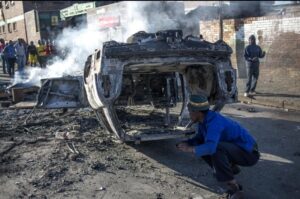
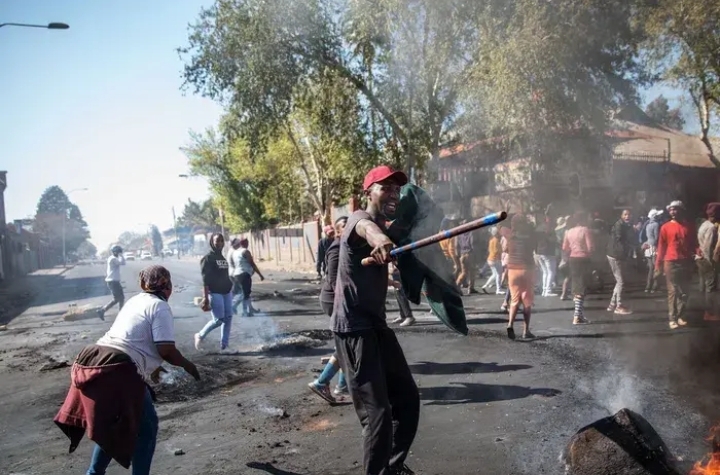
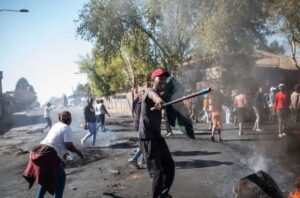
Violence has broken out in Eastern Cape after protests against the installation of a Nigerian traditional leader spiralled into widespread unrest, with vehicles set ablaze and properties linked to foreign nationals attacked.
The incident occurred in East London, where demonstrators gathered to oppose the coronation of Solomon Ogbonna Ezike as “Igwe Ndigbo,” a title traditionally used among the Igbo people of southeastern Nigeria to denote a cultural and community leader.
What began as a demonstration quickly degenerated into chaos, as some protesters torched trucks and commercial vehicles while vandalising buildings believed to be owned by foreigners. Emergency services were deployed to contain the fires, while security operatives moved in to restore order.
Police reportedly used crowd-control measures, including stun grenades, to disperse the protesters as tensions escalated. Authorities are yet to confirm the full extent of the damage or provide details on possible arrests.
The controversy stems from the symbolic and cultural significance of the “Igwe” title. In Nigeria, an Igwe serves as a traditional ruler and custodian of customs. Among Igbo communities abroad, similar titles are sometimes adopted to coordinate cultural activities, provide leadership, and maintain communal identity.
However, the installation of such a figure within South Africa has drawn criticism from some local groups. Opponents argue that establishing a foreign traditional leadership structure on South African soil raises concerns about sovereignty and could undermine existing indigenous institutions.

The unrest has once again spotlighted long-standing tensions around immigration in South Africa. Over the years, sporadic outbreaks of xenophobic violence have targeted foreign nationals, particularly those from other African countries, amid frustrations over unemployment, crime, and economic inequality.
Although organisers initially framed the protest as opposition to the installation of a “foreign king,” the escalation into violence reflects deeper societal grievances that extend beyond the immediate issue.
Security presence has been heightened across affected areas as authorities work to stabilise the situation and prevent further breakdown of law and order. Investigations are expected to examine both the violent protests and the circumstances surrounding the controversial installation.
While calm is gradually returning, the incident underscores the fragile balance between cultural expression and national sensitivities in a society still grappling with the complexities of migration and identity.