

By Anthony
Kindly share:
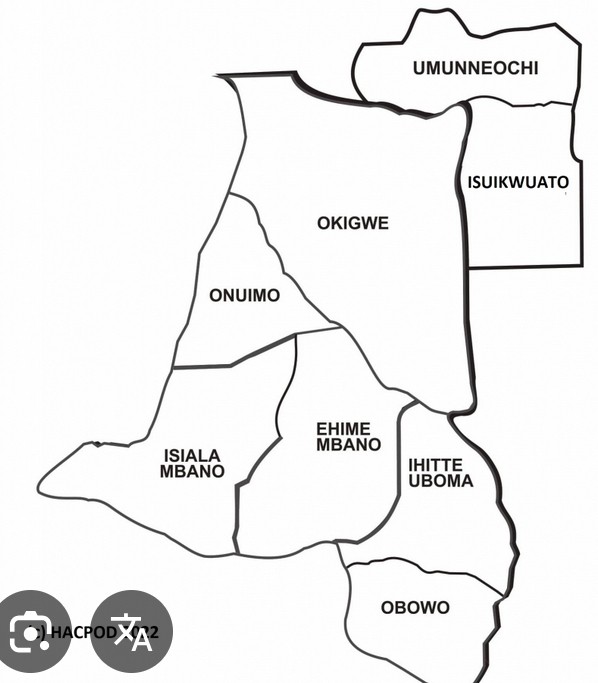
When a people begin to suspect that an election is being arranged rather than conducted, the danger is not only in the mechanics of manipulation but in the psychology of surrender. Fear can paralyse a community long before any ballot is cast. In places like Okigwe, where conversations now revolve around alleged plans to rig, the reintroduction of manual backup procedures, possible “no network” excuses, and the perception that disputed results often survive judicial scrutiny, the greatest threat is not merely technical distortion but civic exhaustion.
The debate over electronic transmission versus manual collation intensified after President Bola Tinubu’s suspicious hasty assent to amendments shaping electoral procedure. Many citizens fear that the manual fallback option creates a loophole wide enough for figures to be adjusted between the polling unit and final collation. Others worry that “network failure” may be invoked at strategic moments to justify delayed uploads. Layered on top of this is a growing cynicism toward the capacity of the courts to overturn flawed outcomes. Whether these fears are exaggerated or grounded in past disappointments, they are real in the minds of voters. And fear, if not redirected, becomes apathy.
Yet even in the worst-case scenario, the foundation of electoral integrity remains the polling unit. Every election is strongest or weakest at that single point. Votes are counted openly. Figures are entered on official result sheets. Party agents sign. Observers watch. Citizens stand nearby.
Before any network is required, before any upload is attempted, before any manual transfer is contemplated, the will of the people is physically written down and witnessed. That moment is the fortress. If it is protected, documented, and replicated across every unit in Okigwe, later distortions become harder to conceal and easier to challenge.
The fear of “no network” can be neutralised not by argument but by preparation. Network failure does not prevent transparent counting. It does not prevent the announcement of results at the unit. It does not prevent agents from receiving signed copies. It does not prevent citizens from lawfully photographing result sheets where permitted. A delayed upload is inconvenient; a missing signed result sheet is catastrophic. The focus must, therefore, shift from transmission anxiety to documentation discipline. When dozens of independent records exist for each polling unit, time-stamped, signed, witnessed, the space for arithmetic invention narrows dramatically.
The deeper anxiety, however, is not technological. It is institutional. Many people believe that even when irregularities are documented, judicial outcomes often validate contested results. That perception, whether universally accurate or not, has created a sense that post-election litigation is a ritual rather than a remedy. If that is the fear, then the strategy cannot rely solely on courtroom salvation. It must emphasise overwhelming legitimacy at the ballot level. Slim margins invite controversy; decisive margins deter manipulation. High voter turnout is not just democratic enthusiasm; it is statistical protection. When participation surges across wards, the cost and visibility of altering outcomes increase exponentially.
Another safeguard that is often underestimated is unity around a credible, competent, and widely acceptable candidate. Fragmented opposition makes engineering outcomes easier. A divided field reduces margins and creates confusion that can be exploited. But when a community spurns political affiliations, and rallies around a candidate whose reputation, grassroots reach, and administrative competence inspire confidence, the political equation changes. The contest shifts from personality to performance, from imposition to comparison.
In that regard, many in Okigwe increasingly whisper about figures such as Attorney Charles Onyirimba, not merely as a name, but as a symbol of the kind of grounded, credible alternative that can consolidate the electorate and counter any attempt at manufactured consensus. Whether or not he becomes the standard-bearer, the principle remains: unity around credibility is itself a safeguard against imposition.
Okigwe’s path forward, therefore, is neither violence, resignation nor withdrawal. Violence creates the very chaos that enables opacity. Resignation or withdrawal creates the vacuum that manipulation exploits. The response must be structured civic vigilance.
Political parties must train and deploy competent agents to every polling unit and ensure they remain until results are fully recorded and copies secured. Civil society groups, churches, professional bodies, youth associations, and town unions should run voter education drives that explain how counting works, what documents matter, and what citizens are legally entitled to observe. Knowledge is the first layer of defence.
Engagement with the Independent National Electoral Commission should also be proactive rather than reactive. Stakeholders can formally request clarification of fallback procedures, demand demonstrations of offline upload synchronisation, and insist on transparency about collation protocols well before election day. When concerns are documented early, institutional accountability begins before tension peaks.
Likewise, legal teams should not wait until after results are declared to begin studying potential vulnerabilities. Ambiguities in procedure can be tested in court before ballots are printed, not after emotions are inflamed.
Parallel vote tabulation at the community or party level, conducted lawfully, can further reinforce transparency. If each polling unit’s signed result is immediately aggregated independently at ward level, discrepancies at higher collation stages become easier to detect.
Media engagement, careful, factual, evidence-based, adds another layer of scrutiny. When irregularities are responsibly documented and widely known, institutional actors operate under heightened reputational pressure.
Perhaps, most importantly, Okigwe must resist the temptation to declare every institution irredeemably compromised. Sweeping delegitimisation may feel emotionally satisfying, but it weakens the very structures that must ultimately be strengthened. Reform is cumulative. It grows from sustained engagement, documentation, advocacy, and memory. Communities that archive their evidence, publish civic reports, and maintain pressure between election cycles gradually reshape the standards by which institutions operate.
The true battle is psychological. Rigging, where it occurs, thrives on fragmentation and despair. It succeeds when citizens conclude in advance that participation is pointless. It falters when communities organise calmly, document meticulously, vote massively, unite around credible leadership, and remain present from accreditation to final collation.
Okigwe’s future will not be secured by rumour, nor by rage, nor by resignation. It will be secured by preparation, unity across party lines on the principle of electoral integrity, and a collective decision to back competence over convenience. The ballot is most vulnerable when the people are divided and demoralised. It becomes powerful when they are organised, informed, unified behind credible leadership, and determined to let their overwhelming voice speak beyond any shadow of doubt.
If Okigwe truly intends to shake off the inertia and underperformance that have defined both past and present representation, then sentiment alone will not suffice. What is required is maturity. It would be not only wise but strategic for the various aspirants to set aside ego, convene in good faith, and forge a united front, a disciplined, formidable coalition capable of confronting the entrenched hegemony that has kept the zone politically subdued and developmentally gasping. Fragmentation has been our weakness; consolidation can become our strength. When ambition yields to collective survival, the balance of power begins to shift.
Anthony Iwuoma
Journalist/Columnist/Pastor
Faith.Politics .Power .Moral Clarity