


By Anthony Iwuoma
Kindly share
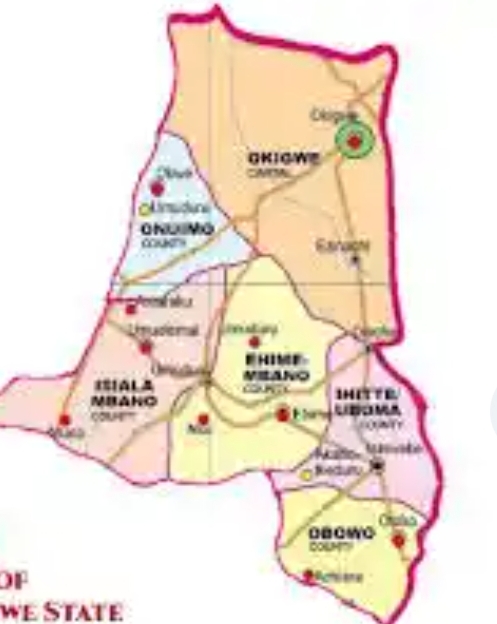
Okigwe Zone stands at a difficult threshold, where memory and possibility wrestle for control of its political imagination. It is a zone rich in resilient people, fertile land, intellectual promise, and a long tradition of community pride, yet repeatedly weakened by a pattern of representation that delivers noise during elections and silence in governance.
Over time, a structure has taken shape that many constituents quietly describe as a cartel of economic interests, a layered network of political gatekeepers, transactional power brokers, and recycled office seekers whose primary achievement has been the management of access rather than the expansion of development.
In this structure, politics is not treated as a covenant of service but as an economy of return. The zone’s resources, both material and human, are repeatedly filtered through layers of loyalty, obligation, and compromise before they ever touch the ordinary citizen. What emerges is a cycle in which elections become rituals of bargaining, and leadership becomes a rotation of familiar faces whose language changes but whose outcomes remain painfully similar. The result is stagnation disguised as activity, and representation that too often struggles to translate into measurable transformation.
At the heart of this problem is the deep entrenchment of political godfatherism and informal control systems that shape who emerges, who survives, and who is sidelined. These structures do not always operate openly; rather, they function through influence networks embedded within party systems, community leadership circles, and financial backchannels. Candidates are often elevated not because they represent a break from the past, but because they fit neatly into pre-existing arrangements that prioritise control over competence.
This has created a political environment where elections are frequently decided long before voters arrive at polling units. In such a system, the electorate is periodically courted, occasionally entertained, but rarely empowered. Development becomes episodic, appearing as scattered projects tied to political cycles rather than sustained programmes rooted in long-term planning. Roads remain incomplete, questionable projects are flagged before the confused constituents, opportunities remain unevenly distributed, and young people continue to drift between hope and frustration.
Yet, any honest conversation about Okigwe Zone must also confront a more uncomfortable reality: the complicity of survival politics among the people themselves. Over time, economic hardship has produced a political culture where immediate needs often outweigh long-term vision. Many constituents, understandably exhausted by deprivation, have learned to prioritise what is often described in local expression as “stomach infrastructure”, short-term relief, cash handouts, temporary jobs, and seasonal empowerment gestures that provide immediate comfort but rarely alter structural conditions.
This dynamic is not born of ignorance but of necessity. When daily survival becomes uncertain, long-term political ideology can feel abstract. In such a context, elections risk becoming marketplaces where votes are exchanged for temporary relief.
It is here that another phrase enters the political vocabulary of the zone: “anywhere belle face”, a survivalist mentality that accepts whatever comes, wherever it comes from, so long as it meets the immediate need of the moment. It is a posture shaped by hardship, but it is also one that entrenches the very system that produces the hardship in the first place.
This convergence of elite capture at the top and survival compromise at the base creates a closed loop. The political class offers short-term inducements instead of structural reform, while portions of the electorate accept these inducements in place of demanding accountability. Between both sides, the long-term future of the zone is quietly negotiated away, election after election.
The tragedy of this arrangement is not that Okigwe lacks capable leaders or visionary individuals. On the contrary, the zone is filled with professionals, entrepreneurs, academics, and public-spirited citizens who, if given space, could reshape its trajectory.
The challenge lies in the gatekeeping system that repeatedly filters leadership through loyalty tests rather than competence benchmarks. Over time, this has weakened institutions, discouraged innovation, and normalised mediocrity as political stability.
The consequences are visible in every sector. Yet, something is beginning to shift in the consciousness of the zone. Beneath the surface of routine political mobilisation, there is a growing sense of fatigue with repetition.
Many constituents are beginning to ask a different kind of question, not just “who is running?” but “what has changed each time we have chosen before?” This subtle shift marks the beginning of political reawakening, where experience begins to outweigh persuasion, and outcomes begin to matter more than promises.
It is within this evolving consciousness that alternative political voices are beginning to gain attention. One of such emerging figures is Attorney Charles Onyirimba, the African Democratic Party senatorial candidate for the zone. His emergence reflects a broader signal of dissatisfaction with the existing political configuration and a search for a different approach to representation.
The appeal of his candidacy does not rest solely on his individual personality, but on what he represents in contrast to the established order: the possibility of politics driven less by entrenched networks and more by structured ideas of development, accountability, and institutional renewal.
For many observers within the Okigwe Zone, the significance lies in the attempt to shift the conversation from patronage distribution to governance architecture.
However, any genuine political transformation in Okigwe Zone cannot be outsourced to a single candidate or party. It must involve a deeper interrogation of both leadership selection and civic expectation. The culture of “anything goes as long as something drops” must gradually give way to a more demanding standard where citizens insist that governance must be judged by sustained outcomes rather than temporary relief.
This does not mean dismissing the reality of hardship or condemning those who seek immediate assistance. Rather, it means recognising that a system built primarily on short-term inducements will always reproduce short-term outcomes. If roads, schools, healthcare, and employment opportunities remain the desired goals, then the political choices made must begin to reflect those priorities consistently and deliberately.
For Okigwe Zone to reclaim itself, it must begin with the uncomfortable process of redefining political value. Value must no longer be measured by the size of election-time distribution, but by the depth of post-election delivery. It must no longer be acceptable for representation to exist as symbolic presence without structural impact. And it must no longer be normal for communities to cycle through leaders without cycling forward in development.
At the same time, political actors must also recognise that legitimacy cannot be permanently sustained through coercion, patronage, or elite arrangement. A zone that remains underdeveloped despite repeated representation will eventually question the value of its own political patterns.
That questioning has already begun, quietly but steadily, in conversations across villages, town halls, youth gatherings, and professional space.
The future of Okigwe Zone will depend on whether this emerging consciousness can be converted into organised civic pressure and disciplined electoral choices. It will also depend on whether alternative platforms can rise beyond rhetoric and demonstrate credible frameworks for governance that can withstand scrutiny beyond campaign seasons.
Already, the Action Democratic Party, though relatively unknown, has positioned itself as the vehicle to drive this shift from the dominant platforms because of its freshness shorn of baggage and clutter of the past.
In the end, the story of Okigwe is not one of permanent captivity, but of deferred liberation. The structures that currently shape its politics are powerful, but not unchangeable. They are sustained by repetition, familiarity, and resignation, but all of these are human conditions, not permanent destinies. Once a people begin to question the logic of their own political cycle, the possibility of change begins to emerge.
The task before the zone is, therefore, not simply to replace one set of leaders with another, but to reset the terms of engagement between the governed and those who seek to govern. Until that happens, economic stagnation will continue to mirror political stagnation, and elections will remain cycles of motion without movement.
But if the current reawakening deepens, if constituents begin to move beyond survival-only politics and beyond “anywhere belle face” compromises, then Okigwe Zone may yet begin the long process of reclaiming not just its political voice, but its developmental destiny.