

By Anthony Iwuoma
Kindly share:
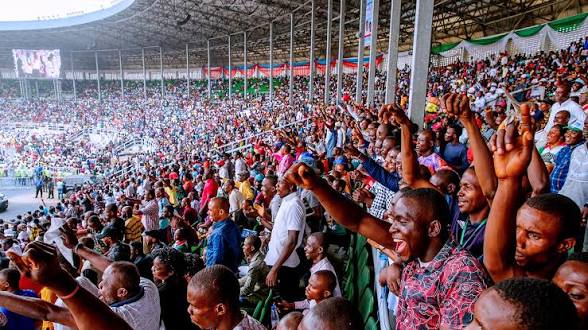
There is something fundamentally deceptive about the politics of crowd mobilisation. Every election season, politicians take to the streets, hire buses, distribute branded T-shirts, rent sound systems, print banners and mobilise crowds to create the impression of overwhelming popularity. Roads are blocked, drums roll, party colours dominate the landscape, and enthusiastic speeches promise heaven on earth.
But beyond the noise, what exactly has changed in the lives of the people?
What is the value of a political rally if the roads leading to the communities remain impassable? What does a mammoth crowd signify when hospitals lack essential facilities, schools are deteriorating, young people remain unemployed and businesses struggle without electricity? Of what use are rented crowds when elected representatives cannot be found when their constituents need them?
Perhaps, even more shameful is the spectacle of politicians who enjoyed the privilege of public office for four years but treated the people who supposedly gave them the mandate as strangers, only to resurface at election time with elaborate rallies, rehearsed speeches and renewed promises. For four whole years, there was no contact, no town hall meeting, no regular constituency engagement, no visible projects and no convincing evidence of commitment to the welfare of the people. Yet, as another election approaches, they suddenly remember the roads to their communities, remember the names of their constituents and rediscover the importance of grassroots politics.
What a convenient rediscovery of the people!
It is an insult to the intelligence of the electorate for politicians who have been absent from their constituencies to return with the expectation that a few hours of music, dancing, handshakes and political theatrics will erase four years of neglect. Their sudden enthusiasm is not necessarily an expression of renewed love for the people. It may simply be the desperation of individuals who need the people’s votes to retain their political relevance.
The tragedy is that these politicians often return with nothing substantial to show for their previous mandates. Instead of presenting a credible account of their stewardship, they recycle old promises, introduce familiar slogans and manufacture fresh excuses for old failures or even refuse to acknowledge them.
And they expect the people to clap!
This is where the electorate must draw a clear line between political loyalty and political foolishness. Democracy does not require citizens to surrender their intelligence, dignity or future to politicians who regard their votes as a seasonal commodity.
A politician who has spent four years avoiding the people should not expect a rally to substitute for four years of responsible representation. A politician whose achievements are invisible should not expect campaign banners to speak louder than the evidence of failure. Where performance exists, it should be the most convincing campaign material. Where genuine achievements have been recorded, communities should be able to point to them without being coached, bribed or mobilised.
The question is simple: if you have served us creditably, why should you need elaborate theatrics to convince us? Why should you spend millions assembling crowds when the evidence of your performance should naturally attract the people?
The truth is that political rallies are, at best, platforms for communication and political engagement. At their worst, they become expensive theatrical performances designed to manufacture popularity, manipulate public perception and distract voters from the real issues.
Democracy is not a carnival. It is a contract between the people and those entrusted with public authority.
The people must, therefore, learn to distinguish between mobilisation and meaningful representation, between political entertainment and purposeful leadership, and between the ability to gather crowds and the capacity to deliver results.
A crowd can be hired. Applause can be purchased. Party uniforms can be distributed. Political endorsements can be staged. But the actual condition of the people’s lives cannot be disguised indefinitely.
For the people of Okigwe Zone, the coming 2027 elections should represent an opportunity to redefine political accountability. The question should no longer be who can organise the biggest rally, hire the largest crowd or make the loudest promises. The question should be who has the competence, character, vision, courage and capacity to confront the challenges confronting the people.
The electorate must also understand that their Permanent Voter Cards are instruments of political power. They should not be exchanged for temporary gratification or surrendered to emotional manipulation.
Those who neglected the people yesterday cannot automatically deserve their confidence today. Those who disappeared after securing electoral victory must explain their absence. Those who made promises without delivering must account for their failures. Those who seek another mandate must first demonstrate why they deserve it. Those who seek fresh mandate must first demonstrate how they wiĺ be better than those they wish to replace.
This is where the Onyirimba proposition becomes relevant. Attorney Charles Chibuike Onyirimba’s campaign offers the people an opportunity to consider a different direction, one that places purposeful representation, accountability, development and the future of Okigwe Zone at the centre of political engagement.
His proposed transformation agenda should be examined on its substance, policy direction and capacity to address the challenges, confronting the zone.
The people deserve representation that goes beyond ceremonial appearances and election-season familiarity. They deserve a senator who understands that public office is neither a trophy nor an avenue for personal enrichment, but a responsibility to remain accessible, speak for the people, pursue development and continually account for the mandate entrusted to him.
The choice before Ndi Okigwe is, therefore, bigger than party colours, political friendships, familiar faces or the entertainment value of campaign rallies. It is about deciding whether the zone will continue recycling political disappointments or embrace a new direction built around competence, integrity and measurable progress.
When politicians return after four years of silence, the people must not be too overwhelmed by their sudden generosity to ask questions. When they arrive with fresh promises, voters must demand explanations for the old ones. When they mount campaign platforms to solicit support, they must be reminded that the same people they are addressing today were entitled to their attention throughout the four years they held public office.
The people are not political merchandise to be picked up during election seasons and abandoned immediately after victory. They are the owners of the democratic mandate. Their welfare must matter beyond election day.
When the music stops, the buses return, the hired crowds disperse and the campaign banners come down, the people are left with one unavoidable question: What has this politician actually done for us; what can this politician possibly do for us?
That question must guide every political conversation in Okigwe Zone as 2027 approaches.
The future of our communities cannot be secured by political spectacles, recycled promises or manufactured popularity. It will be secured by purposeful leadership, measurable results, responsible representation and sustained accountability.
Ndi Okigwe, do not be deceived by the noise of political rallies. Demand performance. Question failure. Reject the politics of use and dump. Your votes are too valuable to reward four years of neglect.
Anthony Iwuoma is a newspaper columnist and public commentator.
Enough of politics as entertainment. It is time for politics as service.