
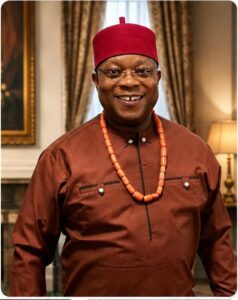
By Anthony Iwuoma
Kindly share:
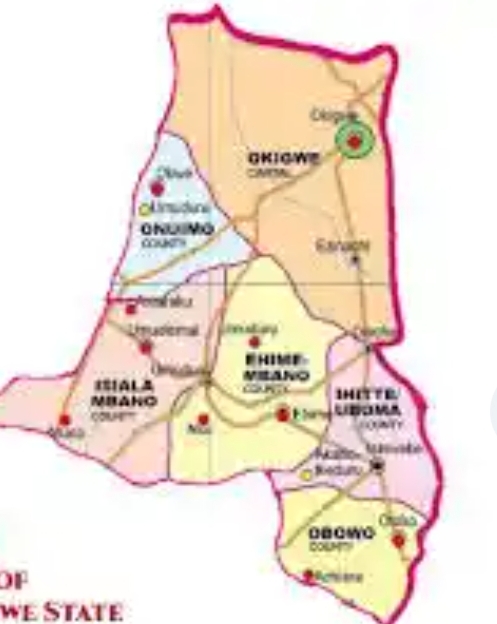
The story of Okigwe Zone is one of considerable potential alongside persistent developmental challenges. The zone has produced accomplished professionals, entrepreneurs, academics and public figures, yet questions continue to be raised about its visibility, influence and ability to attract sustained development.
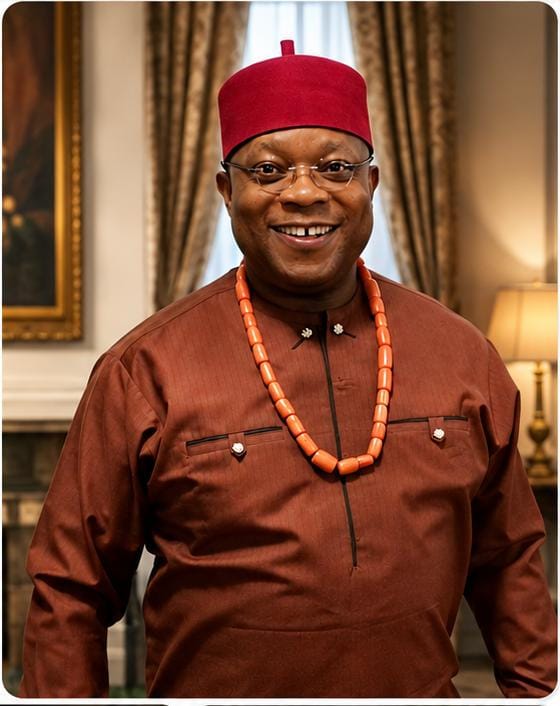
Against this background, the emergence of Attorney Charles Onyirimba as a senatorial contender provides an opportunity to examine a fundamental question: what kind of representative does a zone in search of renewed relevance require?
Onyirimba’s candidacy is particularly interesting because his background extends beyond conventional local political structures. His training in political science, journalism and law, professional experience in the United States, community leadership and involvement in Diaspora affairs give him exposure to institutions and systems beyond the traditional Nigerian political environment.
That background forms an important part of the argument advanced by his supporters: that representation can be approached as a professional responsibility rather than simply as political occupation.
A DIFFERENT POLITICAL PROFILE
The phrase “not the usual politician” should not be understood merely as campaign language. It can be tested against a candidate’s record, experience and approach.
Onyirimba has spent significant portions of his professional and community life outside conventional Nigerian political structures. His legal career exposed him to government processes and regulatory institutions, while his involvement with Igbo organisations in the Diaspora placed him in leadership situations requiring negotiation, organisation and relationship-building.
Of course, such experiences do not automatically guarantee effective representation; elections ultimately require accountability for actual performance. However, they provide a basis for asking whether a candidate possesses skills that could be relevant to legislative and constituency work.
The distinction is important.
A senator requires political understanding, but also needs the ability to analyse policy, negotiate with institutions, communicate effectively, build relationships and pursue constituency interests. These are competencies that can be developed through professional and civic experience as much as through traditional party politics.
FROM REPRESENTATION TO REPOSITIONING
The larger question surrounding Onyirimba’s candidacy is, therefore, not simply whether he can represent Okigwe, but whether he can help reposition it.
For years, development discussions about the zone have frequently centred on roads, infrastructure, employment, education, healthcare and economic opportunities. These remain important. But there is another dimension: strategic relevance.
A constituency can have enormous resources and still remain under-connected to centres of power and opportunity.
Repositioning Okigwe would require building stronger relationships with federal institutions, private investors, development organisations, professional networks and the Diaspora. It would require identifying opportunities and developing mechanisms for connecting communities and individuals to them.
This is an area where Onyirimba’s international exposure could potentially become relevant.
His understanding of Diaspora networks and international environments could help expand the conversation beyond conventional constituency politics.
Besides, Onyirimba has the capacitor to surmount the challenge of converting relationships into measurable outcomes.
THE VALUE OF LEGISLATIVE EXPERIENCE
There is another important consideration.
A senator’s primary constitutional responsibilities include legislation and oversight. Constituency projects are visible, but they represent only one part of the office.
A capable senator must understand legislation, scrutinise government policies, participate meaningfully in committees and advocate for policies that affect the constituency and the wider country.
Onyirimba’s legal background could potentially be useful in this regard. Legal training does not automatically make someone an effective legislator, just as political experience does not automatically make someone a good lawmaker. What matters is how knowledge is applied.
For Okigwe, the relevant question is. therefore. whether Onyirimba can combine his legal and professional background with the political skills required to function effectively within the National Assembly.
THE DEVELOPMENT QUESTION
The real measure of any political proposition remains development.
Okigwe cannot be transformed by rhetoric alone. Roads must function. The people can no longer be transporting their dead on motorbikes that cannot even plod though impassable roads. Young people need opportunities. Businesses require enabling conditions. Artisans need electricity to work indtead of waiting enflessly for Gordot. Farmers need access to markets. Communities require infrastructure. Education and healthcare require sustained attention.
A candidate promising transformation, therefore, needs more than a compelling biography.
There must be an identifiable pathway between capacity and outcomes.
In Onyirimba’s case, that pathway would presumably involve using legislative influence, constituency advocacy, government connections, private-sector relationships and Diaspora networks to expand opportunities available to the zone.
This is potentially where his unconventional background becomes an advantage.
WHY THE “USUAL POLITICIAN” QUESTION MATTERS
Political systems often reproduce familiar patterns. Candidates emerge from established networks, campaign around personalities, mobilise supporters during election seasons and then settle into conventional patterns of representation.
The argument surrounding Onyirimba is that Okigwe will need something different.
But for him, “different” mean more than appearance or a campaign description
It means a different approach to constituency engagement, a different understanding of development, a stronger emphasis on measurable outcomes and a willingness to use professional expertise and networks in public service.
That approach is what Onyirimba will ultimately deliver. So, the distinction between him and conventional political actors is meaningful.
FROM DARKNESS TO LIGHT
The metaphor of moving from darkness to light captures the larger aspiration surrounding Okigwe’s political future.
Darkness represents stagnation, weak visibility, missed opportunities and the frustration of a people who believe their potential has not been sufficiently realised.
Light represents possibility: stronger representation, greater visibility, economic opportunity, institutional connections and renewed confidence.
Onyirimba’s candidacy can therefore be examined as a proposition for achieving that transition.
His education provides one dimension. His legal training provides another. His professional experience, international exposure, community leadership and political involvement add further dimensions. Together, these attributes suggest a candidate with a profile that differs in important respects from the conventional political template.
But ultimately, capacity must meet responsibility.
The transformation of Okigwe cannot rest on one individual alone. It requires communities, professionals, businesses, young people, women, traditional institutions, government agencies and the Diaspora to participate in a shared development project.
The senator can provide advocacy, access and leadership. The zone must provide collective commitment.
The enduring question, therefore, is not simply “Can Onyirimba change Okigwe?”
It is whether his particular combination of skills, experience and networks can be organised into an effective model of representation capable of helping Okigwe move from persistent developmental frustration toward greater relevance and opportunity.
That is the proposition his candidacy places before the zone, and one that can ultimately be judged not by slogans, but by capacity, plans, accountability and results.
The good news is that Attorney Charles Onyirimba is equipped with the vision, experience, capacity and courage required to take Okigwe Zone on a new trajectory, away from years of stagnation and toward the light of purposeful representation, development and opportunity.
But the power to change this story rests squarely with Ndi Okigwe. The choice is theirs: embrace a new direction with a leader prepared to challenge the forces that have held the zone back, or continue along the familiar dark alleys of disappointment while other senatorial zones surge ahead.
Okigwe cannot afford another cycle of missed opportunities. The time has come to break from the past, demand more from leadership and choose a representative who sees public office not as a prize to be won, but as a responsibility to be honoured.
The light is within reach. The question is: will Ndi Okigwe choose to walk toward it? I pray so.
Anthony Iwuoma, a newspaper editor and columnist, wrote from Abuja