
By Anthony
Kindly share:
Sunday’s service at the Acts of Restoration and Compassion, ARC, Church was a powerful time of worship, teaching, encouragement and spiritual reflection.
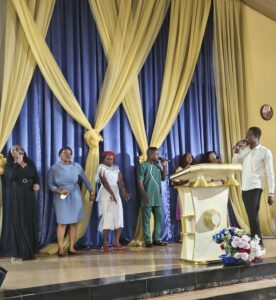
As usual, the service began with an exuberant worship session led by the choir, creating an atmosphere of praise and preparing the congregation for the Word.
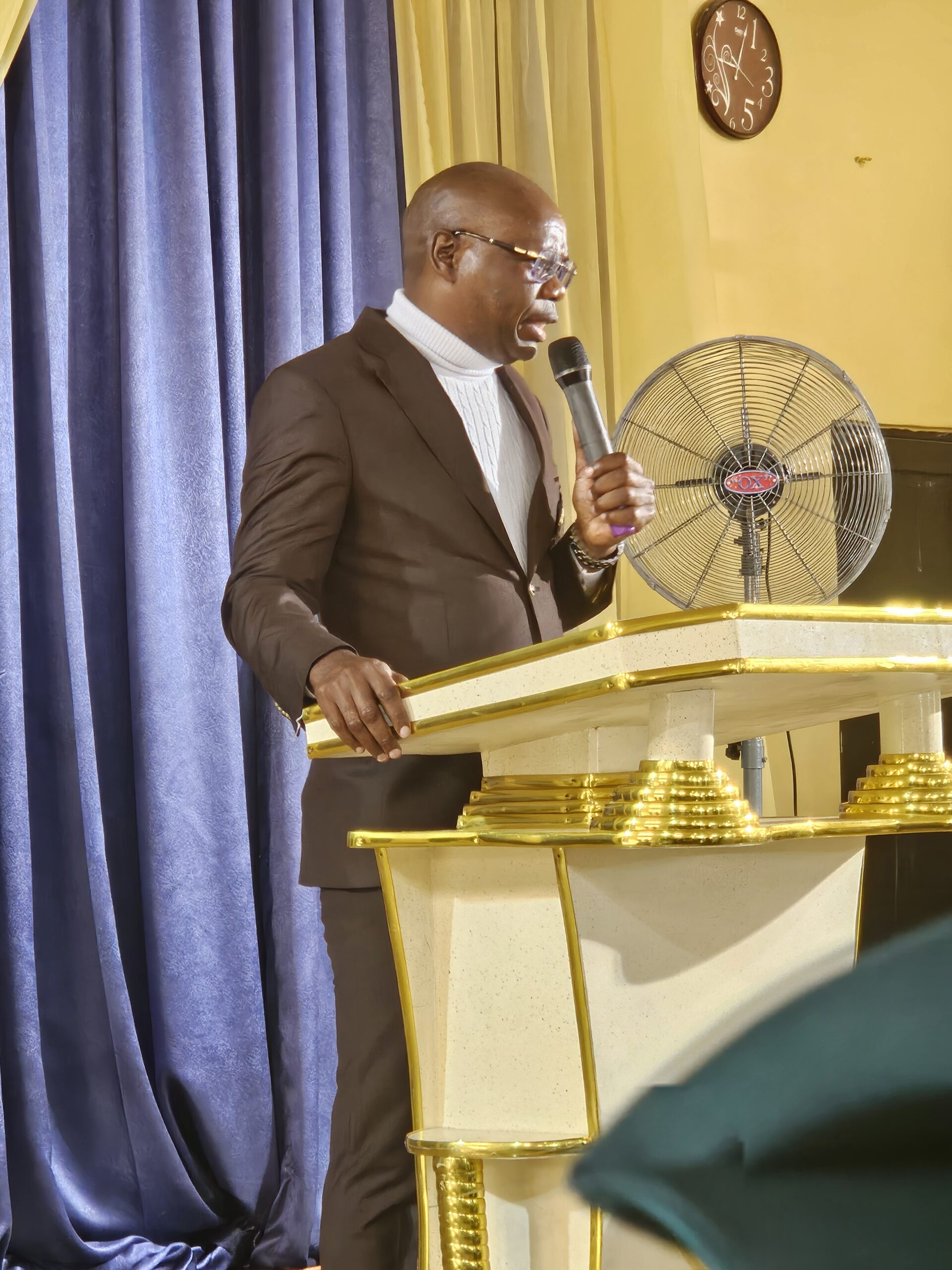
The lead apostle of the church, Rev. Paul Chikwem, subsequently took over the pulpit and delivered a message centred on survival, purpose, divine help, separation and the making of a blessing, drawing lessons from the lives of Moses and Abraham.
“NO MATTER WHAT YOU WERE BORN INTO, YOU WILL SURVIVE IT”
Rev. Chikwem began with a powerful declaration: “No matter what you are born into, you will survive it.” He encouraged the congregation not to allow difficult family backgrounds, unfavourable circumstances or challenging environments to determine their destiny.
Using Moses as an example, he noted that Moses was born at a time when a decree had been issued for Hebrew male children to be killed. Yet, despite the hostile environment into which he was born, Moses survived and eventually became a great leader.
He emphasised the importance of having people who can recognise one’s potential. Moses’ mother did not merely see a child; she perceived a future leader and took deliberate steps to preserve his life.
The preacher prayed that the eyes of those assigned to help the congregation would see their potential and invest in them.
He also referred to the Shunammite woman, who perceived Elisha beyond his physical appearance and recognised him as a man of God. Likewise, the wise men did not merely see a baby in Jesus; they recognised a King.
According to him, what people see and perceive often determines how they respond.
WHEN ONE HELPER’S ASSIGNMENT ENDS
Rev. Chikwem stressed that no human being can help another person indefinitely.
He explained that when a helper reaches the limit of what he or she can do, the person should not be blamed. Rather, God can raise another helper for the next stage.
He cited Moses’ mother, who eventually could no longer protect him directly and had to devise another means of preserving his life. Moses was placed in a basket and released into the river, but what appeared to be abandonment became another stage in God’s plan, as Pharaoh’s daughter took over.
The lesson was clear: when one door closes or one source of help ends, God remains capable of providing another way forward.
He also referenced Jephthah, who was rejected and driven away but later became a man whom those who rejected him needed.
“They will not come when you have not become; when you become, they will come,” he said, encouraging the congregation not to allow rejection to define their future.
SURVIVAL IS WITHIN YOU
The man of God challenged the congregation to develop a mentality of success and resilience.
“Be among the best; don’t become among the rest,” he declared, urging believers not to allow their environment to imprison their potential.
He reminded the congregation that having Christ within them should inspire confidence rather than defeat.
He compared human potential to the elephant, whose growth is already embedded within its nature, and the palm tree, whose ability to withstand difficult conditions is connected to the strength of its roots.
The congregation was therefore encouraged to discover who they are, develop their gifts and refuse to make excuses for their circumstances.
“Don’t give excuses with your environment; make your environment submit to you,” he urged.
He illustrated this with practical examples: don’t wait until you live on an island before developing an island mentality; don’t wait until you appear on television before learning to present yourself properly; and don’t wait until visitors are coming before keeping your home in order.
The message was that preparation must precede opportunity.
THE GOD OF ABRAHAM — PART TWO
Rev. Chikwem subsequently continued his teaching on “The God of Abraham,” derived from Genesis 12:1-5. He focused particularly on God’s call to Abraham and the significance of separation.
He explained that the command “Get out” can sound like an insult in one context and become wise counsel in another. For Abraham, however, it was a divine instruction requiring him to leave his country, kindred and family.
THE POWER OF SEPARATION
According to the preacher, there are associations and relationships that can hold a person back from God’s purpose. Such entanglements sometimes require deliberate separation.
He referred to Saul’s incomplete obedience in the command concerning the Amalekites, noting that partial obedience cannot be presented as complete obedience.
The congregation was encouraged to examine their own lives and determine whether certain relationships, habits or associations are helping or hindering their walk with God.
However, he cautioned against hatred.
“You are not doing yourself any good by hating anyone,” he said, emphasising that people can continue with their lives even when we are no longer part of them.
He encouraged the congregation to make peace where they have caused offence, but not to chase after people who deliberately choose to leave.
GATHER PEOPLE, NOT JUST POSSESSIONS
Rev. Chikwem challenged believers to consider what they are gathering beyond material possessions.
Abraham left with his wife, Lot and the people he had gathered. The preacher therefore asked the congregation:
“Don’t just gather material things; also gather souls.”
He referenced Naomi, who experienced tremendous loss but returned with Ruth, a relationship through which God’s redemptive purpose continued.
The congregation was challenged to consider the spiritual impact of their lives and ask: “How many souls have you won?”
THE GOD OF ABRAHAM IS THE TRUE GOD
Rev. Chikwem further observed that Abraham himself came from a background where other gods were worshipped, yet God chose him and called him into a covenant relationship.
He emphasised that the God of Abraham is the one true God, incomparable with every other deity. He warned against mixing faith in God with competing spiritual allegiances, stressing that light and darkness cannot operate as equal partners.
He also reminded the congregation that God’s questions are not asked because He lacks knowledge. When God asked Adam, “Where are you?” or Cain about his brother, the questions were intended to bring correction and accountability.
THREE ATTRIBUTES OF THE GOD OF ABRAHAM
1. GOD IS A GOD OF CHOICE
Rev. Chikwem described God’s choice as a privilege. There may be millions of people who appear more qualified, yet God chooses whom He chooses for His purpose.
He therefore encouraged the congregation to value divine calling and avoid anything that could make them betray genuine friendships and relationships
2. GOD IS A GOD OF SEPARATION
The call to Abraham demonstrates that sometimes God’s purpose requires separation.
The preacher returned to the biblical instruction: “Come out from among them.”
He urged believers to examine relationships and associations that continually pull them away from God’s purpose.
Where there has been offence, he advised reconciliation; but where people voluntarily walk away, believers should not spend their lives chasing after them.
3. GOD IS A GOD WHO SHOWS
Rev. Chikwem explained that people may form opinions about others based on what they think they know, but God can reveal what is actually happening beneath the surface.
He therefore encouraged the congregation to pray for divine revelation, to ask God to show them people, situations and relationships for what they truly are, and to give them wisdom to respond appropriately.
GOD IS A MAKING GOD
The final emphasis of the message was drawn from God’s promise to Abraham:
“I will make you a great nation… and you will be a blessing.”
Rev. Chikwem emphasised that God is a making God.
Making is a process, and processes require patience.
He observed that people often desire finished products but are unwilling to endure the process required to produce them. Yet God’s dealings with Abraham demonstrate that destiny unfolds progressively.
The congregation was therefore encouraged to trust God’s process, embrace growth, remain patient and allow God to complete His work.
The service ended with a strong reminder that where a person starts does not have to determine where they finish. With God, difficult beginnings can become powerful testimonies, rejection can become preparation, separation can become positioning, and the process can ultimately produce a blessing
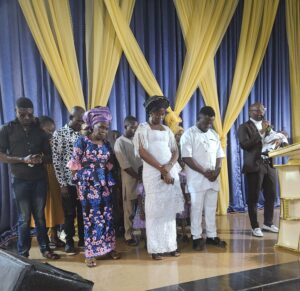
A major highlight of the day’s service was the dedication of Baby Daniel Munachi Osigwe.
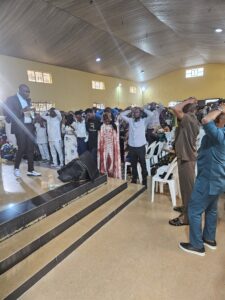
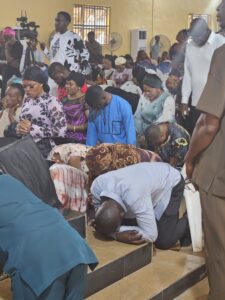
It climaxed with a series of prophetic declarations and prayers as the congregation dispersed with joy and hope for a blessed new week.