
By Amah
Kindly share:
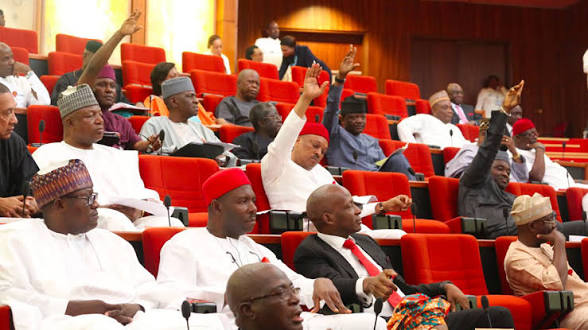
Nigeria’s Senate has dramatically reversed a controversial amendment to its Standing Rules, reopening the contest for key leadership positions in the 11th National Assembly and exposing fresh cracks within the upper legislative chamber.
The reversal, adopted during plenary under the supervision of Deputy Senate President Jubril Barau, following a motion moved by Senate Leader, Opeyemi Bamidele, effectively nullifies restrictions that had limited eligibility for principal offices, such as Senate President, Deputy Senate President, Majority Leader, and other strategic positions to ranking lawmakers.
The now-reversed amendment had stipulated that only senators, who had served two terms, with one being the immediate preceding term, could contest for top Senate offices. Critics had viewed the provision as a calculated political barricade designed to shut out first-time senators and narrow the field for future leadership contests.
With the latest development, the Senate has returned to a broader and more flexible framework that allows both ranking and non-ranking senators to seek principal offices, a move many observers say could significantly reshape power permutations ahead of future National Assembly leadership contests.
The decision followed rising tension within the Senate, climaxing in a procedural clash between Senate President, Godswill Akpabio, and former Edo State governor, Adams Oshiomhole during plenary.
Trouble began when Akpabio commenced reading the Votes and Proceedings from the previous sitting and Oshiomhole raised a point of order. Akpabio immediately ruled him out of order, citing provisions in the 2023 Senate Standing Rules, which prohibit interruptions during that stage of proceedings.
The exchange exposed growing disagreements within the chamber over the interpretation and application of Senate Rules, especially amid speculation about future power alignments and succession battles within the National Assembly.
Political analysts say the reversal may have far-reaching implications for Nigeria’s evolving legislative politics. By reopening eligibility, the Senate has potentially widened the pool of aspirants for future leadership contests, while also weakening attempts to institutionalise exclusivity within the chamber.
The controversy also comes against the backdrop of sustained public criticism of the 10th Senate under Akpabio’s leadership. Many Nigerians have accused the current Senate of operating more as an extension of executive influence than as an independent legislative institution capable of robust oversight and internal democracy.
Observers argue that the sudden reversal of the Standing Orders further underscores the fluid and highly strategic nature of Nigerian legislative politics, where rules are often interpreted through the prism of political convenience and elite calculations.
For now, the reversal has reopened old ambitions, revived stalled calculations, and signals that the battle for influence within the National Assembly is far from over.