
By James
Kindly share:
Tensions are beginning to surface within the African Democratic Congress (ADC) over how the party should select its presidential candidate ahead of the 2027 general elections, following a sharp disagreement over the proposal to adopt a consensus arrangement.
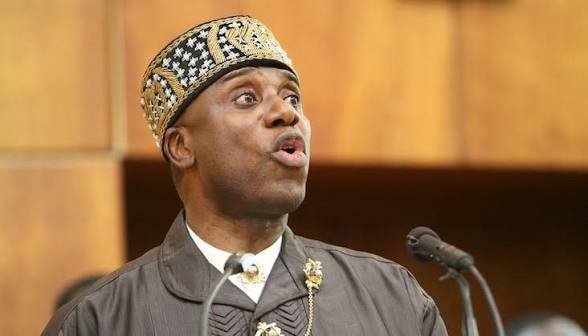
Former Minister of Transportation and ex-Rivers State Governor, Chibuike Amaechi, has openly rejected the idea of a consensus candidate, insisting that the party must conduct a full primary election to ensure fairness, legitimacy, and internal democracy.
The development comes against the backdrop of discussions within opposition circles, including remarks attributed to former Vice President Atiku Abubakar, who reportedly suggested that the ADC could first explore consensus-building as a strategy to unify key stakeholders and reduce internal conflict ahead of the polls.
But speaking during an interview on Channels Television on Friday, Amaechi pushed back strongly against the idea, warning that sidelining members through consensus could undermine party unity and credibility.
“If he wins, I will support him, but I don’t agree with those who say consensus candidate. Let’s go and face the people, let the people choose who they want in the party. There must be a primary election in the ADC,” he said.
Amaechi maintained that only a competitive primary process can produce a truly legitimate candidate who commands the confidence of party members at all levels.
Beyond the internal debate, he also weighed in on broader political considerations such as zoning and power rotation, arguing that such arrangements should not be rigidly imposed across parties. According to him, zoning has largely been a Peoples Democratic Party (PDP) convention and should not be treated as a binding national formula.
“Atiku is eminently qualified to be the president of Nigeria; it is within his right to contest,” Amaechi said, while stressing that competence and capacity should remain the guiding principles in leadership selection.
He further positioned himself within the emerging race, arguing that generational energy and capacity matter in national leadership.
“I’m the youngest candidate among all those running now, I’m 60. The rest of them are in their 70s. This thing requires capacity,” he added.
The disagreement highlights early fault lines within the ADC as the party and its allies begin strategic positioning for 2027, particularly on whether to prioritize consensus politics or open democratic competition.
Analysts say the unfolding debate could shape not only the ADC’s internal cohesion but also its ability to emerge as a credible opposition force in Nigeria’s increasingly competitive political landscape.