
By Amah
Kindly share:
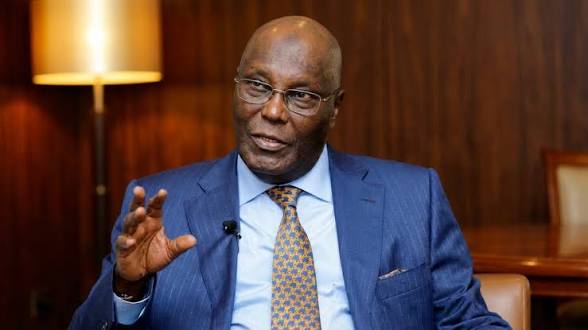
The political temperature ahead of the 2027 general elections continues to rise, as former Vice President Atiku Abubakar’s camp and President Bola Ahmed Tinubu trade sharp accusations over credibility, governance records, and past policy positions.
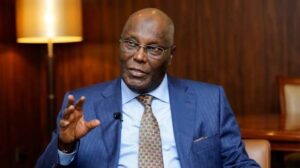
In a strongly worded statement issued through his media aide, Phrank Shaibu, Atiku described President Tinubu’s recent comments about him as a “reckless tirade” driven by desperation and what he called a “pattern of hypocrisy and historical distortion.”
The exchange follows Tinubu’s public criticism of Atiku’s past in government and his economic policy record as Vice President. But Atiku’s camp fired back, arguing that the President’s remarks collapse under scrutiny given long-standing controversies, surrounding his own academic and professional history.
According to the statement, it is ironic that a president who has faced repeated public questions over his credentials would attempt to discredit others with documented public service records.
It referenced long-standing disputes around Tinubu’s academic background, including allegations tied to inconsistencies in claims about his early education and the widely publicised controversy surrounding his Chicago State University records.
The statement also escalated personal attacks, controversially alleging that “it is not our fault that the President cannot read,” while further referencing claims about his educational history in Lagos. These remarks reflect the increasingly combative tone of political communication as elite rivalry intensifies ahead of 2027.
On policy substance, Atiku’s camp pushed back against Tinubu’s criticism of his economic legacy, especially on privatisation. It recalled that Atiku had long advocated the privatisation of the Nigerian National Petroleum Corporation (NNPC) and the sale of state-owned refineries to credible private investors, positions they argue are now being implemented in a different form under the current administration.
However, the statement accused the Tinubu government of executing what it described as “privatisation without accountability,” alleging that reforms in the oil sector lack transparency, clear valuation, and clarity on beneficiaries.
“You cannot oppose reform when it demands courage and then execute a shadow version of it in power,” the statement added.
It further cited former Lagos State governor Nasir el-Rufai’s account in The Accidental Public Servant to argue that earlier privatisation efforts under Atiku were structured, documented, and aimed at efficiency-driven economic reform.
The latest exchange underscores the deepening rivalry between Nigeria’s major political actors as the 2027 race begins to take shape, with issues of credibility, economic reform, and institutional trust increasingly becoming central to the national conversation.