

By Amah Franklyn/ Guest Writer
Kindly share:
There is something almost predictable about elections in Nigeria. Before a single vote is cast, before a single manifesto is printed, the outcome often seems pre-written, not by the will of the people, but by the weight of structure. Structure, in the Nigerian political sense, is not just organisation; it is a living ecosystem of influence, patronage, familiarity, financial muscle and rigging capacity. It is the silent engine that moves campaigns long before slogans are coined.
Yet, as 2027 approaches in Okigwe, a quiet but consequential question is beginning to unsettle that long-standing order: can strategy, driven by ideas and connection, truly confront and possibly overcome entrenched machinery?
Okigwe is not just another political constituency. It is a zone where history, identity, and ambition intersect. Over the years, it has been both a battleground and a bargaining chip in Imo State’s wider political equation. The major parties, All Progressives Congress, APC, and Peoples Democratic Party, PDP, have, through cycles of elections, built formidable networks across its towns and communities. These networks are not accidental; they are cultivated through years of relationships, negotiations, and the careful distribution of political benefits. They know the ward leaders by name, the influencers by habit, and the voters by pattern.
In this traditional arrangement, elections are less about persuasion and more about activation. The machinery is already in place; the task is simply to switch it on. On election day, the structure mobilises transportation, coordinates agents, secures loyalties, and ensures turnout where it matters most, and most likely, lets loose their army of ballot box snatchers and buyers. It is efficient, practiced, and often decisive. Money flows through it like fuel through an engine, powering every stage of the process. Within such a system, ideas are often ornamental, nice to have, but rarely decisive.
But beneath this apparent stability, something has been shifting. It is subtle, almost imperceptible at first, but increasingly undeniable. The voter is changing. Not entirely, not uniformly, but enough to matter. Economic hardship has sharpened public awareness. Disappointment with governance has eroded blind loyalty. The rise of digital communication has opened new channels of influence, allowing voices to bypass traditional gatekeepers. In this evolving environment, the old assumptions are beginning to crack.
Into this shifting terrain steps the African Democratic Congress, and even the newly formed Nigeria Democratic Congress, NDC, not as a dominant force, but as a disruptive possibility. Unlike the established parties, it does not carry the weight of decades-old structures. It does not command the same financial reservoirs. It cannot rely on inherited loyalty. What it possesses instead is something less tangible but potentially potent: the freedom to think differently.
Where structure depends on control, strategy depends on understanding. Where machinery relies on repetition, strategy thrives on adaptation. Where the older parties trust in rigging and underhand dealings to emerge yet again, strategy hopes in convincing the people not to sell their future for paltry immediate gains.
The emerging approach within ADC or NDC circles is not to replicate the old model, but to bypass it, to engage voters not as passive recipients of inducement, but as active participants in a shared vision. This is a slower, more demanding path. It requires listening before speaking, connecting before convincing, and building trust without immediate returns. The party is eager and willingly doing just that.
The contrast is stark. On one side stands the familiar architecture of power, reinforced by years of dominance and sustained by resources. On the other stands a more fluid, less certain approach that leans heavily on message, credibility, and grassroots resonance. It is not a fair fight, at least, not in the conventional sense. Structure has the advantage of certainty; strategy operates in the realm of possibility.
Yet, history, both within and beyond Nigeria, suggests that moments of disruption often arise when certainty becomes complacency. The danger for entrenched systems is not their strength, but their tendency to assume permanence. When a structure becomes too confident in its own inevitability, it risks overlooking the quiet changes happening beneath it. It begins to mistake familiarity for loyalty, and routine for relevance.
In Okigwe, this risk is becoming more pronounced. The electorate is no longer as predictable as it once was. Young voters, in particular, are less tied to traditional affiliations. Their expectations are shaped less by past loyalties and more by present realities. They are more exposed, more expressive, and, at times, more impatient. They are not immune to the influence of money, but they are not entirely defined by it either. They represent a variable that structure alone may struggle to fully control.
This is where strategy finds its opening. Not in overpowering the existing system, but in exploiting its blind spots. A well-crafted message, consistently delivered and authentically lived, can begin to chip away at established perceptions. Community-level engagement is being sustained sincerely,and therefore gradually building alternative networks of influence. Digital platforms are also being effectively utilised to amplify voices that would otherwise remain unheard. None of these elements guarantees victory, but together, they create momentum.
Still, momentum is not enough. The greatest challenge for any strategy-driven campaign is conversion, turning interest into commitment, and commitment into votes. Inspiration must translate into organisation. Ideas must be anchored on structure, even if a lighter, more flexible one. Without this, strategy risks becoming noise, visible, exciting, but ultimately ineffective at the decisive moment.
For the dominant parties, the challenge is different but equally significant. They must prove that structure is not synonymous with stagnation. That their machinery can still respond to changing realities. That their access to resources can be matched with responsiveness to the needs of the people. So far, they have failed to do this. Consequently, their greatest strength has become their greatest vulnerability.
What makes the Okigwe 2027 contest particularly compelling is that it is not merely a competition between parties, but between philosophies. It is a test of whether politics in the region will continue to be defined by imposition and accumulation, of power, of resources, of influence; or whether it can evolve toward engagement, of ideas, of people, of purpose. It is a question of whether the voter remains a unit to be mobilised casually, using the traditional miserable stipend, or becomes a voice to be persuaded.
The answer will not come easily. It will emerge gradually, through conversations in homes and markets, through choices made in quiet moments, through decisions that may not always align with expectation. It will be shaped by both visible campaigns and invisible sentiments. And when it finally reveals itself, it may not be absolute. Structure may still prevail but, perhaps, not as overwhelmingly as before. Strategy may not win outright, but it may leave a mark too significant to ignore.
In the end, the true significance of Okigwe 2027 may lie not in who wins, but in what changes. If ideas can force structure to adapt, then a new balance begins to form. Unfortunately, they are unlikely to because leopards do not easily change their spots. If strategy can carve out space within a system long dominated by machinery, then the rules of engagement begin to shift. They are doing this forcefully and upsetting the old order, making them unnecessarily allergic to criticism. The fear is that if voters, even in small numbers, begin to choose based on conviction rather than convenience, then the foundations of the political order begin, however slowly, to transform.
So, the question lingers, not as a rhetorical flourish but as a genuine uncertainty: can ideas defeat money and machinery? Perhaps, the more honest answer is that they do not need to defeat them outright to matter. Sometimes, it is enough that they challenge them, enough to make the inevitable uncertain, and the predictable contestable. In that tension, democracy finds its most authentic expression.
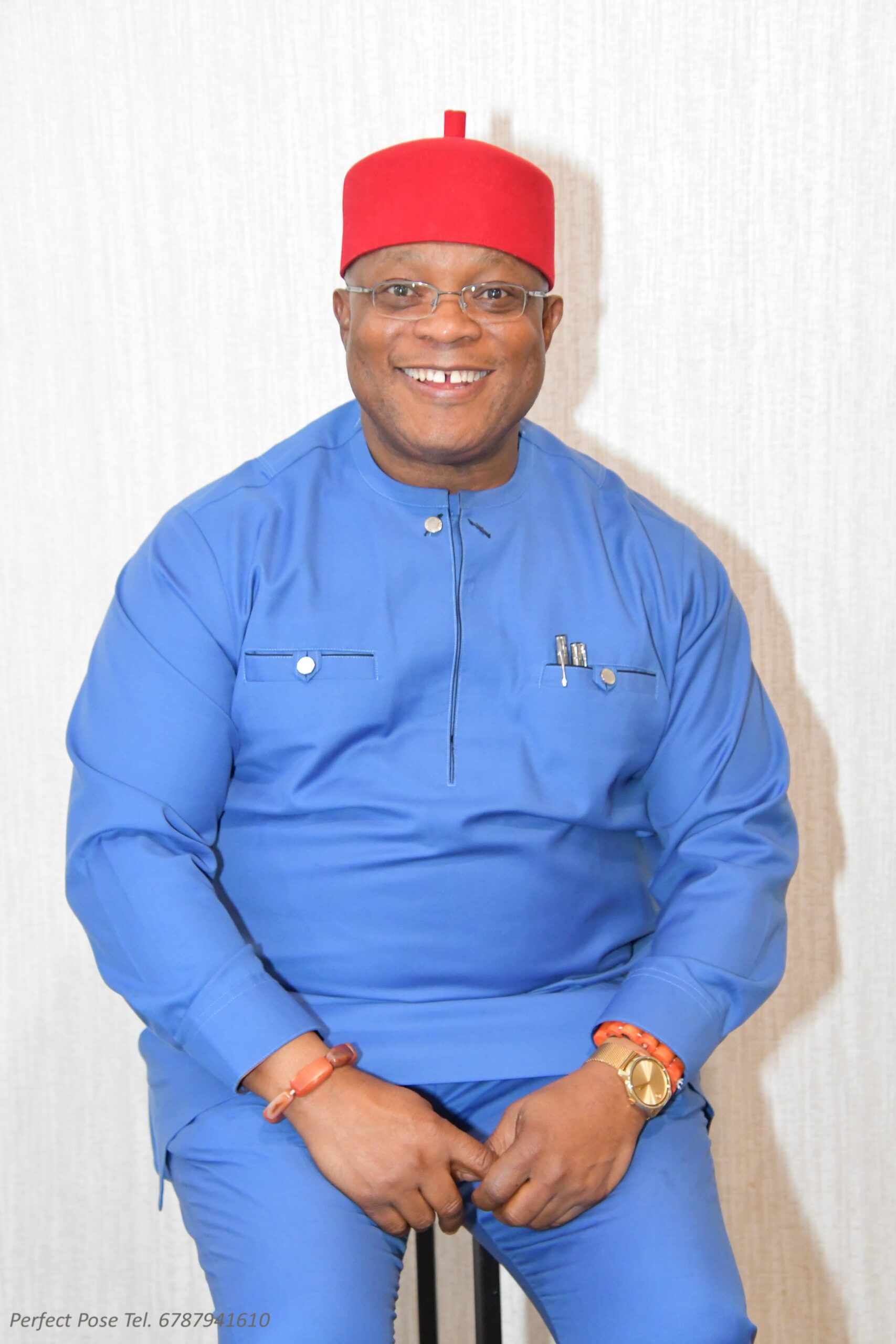
In a political climate long dominated by party machinery and recycled promises, Attorney Charles Onyirimba is steadily carving out the image of a genuine change agent whose message is no longer echoing in isolation but resonating deeply with the grassroots. His campaign, built less on noise and more on clarity of purpose, is striking a chord with constituents who are increasingly disillusioned with traditional party dominance and are now prioritising competence, credibility, and connection.
What began as a quiet, idea-driven movement is fast evolving into a formidable force, with his prospects of emerging into the Red Chamber next year looking remarkably bright.
More significantly, this shifting momentum signals a broader electoral awakening, one where party labels may carry less weight, and voters are more inclined than ever to rally behind a man they perceive to possess the capacity, courage, and conviction to truly represent their interests, regardless of political affiliation.
Amah Franklyn is a policy and public affairs analyst