
By James
Kindly share:
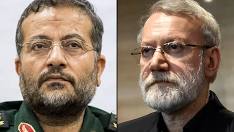
A fresh wave of tension has gripped the already volatile Middle East following a dramatic claim by Israel that one of Iran’s most powerful security figures, Ali Larijani, has been killed in a targeted operation.
According to a report by Al Jazeera, Israeli Defence Minister, Israel Katz, announced on Tuesday that Larijani, who served as secretary of Iran’s Supreme National Security Council, was “eliminated” in an overnight operation.
Katz, in a sharply worded statement, framed the development as part of a broader campaign against Iran’s leadership, declaring that Israel would persist in dismantling what he described as a network of terror and repression. He added that Israeli forces had been directed to continue targeting key figures within the Iranian establishment in a bid to weaken its operational capacity.
The claim, if confirmed, marks a significant escalation in the shadow war between Israel and Iran, two regional rivals long locked in a battle of covert operations, proxy conflicts, and strategic strikes across the Middle East.
An Israeli military official, speaking during a media briefing, described Larijani as a central figure in Iran’s power structure, alleging that he had effectively become the country’s “de facto leader”, following the reported death of Supreme Leader Ali Khamenei. The official further accused him of directing military and proxy operations against Israel and allied Gulf states.
The military says that Larijani “served as the de facto leader of the Iranian terror regime,” following the killing of the late supreme leader Ali Khamenei.
“For years, Larijani was considered one of the most senior and veteran figures in the leadership of the Iranian terror regime and was close to the regime’s leader, Ali Khamenei,” the IDF says.
It says that after Khamenei’s killing in the opening strikes of the war on February 28, “Larijani established his position as the de facto leader of the Iranian terror regime and led the fighting against the State of Israel and countries in the region.”
“As part of his role, Larijani led the political-security coordination of the Iranian terror regime and was involved in directing its international activity,” the statement continues.
According to the briefing, the alleged killing represents a “significant blow” to Iran’s command structure and its ability to project power both externally and domestically.
Despite the gravity of Israel’s claims, Iranian authorities have yet to officially confirm Larijani’s death. In a move that has deepened uncertainty, Iran’s state-affiliated Tasnim News Agency released what it described as a handwritten note from Larijani, dated March 17, mourning fallen naval personnel.
The note, circulated via Telegram, has raised questions about the accuracy of Israel’s announcement, with analysts suggesting it could either indicate that Larijani is still alive or reflect a delayed or strategic communication from Tehran.
A seasoned political heavyweight, Larijani has long stood at the crossroads of Iran’s security and political architecture. As secretary of the Supreme National Security Council, he played a pivotal role in shaping Iran’s defence posture, foreign policy strategies, and internal security operations.
Known for his close ties to Ali Khamenei, Larijani was widely regarded as one of the most influential civilian figures in Iran’s ruling establishment, often acting as a bridge between the country’s clerical leadership and its security apparatus.
The conflicting narratives emerging from Tel Aviv and Tehran underscore the fragile and opaque nature of the ongoing confrontation between the two nations. With neither side offering verifiable evidence and the stakes continuing to rise, the situation remains fluid, and potentially explosive.
As the world watches, the question lingers: Is this a decisive strike that alters the balance of power, or another chapter in a long-running war fought as much through information as through firepower?