

By James
Kindly share:
As Nigerians debate the reliability of electronic voting, former INEC Chairman, Mahmood Yakubu, has assured the public that the Bimodal Voter Accreditation System (BVAS) operates fully offline, meaning voter accreditation on election day is unaffected by poor Internet coverage.
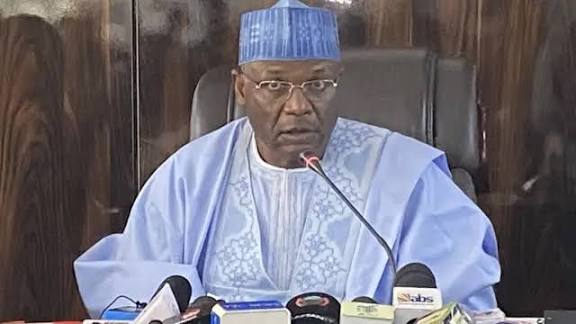
In a video that circulated online, Yakubu addressed widespread concerns over network failures, which have in past elections slowed result uploads and fueled disputes. He stressed that BVAS is designed to register voters without any connection to the internet.
“The machine on election day does not require internet for upload; it works offline,” Yakubu said.
Network connectivity becomes relevant only after voting ends, when polling officials transmit results electronically. The process involves scanning the polling unit result sheet via BVAS, which is then uploaded once officials reach areas with reliable network coverage.
“Transmission of results requires network. But if there is no coverage nearby, the scanned image of the polling unit result is sent as soon as staff move to a collation centre,” he explained.
Yakubu also revealed that INEC is working with telecom companies to address coverage gaps in known network “blind spots,” aiming to ensure smooth electronic result transmission.
The clarification comes amid intensified debate over the credibility of electronic results in Nigeria. BVAS, introduced to strengthen transparency, combines biometric voter verification with electronic uploads to the INEC Result Viewing Portal (IREV). Yet past elections have shown that weak networks in remote areas can delay uploads, sometimes escalating into court battles and political disputes.
This debate has gained urgency following recent amendments to the Electoral Act. The National Assembly revised Section 60, mandating electronic result uploads immediately after voting. However, the law also prioritises manual result sheets (Form EC8A) if electronic transmission fails, creating a backup for network-challenged areas.
Civil society groups and opposition figures have criticised the amendment, warning that defaulting to manual results could weaken transparency. Former presidential candidate Omoyele Sowore, joining protesters under the #OccupyNASS banner, accused lawmakers of creating loopholes for manipulation.
“They know why they are doing it. These people cannot win in free and fair elections. The people must demand processes that guarantee legal and transparent elections,” Sowore said.
Yakubu’s comments, however, focus on reassuring voters that the act of casting a ballot remains secure. BVAS ensures that voter accreditation at polling units proceeds smoothly, leaving only the transmission of results dependent on network availability.
As Nigeria prepares for upcoming elections, the challenge is clear: technology secures the vote, but effective oversight and robust transmission protocols will determine whether results reach collation centres transparently, or remain mired in network uncertainty and political controversy.