

By Bose
Kindly share:
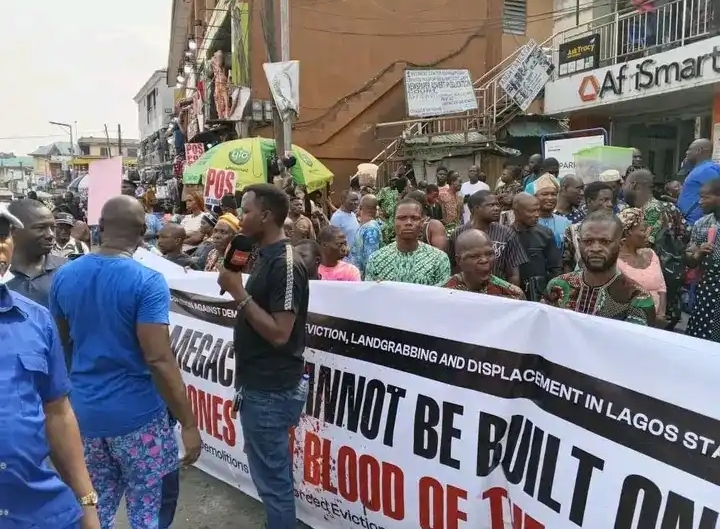
Hundreds of residents and community leaders on Wednesday, took to the streets under the Ikeja under-bridge , staging a powerful protest against demolitions and forced evictions in Lagos’ waterfront and low-income communities.
The neighbourhoods affected include Makoko, Owode Onirin, and Oworonshoki.
Armed with banners, placards, and photographs of destroyed homes, the demonstrators drew the attention of commuters along one of Lagos’ busiest routes to what they described as “inhuman” treatment of the poor.
Messages on their signs sent a direct warning to the government: “Stop Forced Evictions Now,” “Makoko Lives Matter,” “Urban Renewal, Not Urban Removal,” and “Housing Is a Human Right.”
Other placards asked: “Where Do You Want the Poor to Go?” and “Lagos Is for All, Not the Rich Alone.”
Chanting slogans like “No Justice, No Peace” and “Consult the People,” protesters highlighted the human cost of the demolitions, particularly on children and the elderly. Some carried images of families forced to sleep in canoes, under bridges, or in open spaces after losing their homes overnight.
Speaking to journalists, one of the protesters explained that the affected communities had existed for decades.
He contended that the government should upgrade and integrate them into proper urban planning instead of demolishing them, adding that destroying homes without compensation is illegal and cruel.
The protesters accused the Lagos State Government of ignoring court orders, restraining forced evictions in waterfront communities, claiming that demolitions continue despite legal interventions.
Vowing to sustain the protests, the demonstrators called for an immediate halt to demolitions, provision of relief materials, compensation for affected families, and humane resettlement policies.
As the city grapples with rapid urban development, residents warn that continued evictions without proper planning risk deepening social inequalities and displacing the most vulnerable, leaving them literally out on the streets.