

By Publisher
Kindly share:
What began as whispers on social media has now crystallised into one of the gravest internal security scares of President Bola Tinubu’s administration: a foiled military plot allegedly driven by personal grievance, quietly nurtured across service lines, and neutralised just weeks before its planned execution.
The aborted plot, uncovered ahead of October 25, 2025, was initially dismissed by the Defence Headquarters (DHQ) when rumours first surfaced online. Yet the abrupt cancellation of Nigeria’s Independence Day parade at the time hinted at unease within the security establishment. Subsequent investigations now suggest those early denials masked a far deeper and more dangerous reality.
At the centre of the plot, investigators say, was a serving Army Colonel whose stalled career became the seed of a wider conspiracy. Repeated failures in promotion examinations reportedly bred frustration and alienation, emotions that were later weaponised to recruit officers across the Army, Navy and Air Force. What emerged was not a rigid command structure, but a shadowy, cross-service network bound by disaffection and secrecy.
According to intelligence reports, the group graduated from complaints and private discussions into deliberate reconnaissance. Members were allegedly tasked with discreetly studying strategic installations, including the Presidential Villa, the Armed Forces Complex, Niger Barracks, and key international airports in Abuja and Lagos. Their brief was to observe routines, map access routes and identify security vulnerabilities.
Security operatives say tangible evidence soon followed. Searches conducted on the lead suspect’s vehicle allegedly uncovered charms and subversive materials, while a raid on his Abuja residence yielded documents assigning operational roles and outlining plans for the handling of senior national figures once the plot was activated.
Investigators further allege that insider access was exploited to breach sensitive spaces. Workers linked to construction firm Julius Berger at the Presidential Villa were reportedly compromised to obtain security information. Encrypted messaging platforms allegedly served as the backbone of communication, coordinating logistics, funding and movements. Unusual cash transfers, discreet vehicle repairs and unexplained financial activity pointed to preparations for mobilisation.
Financial intelligence units have since traced inducements ranging from ₦2 million to ₦5 million paid to key actors. The money trail, now under scrutiny by the Nigerian Financial Intelligence Unit, is expected to shed light on both internal financiers and external collaborators.
A major breakthrough came when one suspect, Lt-Col. S. Bappah, reportedly turned state witness. His confession is said to have provided investigators with crucial insight into recruitment strategies, communication patterns and funding channels, accelerating the unravelling of the network.
Perhaps, most alarming to security officials was the breadth of the alleged conspiracy. The network reportedly cut across all three services and included officers as senior as Brigadier-General. The planned operation was described in intelligence briefings as “lethal in scope,” with President Tinubu, Vice-President Kashim Shettima, service chiefs, ministers and other top officials allegedly listed as targets.
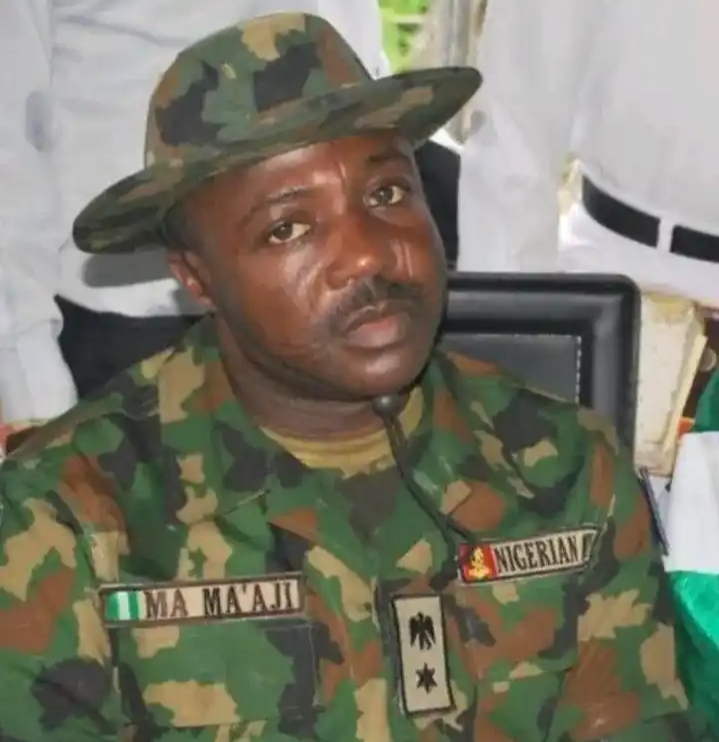
Investigators have since identified Colonel Mohammed Ma’aji as the principal suspect. A graduate of the Nigerian Defence Academy’s Regular Course 47, Ma’aji was born in 1976 to Nupe parents in Niger State. Over a long military career, he occupied sensitive command and advisory roles, including serving as security adviser to former Bayelsa State governor Timipre Sylva during the 2015 elections, commanding the 19 Battalion in Okitipupa, Ondo State, and later overseeing operations in Koko, Delta State.
The confirmation of his alleged role has triggered renewed scrutiny of internal controls within the armed forces. Security analysts argue that while the military’s institutional integrity remains vital, the case exposes the risks posed by unresolved grievances, insider access and weak internal monitoring.
With the military investigation now concluded and reports forwarded to higher authorities, the Defence Headquarters has confirmed that all indicted personnel will face military judicial panels. Meanwhile, the probe has expanded beyond the barracks to examine civilian financiers and political contacts who may have interfaced with the suspects.
For Nigeria’s security establishment, the message is stark: the threat did not come from outside the gates, but from within. And it was only narrowly stopped before planning could harden into action.