



By Anthony Iwuoma
Kindly share:
Politics, especially as elections approach, is rarely as simple as it appears on the surface. Behind every public endorsement lies a calculation; behind every alliance is a question of interest, loyalty and political consequence.
That is why the decision by women leaders and members associated with the African Democratic Congress (ADC) in Okigwe Zone to support the senatorial aspiration of Attorney Charles Onyirimba has generated more than ordinary political interest.
At one level, it is being celebrated as another sign of a political hurricane gathering force across Okigwe. At another, it has raised an important question: when members of a political party rally behind a candidate seeking election on a different platform, where does personal political choice end and anti-party activity begin?
That question deserves consideration, particularly because political parties are built on structures, loyalty and collective interests. Yet the circumstances surrounding the latest development also make the issue more nuanced.
The women who expressed support for Onyirimba did not present their decision as an abandonment of ADC. Rather, they said they had examined the contenders for the Imo North senatorial seat and arrived at their preferred choice based on what they believe the zone needs from its next representative.
Crucially, their position comes in a situation where, according to the campaign, there is no ADC senatorial candidate competing for the seat.
That distinction is central to understanding the development.
The women are not being presented as defecting from ADC to join another political party. Neither are they announcing that ADC, as a political organisation, has endorsed Onyirimba.
What they are doing, by their own account, is expressing support for a senatorial candidate they believe possesses the capacity to represent Okigwe effectively.
That, however, does not entirely remove the political sensitivity.
Politics is ultimately about representation, and voters are not merely extensions of party machinery. Where a party does not field a candidate in a particular contest, individual members may naturally consider the available choices and decide whom they believe best represents their interests.
The women appear to be making precisely that argument.
Their position is that the 2027 senatorial contest should not be reduced to party labels, political structures or election-season inducements. They want voters to consider competence, character, capacity and the ability to deliver meaningful representation.
“We have looked at the contenders and we have made our choice. We believe Charles Onyirimba has what it takes to give Okigwe Zone the representation it deserves,” one of the women leaders said.
It is a statement that shifts the discussion from party identity to performance.
For the women, the question is not simply who occupies the senatorial seat, but what the occupant does with it.
They argue that Okigwe can no longer afford a senator whose principal achievement is merely being present in Abuja. The zone, in their view, requires a representative capable of understanding legislation, influencing policy, advocating strategically, attracting development opportunities and articulating the concerns of constituents effectively.
It is on that basis that Onyirimba has emerged as their choice.
His supporters point to his background as a lawyer, international exposure, experience in public affairs and longstanding engagement with communities as evidence of the capacity they believe is required for the job.
The political significance of the women’s declaration, however, goes beyond the endorsement of an individual.
Organised women constitute an important political constituency in any election. Their influence extends through families, communities, social organisations, professional networks and grassroots relationships. A declaration of support by women with established contacts across the six local government areas of Okigwe Zone therefore has obvious political value.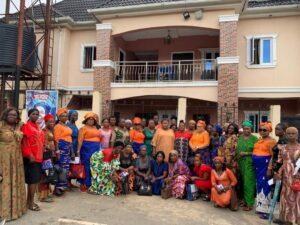
That is why the Onyirimba camp sees the development as another gust in what it has increasingly described as a political hurricane while it has unsettled his opponents.
The campaign’s Director-General, Mrs. Favour Nwelue, described the women’s support as a significant boost, arguing that the Onyirimba project was steadily developing from an individual aspiration into a wider political movement.
According to Nwelue, women, youths, professionals, community organisations and other political interests are increasingly being drawn towards the campaign by a shared demand for more effective representation.
For now, the women say they are prepared to do more than simply announce their preference.
They have pledged to take the Onyirimba message into communities and households, using their networks to persuade voters to examine the qualities of the candidates and the kind of representation they want from the Senate.
That promise is potentially more consequential than the headline itself.
The women are acting as private individuals or as a group of ADC-affiliated members exercising their political preference in a race where their party has no candidate. Describing their action automatically as anti-party activity may be too sweeping.
The situation becomes more complicated if they are purporting to speak officially for ADC, using the authority or resources of the party’s organisational structure, or presenting their endorsement as an official decision of the ADC women’s wing without the approval of the competent party leadership.
That distinction matters.
There is a considerable difference between saying, “We are ADC women and we personally support Onyirimba,” and saying, “The ADC Women’s Wing has officially endorsed Onyirimba.”
The first is a political expression by individuals or a group of members. The second could be interpreted as an organisational decision of the party.
The language used in reporting the event is therefore important, not merely for journalistic accuracy but also for protecting the political actors involved from an avoidable controversy.
That is why the development is better understood as ADC-affiliated women backing Onyirimba, rather than ADC backing Onyirimba.
The distinction may appear semantic, but in politics it can become decisive.
Beyond the controversy, however, lies a larger issue that the women themselves have placed before Okigwe voters.
What should determine the choice of a senator?
Should it be party loyalty? Should it be the strength of political structures?
Should it be financial inducement? Or should voters primarily examine the character, competence and capacity of the person seeking to represent them?
The last option should be the defining question of the election. The Senate should not be treated as an honorary destination for politicians. A senator has legislative responsibilities and an important role in policy, oversight, advocacy and constituency representation.
From this perspective, the value of a senator should ultimately be measured by impact.
Can the representative articulate the needs of the district? Can he engage government institutions effectively? Can he understand complex legislation? Can he build relationships that attract opportunities to the constituency? Can he remain accessible to the people after the election?
And, perhaps most importantly, can he turn the enormous political capital of a senatorial mandate into tangible benefits for the people?
These are legitimate questions irrespective of party affiliation.
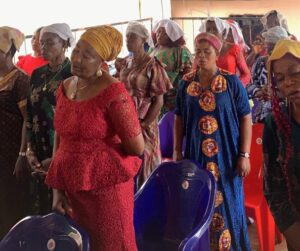
During the meeting in Ehime Mbano, Onyirimba joined the gathering by telephone from the United States and thanked the women for the confidence they had placed in him.
He assured them that he appreciated the significance of their decision and would not betray their trust or disappoint them if allowed to serve.
The moment was symbolic.
A candidate thousands of miles away speaking directly to grassroots political actors in Okigwe; women declaring that they had examined the field and chosen their preferred candidate; and a campaign interpreting the development as evidence that its message is moving beyond conventional political boundaries. This is unlike those within the Nigerian space that find it difficult to engage with the constituents.
Something is clearly happening in the political calculations surrounding the 2027 Imo North contest. Individuals and groups are beginning to reassess old loyalties, examine the candidates and ask what they want from the next senator.

The ADC-affiliated women’s decision is one manifestation of that process.
For the Onyirimba camp, it represents another gust in a political hurricane that it believes is sweeping across Okigwe, crossing traditional boundaries and creating unexpected alliances.
For those concerned about anti-party activity, however, the development is a reminder that political enthusiasm must operate within the boundaries of party rules and organisational authority. Both perspectives can coexist.
The women can legitimately explain why they prefer Onyirimba, while ADC leadership retains the right to determine whether their conduct complies with the party’s rules. That is the more balanced way to view the development.
Ultimately, the 2027 election will be decided by voters. And when those voters eventually enter the polling booth, the question before them will be much larger than party labels. They will have to decide who they believe can best represent Okigwe Zone, who possesses the capacity to make the senatorial seat count, and who can transform the mandate into meaningful representation.
For now, the political winds are undoubtedly shifting at a rate they would eventually become a hurricane strong enough to alter the political landscape of Okigwe Zone.
Anthony Iwuoma is a political analyst. He wrote from Owerri