
By Amah
Kindly share:
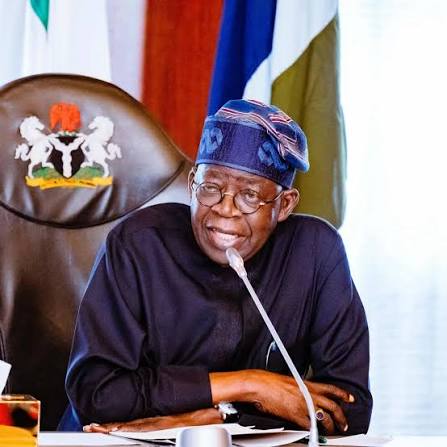
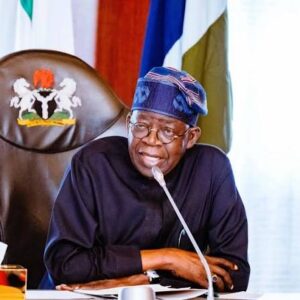
President Bola Tinubu’s political machinery for the 2027 presidential election has suffered an unexpected early setback, with reports that the President has ordered the withdrawal and review of the newly released APC Presidential Campaign Council list, following an uproar over the omission of several influential party figures.
The development has thrown the ruling All Progressives Congress (APC) campaign preparations into fresh controversy, raising questions about internal consultation, political balance and the extent to which key stakeholders were involved in drawing up the structure that is expected to lead Tinubu into the 2027 presidential contest.
The initial list, released on Saturday, was expected to signal the beginning of a coordinated campaign to secure Tinubu’s re-election. Instead, it quickly became the subject of intense discussion within the party after several heavyweight APC politicians and experienced campaign operatives were found missing.
Among those whose names did not appear were Deputy Speaker of the House of Representatives Benjamin Kalu, Minister of Aviation and Aerospace Development Festus Keyamo, former Plateau State Governor Simon Lalong, National Security Adviser Nuhu Ribadu, former Kogi State Governor Yahaya Bello, former Ogun governors Gbenga Daniel and Ibikunle Amosun, former Edo governorship candidate Osagie Ize-Iyamu, and Edo State Governor Monday Okpebholo.
The omissions were particularly striking because several of these politicians played important roles in the APC’s previous presidential campaign or occupy influential positions within the party and government.
According to reports, Tinubu subsequently directed the Presidency, the leadership of the National Assembly and the APC National Working Committee to withdraw and review the initial composition before a revised list is released.
The reported decision followed concerns from senior party members that the council did not sufficiently reflect the APC’s political hierarchy, geographical spread and network of influential stakeholders.
One source quoted in reports claimed that the President was surprised that there had been limited input from some of the party’s experienced political actors before the list was finalised.
That revelation, if accurate, exposes a potentially significant weakness in the early organisation of Tinubu’s 2027 campaign.
A presidential campaign council is not merely a ceremonial collection of politicians. It is supposed to function as the political engine room of a presidential election, bringing together governors, legislators, former office holders, party leaders, grassroots organisers, media strategists, regional power brokers, youth mobilisers and other influential actors capable of delivering votes.
Consequently, who appears on the list, and who does not, can carry considerable political meaning.
The initial council was headed by former Zamfara State Governor and Senator Abdul’aziz Yari as Director-General. Tinubu was named chairman, while Vice President Kashim Shettima and APC National Chairman Nentawe Yilwatda were listed as vice chairmen. Imo State Governor Hope Uzodimma was named secretary.
The structure was reportedly designed to be leaner than the APC’s 2023 presidential campaign council, containing 223 names compared with 422 members in the previous structure.
A smaller campaign council could ordinarily be interpreted as an attempt to create a more efficient and focused organisation.
But efficiency in political organisation must compete with another reality: political inclusion.
That became obvious with the omission of Benjamin Kalu.
As Deputy Speaker of the House of Representatives and one of the APC’s most prominent political figures from the South-East, Kalu’s absence immediately attracted attention.
The controversy became more complicated because the initial arrangement included other senior National Assembly leaders. Senate President Godswill Akpabio was named Deputy Director-General for the Southern campaign, alongside Speaker Tajudeen Abbas and Yobe State Governor Mai Mala Buni, while Senate Leader Opeyemi Bamidele and Deputy Senate President Jibril Barau were assigned other coordinating responsibilities.
Reports indicate that some party stakeholders questioned whether the arrangement adequately reflected the constitutional and political hierarchy of the National Assembly.
The issue was therefore not simply about giving Kalu a position.
It was about whether the structure communicated the right political message to a major geopolitical zone and whether the hierarchy of the country’s legislative leadership had been properly considered.
For the APC, the South-east dimension is particularly delicate. The ruling party will need to demonstrate political reach across all regions if it hopes to strengthen its national coalition ahead of 2027. The visibility of influential South-east politicians within the campaign structure can therefore have significance beyond the individual politicians involved.
Then came the omission of Festus Keyamo, SAN.
Keyamo was one of the most recognisable public voices of the APC’s 2023 presidential campaign. As a prominent spokesman and Director of Public Affairs during that election, he was at the forefront of defending Tinubu and countering opposition attacks. His absence from the initial 2027 structure was therefore difficult to ignore.
So was that of Simon Lalong, the former Plateau State governor who served as Director-General of the APC Presidential Campaign Council during the 2023 election.
The omission of a former campaign director-general from the new presidential campaign structure naturally raises questions about how much the Tinubu camp intends to rely on the personnel and organisational experience of the previous campaign.
Nuhu Ribadu, who served as Director of Stakeholders Relations in the 2023 structure and is now National Security Adviser, was also reportedly absent.
Yahaya Bello, who played a prominent youth mobilisation role during the previous presidential campaign, was another notable omission.
Other prominent names reported to be missing included former Ogun governors Gbenga Daniel and Ibikunle Amosun, as well as former Edo governorship candidate, Osagie Ize-Iyamu.
The reported omission of Edo State Governor Monday Okpebholo also attracted attention. Okpebholo has emerged as an important APC political figure in the South-south, following his victory in the Edo governorship election and has been involved in mobilisation efforts for Tinubu.
Taken together, the omissions created the impression that some of the party’s important political networks had not been adequately represented.
That impression appears to have been strong enough to force a rethink.
However, it is important to distinguish between the withdrawal of the initial list for review and the collapse of the entire campaign structure.
Reports indicate that Tinubu ordered the list to be reviewed and reconstituted. There has been no indication that the President has withdrawn Yari’s appointment as Director-General.
In other words, the campaign is not necessarily falling apart. Rather, the President appears to have hit the reset button before the political machinery becomes fully operational.
And that may ultimately be a sensible decision.
The 2027 presidential election is already shaping up as a major political contest. Tinubu will not only have to defend his record in office; he will have to manage a complex coalition of governors, legislators, party leaders, former political office holders and regional interests.
The APC will also have to confront opposition efforts to build alternative political alliances and convert dissatisfaction with government policies into electoral support.
Against that background, an internally controversial campaign council is hardly the ideal starting point.
The controversy has also exposed one of the enduring realities of Nigerian politics: political structures cannot be built entirely from the top down.
Presidential authority may determine the ultimate direction of a campaign, but elections are won through thousands of relationships at the state, local government, ward and polling-unit levels.
Leaving too many of major political actors outside the tent can create resentment long before the opposition has fired its first major political shot.
For Tinubu, therefore, the reported withdrawal of the APC 2027 campaign council list could become either an embarrassing episode or a valuable correction.
If the revised structure genuinely reflects wider consultation, political experience, regional balance and the strength of the party’s various networks, the controversy may soon be forgotten. But if the exercise merely produces another list without addressing the underlying concerns about consultation and inclusion, the problem could return in a more damaging form.
The larger lesson is already clear. A presidential campaign council is not just a list of names. It is a statement about who matters, who is trusted and who is expected to carry the political burden of victory.
And by withdrawing the first list, Tinubu appears to have acknowledged that, at least, for the moment, his 2027 campaign machine was not sending the message his party needed to hear.
The reset button has been pressed.
What the APC produces next may reveal far more about the political strategy behind Tinubu’s 2027 re-election campaign than the original list ever could.