

By James
kindly share:
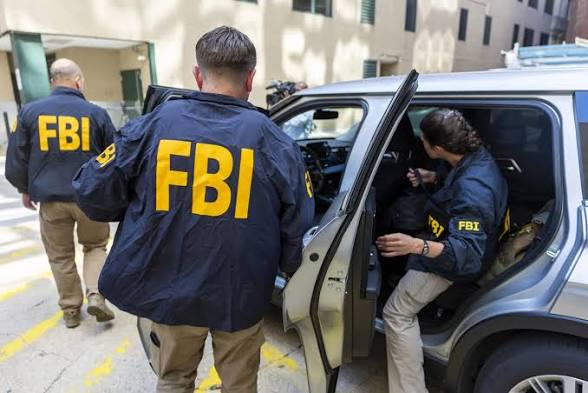
The United States Federal Bureau of Investigation (FBI) has asked a federal court in Washington, DC, for permission to keep parts of records linked to a decades-old investigation involving President Bola Ahmed Tinubu away from public view, arguing that full disclosure could reveal sensitive investigative techniques and potentially endanger individuals.
The latest development has added a new twist to a Freedom of Information Act (FOIA) lawsuit that has kept Tinubu’s historical US records in the spotlight for more than three years. The case centres on efforts by American transparency activist and PlainSite founder Aaron Greenspan to obtain government records concerning Tinubu and others allegedly connected to a drug-trafficking and money-laundering investigation dating to the early 1990s.
In a motion filed on August 20, the FBI asked the US District Court for the District of Columbia to allow it to submit additional explanations privately to Judge Beryl Howell. The bureau wants to make an ex parte, in camera submission, meaning the judge would examine the material privately rather than having it placed in the public court record.
The FBI says it cannot fully explain in public why some of the information should remain undisclosed without potentially revealing the very law-enforcement information it is trying to protect. It has invoked several FOIA exemptions, including provisions relating to personal privacy, confidential sources, investigative techniques and information that could reasonably be expected to endanger someone’s life or physical safety.
The agency specifically says it needs to provide a fuller confidential justification for its reliance on FOIA Exemptions 7(E) and 7(F). If the court grants the request, the FBI says it plans to submit the confidential declaration by August 28.
The case dates back to 2022 and 2023, when Greenspan filed a series of FOIA requests with several US federal agencies. According to the case record, the requests sought information concerning Tinubu and Abiodun Agbele, as well as records associated with a broader investigation. The lawsuit, filed in June 2023, named the FBI, Drug Enforcement Administration (DEA), CIA, IRS, Department of State and Executive Office for US Attorneys among the defendants.
Among the records sought are an FBI file relating to Tinubu and FBI Form 302 interview records associated with a case from 1992 and 1993. Form 302 documents are interview reports prepared by FBI agents after questioning witnesses or subjects.
The dispute became particularly significant because several US agencies initially used what is known as a “Glomar response”—a legal position under which an agency neither confirms nor denies the existence of requested records.
Greenspan challenged those responses in court. In a major ruling on April 8, 2025, Judge Howell found that the FBI and DEA had not adequately justified their refusal to acknowledge whether records concerning Tinubu and Agbele existed. Her ruling dealt with Greenspan’s FOIA claims concerning alleged federal investigations into the two men.
That ruling did not amount to a finding that Tinubu committed drug trafficking. Rather, it addressed whether US government agencies had met their legal obligations under the Freedom of Information Act when responding to Greenspan’s requests.
The controversy surrounding the records is rooted in events from Tinubu’s years in the United States before he became a prominent Nigerian politician. In 1993, a US federal court in Chicago entered a forfeiture order involving $460,000 held in a bank account in Tinubu’s name. The court record stated that the funds were deemed forfeitable because they represented proceeds of narcotics trafficking or were involved in financial transactions that violated specified US laws. The matter was resolved through a forfeiture proceeding rather than a criminal conviction against Tinubu for drug trafficking.
That distinction remains important. The existence of the forfeiture order and the FBI investigation records has fueled political controversy in Nigeria for years, but the current FOIA litigation is about access to government records, not a new criminal prosecution or a judicial determination that Tinubu committed a drug-trafficking offence.
Tinubu has consistently denied wrongdoing associated with the allegations. His lawyers have also become involved in the FOIA litigation, reflecting the political sensitivity of the records, particularly as Nigeria approaches the 2027 general elections.
The latest court battle has also acquired a political dimension. The FBI’s August 20 filing was publicised on X by Von Batten-Montague-York, a Washington-based lobbying firm recently retained by former Vice-President Atiku Abubakar, an African Democratic Congress (ADC) presidential candidate for 2027. The firm has been closely following developments in the case and has publicly criticised delays surrounding the release of the records.
Separately, Tinubu recently joined the US Department of Justice’s request for additional time to respond to a court order in the case. The Justice Department had sought a 10-day extension, but Judge Howell reportedly granted only four additional days, setting August 21 as the new deadline.
The timing has intensified political interest in the dispute because any additional disclosure could potentially become a major issue in Nigeria’s 2027 presidential contest. However, it remains important to distinguish between allegations, historical investigative records and established judicial findings.
For now, the FBI is not asking the court to declare that the records never existed. Instead, it is asking for permission to privately explain why some information should remain protected even as the broader FOIA litigation continues.
The judge’s decision on the FBI’s request could, therefore, determine whether the bureau must provide more of the disputed material to the public or whether significant portions can remain sealed under FOIA’s law-enforcement and safety exemptions.
Until the court rules and the underlying records are made public, claims about what the unreleased FBI material contains remain unverified. What is established is that the records are the subject of an active federal court dispute and that the FBI is seeking judicial permission to keep some of the information confidential.