
By Amah
Kindly share:
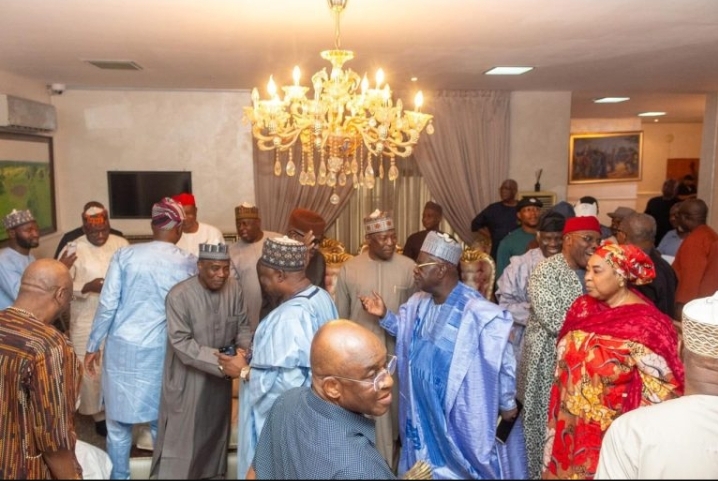
Fresh details have emerged from a strategic meeting in Abuja between a faction of the Peoples Democratic Party (PDP) and the African Democratic Congress (ADC), in what observers see as a significant step toward a possible opposition coalition ahead of Nigeria’s 2027 general elections.
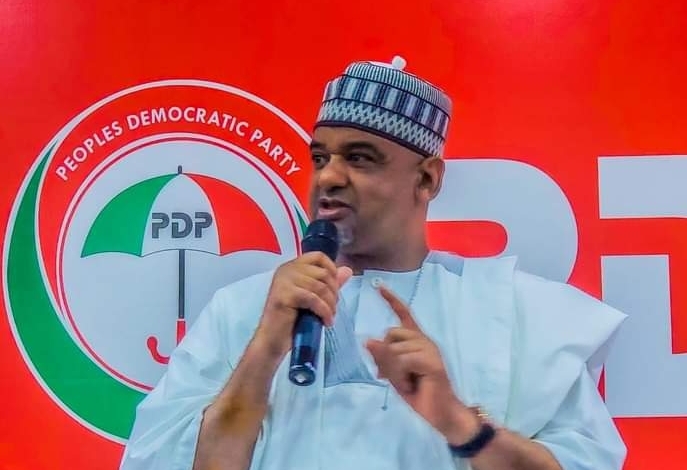
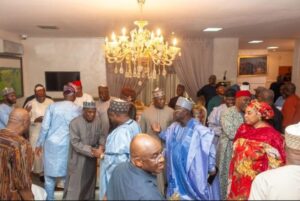
The delegation, led by the PDP factional chairman, Kabiru Tanimu Turaki, and Governor Seyi Makinde of Oyo State, paid a solidarity visit to the ADC leadership under former Senate President David Mark.
The meeting, held midweek in Abuja, brought together an array of influential political figures across party lines, fueling speculation of an emerging opposition alliance.
Among those in the PDP delegation were Adolphus Wabara, Jerry Gana, Babangida Aliyu, Taofeek Arapaja, Inna Ciroma, Ishaya Bamayi, and Fred Agbedi.
They were received by a powerful ADC lineup that included Atiku Abubakar, Rabiu Musa Kwankwaso, Aminu Waziri Tambuwal, Peter Obi, Rauf Aregbesola, Rotimi Amaechi, and Liyel Imoke, among others.
The meeting comes against the backdrop of deepening internal crises within the PDP and growing challenges facing smaller opposition platforms like the ADC.
In recent months, factional disputes, leadership tussles, and defections have weakened the PDP’s cohesion, while the ADC has grappled with regulatory and political pressures, including controversies surrounding its recognition status.
These developments have triggered renewed conversations about the need for a united opposition front capable of challenging the dominance of the ruling party in 2027.
Political analysts note that Nigeria’s opposition has historically struggled with fragmentation, often entering elections divided, an outcome that has repeatedly favoured incumbents. The Abuja meeting signals a possible shift toward consolidation.
According to a statement issued by the PDP faction’s spokesperson, Ini Ememobong, the visit was aimed at strengthening solidarity and fostering cooperation in the face of what both parties described as “mounting pressure” on opposition forces.
The PDP delegation reportedly highlighted concerns over actions capable of undermining democratic principles, warning that sustained pressure on opposition parties could weaken political plurality in Nigeria.
In response, the ADC leadership echoed similar concerns, describing the situation as an “existential threat” to democratic institutions. They stressed that the erosion of strong opposition voices could tilt the political landscape toward one-party dominance.
While no formal merger or alliance was announced, both sides affirmed their commitment to continued engagement and collaboration. Insiders say the meeting could be a precursor to broader coalition talks, involving multiple political actors across ideological divides.
The presence of heavyweight figures, such as Atiku Abubakar, Peter Obi, and Rabiu Kwankwaso, key players in Nigeria’s recent electoral contests, has further heightened interest in the unfolding political realignments.
With Nigeria’s next general elections still some distance away, the Abuja meeting underscores one reality: the battle for 2027 may well be decided long before ballots are cast, through alliances, strategy, and the ability of opposition forces to overcome internal divisions.
As political maneuvering intensifies, Nigerians will be watching closely to see whether these talks evolve into a formidable coalition, or dissolve into yet another chapter of missed opposition unity.