
By Bose
Kindly share:
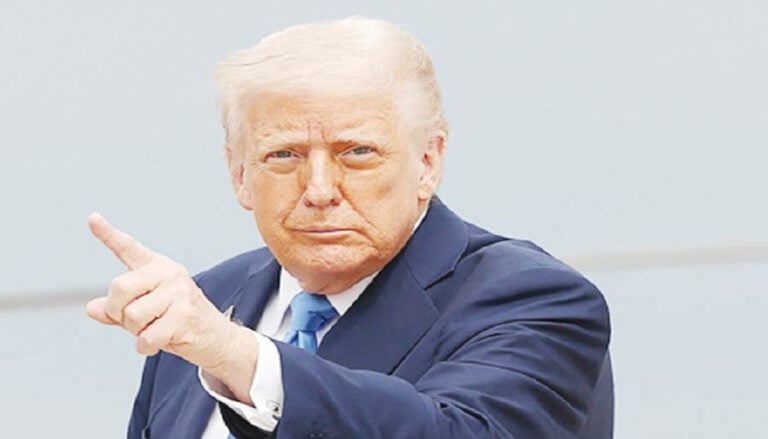
United States President Donald J. Trump has stirred global attention after announcing what he described as a “productive regime change” in Iran, outlining an ambitious post-transition roadmap that he says could redefine power dynamics across the Middle East.
In a series of statements, Trump suggested that Washington is already positioning itself to work closely with a restructured Iranian leadership on critical issues including nuclear disarmament, sanctions relief, and regional security. Central to his proposal is a strict commitment that Iran would halt uranium enrichment entirely, marking a significant departure from years of nuclear tension between both nations.
Trump further disclosed that U.S. forces could play a direct role in dismantling Iran’s nuclear infrastructure, particularly deeply fortified sites allegedly monitored by the United States Space Force. According to him, this would form part of a broader effort to neutralise proliferation risks while stabilising the region.
On the economic front, the former president hinted at ongoing negotiations involving tariff adjustments and phased sanctions relief. Though he referenced a multi-point framework guiding the talks, specific details remain undisclosed. He, however, maintained that progress had already been made on several fronts.
Framing the development as a potential turning point in global diplomacy, Trump described the situation as a “big day for world peace,” expressing optimism that Iran is prepared to pivot from decades of hostility toward cooperation. He also indicated that the United States could assist in securing vital international shipping lanes, particularly the Strait of Hormuz, through which a significant portion of the world’s oil supply flows.
Beyond security and diplomacy, Trump projected a broader reconstruction agenda, suggesting that the U.S. would support Iran’s recovery by supplying essential goods and maintaining a stabilising presence during the transition period. He argued that such efforts could unlock unprecedented economic growth across the region, ushering in what he termed a “Golden Age of the Middle East.”
Iran and the United States have endured decades of strained relations, rooted in ideological divides, sanctions regimes, and disputes over Tehran’s nuclear ambitions. Past agreements, including the 2015 nuclear deal, sought to curb Iran’s enrichment activities in exchange for sanctions relief, but tensions have persisted amid shifting political leadership and policy reversals.
As of now, there has been no independent confirmation from Iranian officials or international monitoring bodies regarding the claimed regime change or the existence of any formal agreement with Washington.
Analysts caution that if verified, such a development would represent one of the most consequential geopolitical shifts in recent history, reshaping alliances, energy markets, and global security architecture.
Until then, Trump’s claims remain a subject of intense scrutiny, with the world watching closely for verification or rebuttal from Tehran and the broader international community.