


By James
Kindly share:
A fresh crack has emerged within Nigeria’s ruling All Progressives Congress (APC) in Enugu State, as former senatorial candidate for Enugu North, Ambassador Ejike Eze, formally exits the party, citing poor leadership coordination, systemic injustice and deep-rooted marginalisation.
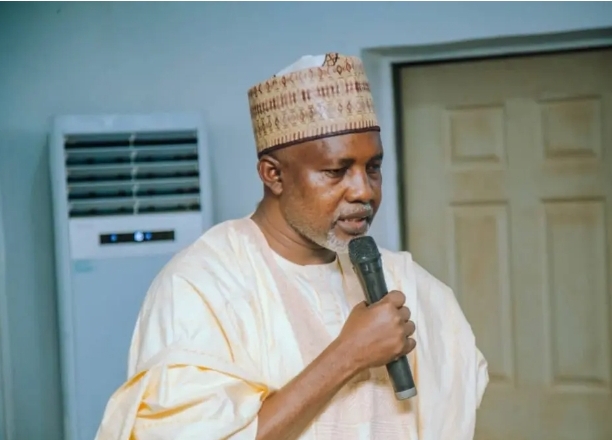
Eze, a seasoned diplomat who previously served under Olusegun Obasanjo as Senior Special Assistant on Protocols and Security, made his position known while addressing journalists in Enugu on Wednesday. His defection adds to growing concerns over internal cohesion within the APC in the South-East, particularly ahead of the 2027 general elections.
According to him, his decision followed months of dissatisfaction with what he described as the party’s failure to uphold fairness, equity, and inclusiveness in its internal structure and reward system. He lamented that despite his financial and political investments in the party, he received no recognition or meaningful engagement from its leadership.
Eze further alleged that the political dynamics within the Enugu APC changed drastically following the entry of Peter Mbah, claiming that newer entrants from opposition ranks took control of party structures, sidelining long-standing members who had laboured to build the party.
In his words, the takeover of party leadership positions at ward, local government, and state levels by defectors undermined loyalty and eroded trust within the party. He described the development as a betrayal of foundational members and a dangerous precedent for internal democracy.
The former APC stalwart also raised concerns about the marginalisation of Enugu North Senatorial District, arguing that despite its population strength, the zone continues to be politically short-changed in the allocation of positions and resources. He pointed to the controversial handling of the Deputy National Chairman (South) position as a clear example of what he termed “injustice against the people.”
Beyond structural grievances, Eze decried what he described as a breakdown in communication between party leaders and grassroots stakeholders. He revealed that repeated attempts to reach key government officials, including the governor’s office, proved unsuccessful, raising questions about accessibility and accountability in governance.
“If someone of my experience and national service cannot access leaders, what hope is there for ordinary citizens?” he queried, warning that such disconnect could have electoral consequences for the party in the region.
In a resignation letter dated March 30, 2026, addressed to his ward in Igbo-Eze South Local Government Area, Eze described recent developments within the party as “undemocratic and unacceptable,” stressing that his political future would be guided by principles rooted in justice, dignity, and the welfare of his people.
He affirmed that his ambition to represent Enugu North at the National Assembly remains intact, hinting that he is already in talks with other political platforms and would soon declare his next move.
Looking ahead to the 2027 elections, Eze issued a strong warning against electoral malpractice and the imposition of candidates, insisting that the people of Nsukka and the wider Enugu North must be allowed to freely choose their representatives.
He declared that the era of political imposition and exclusion is over, adding that stakeholders across the district, traditional, religious, and political, must play a decisive role in shaping their collective future.
His exit underscores a broader narrative of discontent within the APC in the South-east, raising critical questions about party unity, leadership style, and electoral prospects in a region where it continues to struggle for dominance.