

By Amah
Kindly share:
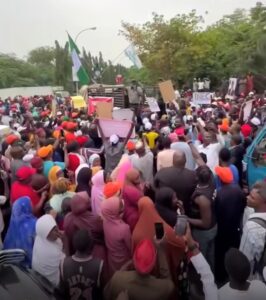
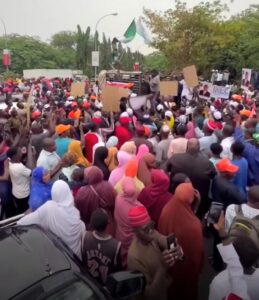
Tension gripped Nigeria’s capital on Wednesday as protesters flooded the headquarters of the Independent National Electoral Commission (INEC) in Abuja, demanding sweeping reforms in the country’s electoral system under the banner of the fast-growing “Save Democracy” movement.
The demonstration, which drew a diverse crowd of political supporters, civil society actors, and youth groups, reflects mounting public frustration over electoral transparency, governance accountability, and the perceived erosion of democratic ideals in Nigeria.
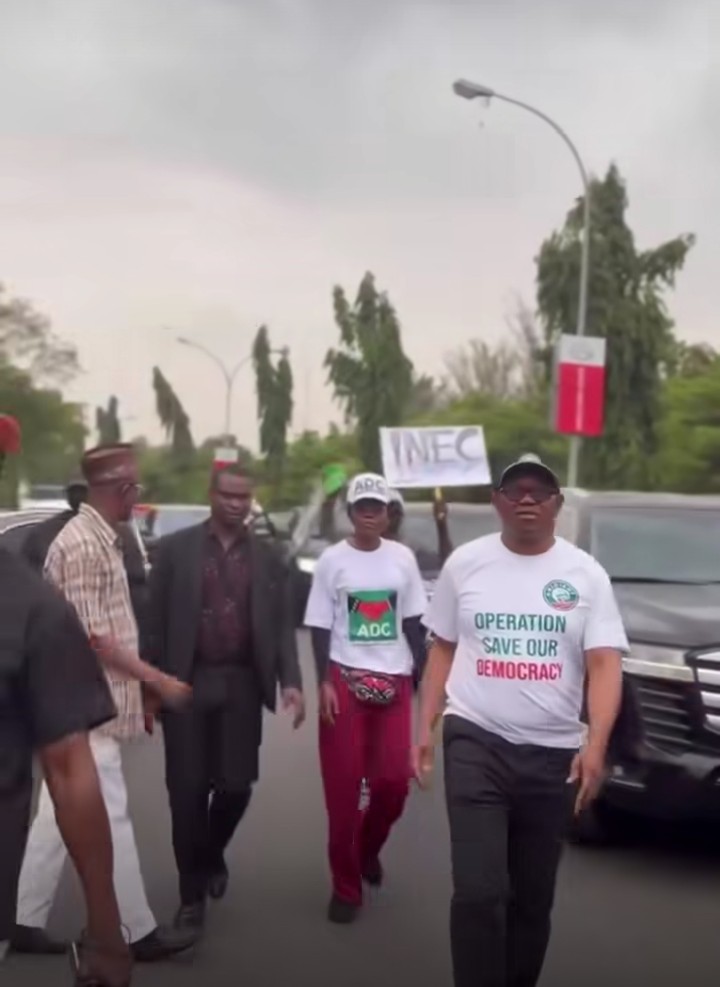
Eyewitness footage circulating online showed hundreds of demonstrators clad in branded “Operation Save Our Democracy” T-shirts, with others donning the symbolic red-and-white caps associated with the Kwankwasiyya political movement. Protesters wielded placards bearing inscriptions calling for electoral justice, institutional independence, and leadership accountability.
At the forefront of the march was former Labour Party presidential candidate Peter Obi, whose presence electrified the crowd and underscored the political weight behind the protest. Obi, widely regarded as a central figure in Nigeria’s opposition movement, has consistently called for reforms to strengthen democratic institutions and restore public trust in the electoral process.
Chants of “We no go gree!” echoed through the streets, as demonstrators voiced resistance against what they described as systemic failures within the electoral body. Some protesters went further, demanding the resignation of the INEC leadership, intensifying the pressure on the commission at a time when confidence in electoral governance remains fragile.
In a parallel mobilisation, notable opposition figures including Atiku Abubakar, Rabiu Musa Kwankwaso, and David Mark were seen preparing to lead another wave of demonstrators from the Maitama Roundabout, further amplifying the scale and coordination of the protest across the Federal Capital Territory.
The protest did not emerge in isolation. It is rooted in lingering controversies surrounding recent electoral cycles, disputes over vote collation processes, and allegations of institutional bias, issues that have continued to polarise public opinion since the 2023 general elections. Calls for electoral reform have since gained traction, particularly among young voters and opposition supporters who feel disenfranchised.
Analysts note that the convergence of high-profile political actors with grassroots activism signals a potentially defining moment for Nigeria’s democracy. The optics of unity among opposition leaders, often divided by ideology and ambition, suggest a strategic alignment driven by shared concerns over the integrity of the electoral system.
Security presence around the INEC headquarters was visibly heightened, although the protest remained largely peaceful, marked more by passionate expression than confrontation. Authorities are yet to issue an official statement addressing the demonstrators’ demands.
As Nigeria edges closer to another electoral cycle, the unfolding events in Abuja raise critical questions about institutional trust, electoral credibility, and the resilience of democratic structures. Whether the protest will translate into concrete reforms or fade into the long history of civic agitation remains uncertain, but its message is unmistakable: a growing segment of Nigerians is no longer willing to stay silent.