


By James
Kindly share:
In every election cycle, a familiar pattern repeats itself: politicians abandon their parties and flood into bigger platforms, persuaded that size guarantees victory. Some move out of fear, others out of ambition, and many through subtle or overt inducement. They assume that political structure, ruling influence, and proximity to power will automatically translate into electoral success. But that assumption is fast becoming outdated, and dangerously so.
A quiet but powerful transformation has taken place among the people. Years of economic hardship, broken promises, and sustained political neglect have produced a new kind of voter, one who is more aware, more discerning, and less tolerant of deception. The electorate is no longer easily swayed by party labels or intimidated by political might. The suffering of the past years has sharpened their judgment, and the disappointments they have endured have deepened their resolve.
The question has changed. It is no longer, “Which party is in power?” but “Who has the capacity to deliver?” This shift is profound. It means that political defection without credibility is nothing more than empty movement. It means that crossing into a bigger party without substance is cosmetic at best and self-deceptive at worst. It means that the old formula, where size, structure, and state access dictated outcomes, is steadily losing its grip.
Those who are now rushing into larger parties, believing they have secured automatic victory, may soon face a harsh and unexpected reality. The people are watching more closely than ever before. They are remembering past absences, recalling past indifference, and measuring present enthusiasm against historical performance. Emergency philanthropy optics don’t sway them. Noise no longer impresses them. Visibility no longer deceives them. Alignment no longer guarantees their loyalty.
There is a dangerous illusion making the rounds, that proximity to power, or access to Douglas House, somehow confers legitimacy or guarantees electoral victory. Nothing could be further from the truth. The soul of representation does not reside in government buildings or elite corridors; it lives in the will of the people. This could be name-dropping though, calculated to deceive the people.
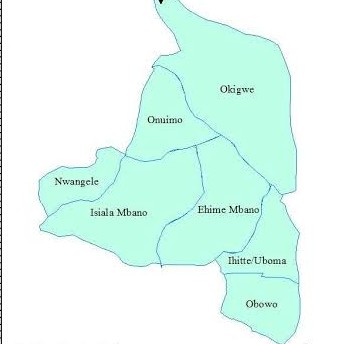
It is the men and women of Okigwe Zone, hardened by years of neglect and sharpened by experience, who alone possess the sovereign authority to choose who speaks for them. No outsider, no matter how highly placed or politically entrenched, can successfully impose a candidate on a people who have learned, the hard way, the cost of borrowed choices.
That experiment has been tried before, and the bitter consequences still linger in the collective memory of the zone, a painful ordeal that has only deepened the resolve of the people. Never again will Okigwe outsource its destiny or mortgage its voice on the altar of political convenience. This time, the decision will be organic, deliberate, and fiercely defended.
The electorate is searching for something deeper and more enduring: capacity. They are looking for competence; the ability to understand and navigate complex governance challenges. They want character: integrity, consistency, and moral steadiness in the face of pressure. They value courage: the willingness to stand for the people even when it is inconvenient. They seek connection, a genuine understanding of their struggles and aspirations. They demand commitment, a verifiable record of service and sacrifice. And above all, they expect clarity of vision, a practical, actionable roadmap for progress, not empty rhetoric.
By these standards, the recent defectors may find themselves politically exposed. Their new affiliations may give them visibility, but not credibility. Their access may give them confidence, but not acceptance. Because when the ballot meets awareness, illusion collapses.
Okigwe stands at the centre of this awakening. The zone has endured too much to continue recycling politicians who merely change parties without changing performance. The people are no longer interested in party supremacy or political intimidation. They are tired of access without impact, promises without delivery, and representation without results. What they now seek is leadership that is credible, accountable, and effective.
It is within this changing landscape that certain individuals begin to stand apart, not because of the parties they belong to, but because of the substance they bring. One such figure is Attorney Charles Onyirimba.
His growing relevance is not built on opportunistic alignment, but on capacity, clarity, and consistency. At a time when many are scrambling for advantage within larger parties, he represents a different path, one that prioritises competence over convenience and substance over structure. His professional grounding, understanding of governance issues, and engagement with the concerns of the people position him as a candidate aligned with the demands of this new, more discerning electorate. One hopes he yields to the desire of the people and join the race for the rescue of Okigwe Zone from the vise grips of political buccaneers.
The long-held belief that only big parties can produce results is fading. In its place is a new and more powerful conviction: that the right individual, even on a smaller platform, can deliver far more than the wrong individual backed by overwhelming political machinery. This is the reality many defectors have failed to grasp.
They are playing by yesterday’s rules in a rapidly changing game.
And that is why disappointment looms.
Because this time, the people are not impressed by movement; they are interested in meaning. They are not dazzled by alignment; they are searching for authenticity. They are not persuaded by access; they are demanding accountability.
If this awakening holds, and all signs suggest that it will, then the coming election will be more than a contest of parties. It will be a referendum on capacity. It will be a rejection of empty political migration. It will be a declaration that Okigwe can no longer be swayed by size without substance .
Those who defected in search of easy victory may find themselves stranded. But those who have prepared with competence, integrity, and vision will find resonance with a people determined, at last, to vote wisely.
In the end, it will not be the biggest party that wins the day; it will be the candidate who best reflects the will, the needs, and the future of the people, because they will vote capacity wherever it is found, across party lines.
James is a political analyst. He wrote from Owerri, Imo State.