
By Amah
Kindly share:
Obi admits ADC ticket not guaranteed amid shifting political alliances
As Nigeria inches toward the 2027 general elections, the political atmosphere is already thick with intrigue, shifting loyalties, and quiet recalibrations.
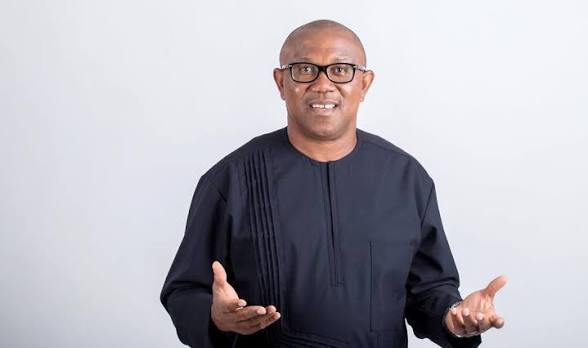
In the midst of this evolving landscape, former presidential candidate, Peter Obi, has offered a candid reflection that captures both his personal political uncertainty and the broader instability within Nigeria’s opposition movement.
Following his widely discussed outing under the Labour Party in the 2023 elections, Obi emerged as a formidable voice in Nigeria’s opposition politics, galvanising a youthful base and reshaping electoral conversations around competence, accountability, and reform.
However, as conversations shift toward 2027, Obi’s political future appears less defined. Speaking in a recent video message, he acknowledged that his chances of clinching the presidential ticket of the African Democratic Congress remain uncertain.
“I cannot be certain,” Obi admitted, responding to questions about whether the ADC would hand him its presidential flag.
Rather than projecting entitlement, his remarks suggest a politician aware of the fragile and often transactional nature of party politics in Nigeria.
Obi was quick to shift the focus away from personal ambition to collective purpose. For him, the central issue is not the ticket, but the mission.
“What matters is that we are committed to a cause.”
This framing underscores a recurring theme in his political messaging: that leadership should be anchored on vision, not merely platform. Yet, it also raises a critical question, gcan a “cause-driven” movement survive Nigeria’s deeply entrenched political structures without a stable platform?
Obi did not romanticise the struggle. He openly acknowledged the cost of being outside the corridors of power in Nigeria, a space where influence, resources, and immediate rewards are often limited.
He praised his supporters for their endurance:
“It’s not easy to be in the opposition in Nigeria… I’m thankful to those who keep supporting even when there’s no clear reward.”
This statement reflects a harsh political reality: opposition politics in Nigeria is not just an ideological battle; it is a test of patience, loyalty, and long-term belief in systemic change.
Perhaps the most striking part of Obi’s message was his skepticism about political alliances. In a system where defections are frequent and loyalties fluid, he raised a concern many observers quietly share:
“How can we be certain that the people we’re working with right now won’t leave us behind tomorrow?”
It is a question that cuts to the heart of Nigeria’s political instability. Coalitions are often built for convenience rather than conviction, making long-term collaboration uncertain at best.
Despite the uncertainties, Obi reaffirmed his commitment to his broader goals. He noted that threats and pressures have not deterred him, a reminder of the personal and political risks that come with challenging entrenched systems.
Yet, his tone was markedly reflective, less triumphant, more contemplative.
Obi’s remarks are more than a personal update; they are a window into the evolving dynamics of Nigeria’s opposition politics. As 2027 approaches, several questions remain unresolved:
Will a unified opposition emerge, or will fragmentation persist?
Can ideology overcome political opportunism?
And ultimately, will figures like Obi find a stable platform strong enough to translate momentum into victory?
For now, one thing is clear: the journey to 2027 has begun, not with certainty, but with questions.