
By Bose
Kindly share:
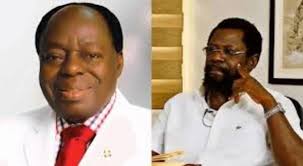
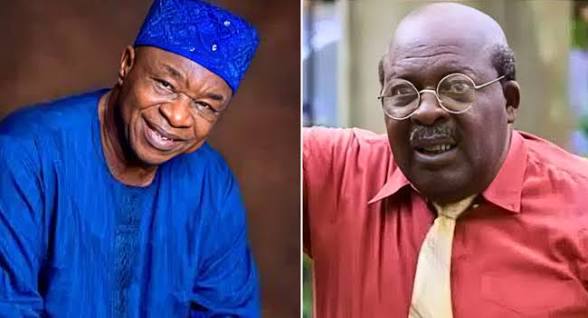
A simmering storm has broken over one of Nigeria’s most beloved television legacies, as veteran producer Wale Adenuga forcefully pushed back against claims of financial distress made by Abiodun Ayoyinka, the man synonymous with the iconic character in Papa Ajasco and Company.
For years, Ayoyinka’s portrayal of Papa Ajasco, complete with his signature bald head and exaggerated misfortunes, brought laughter into millions of Nigerian homes. But behind the humour, a recent interview painted a different picture: one of struggle, sparking shock and sympathy across social media.
The question quickly followed: How does a face so famous become a story of hardship?
Breaking his silence, Adenuga rejected any narrative of neglect, describing the claims as a distortion of reality and an unfair assault on a brand that has endured for decades.
Rather than outrage, his tone carried a mix of disbelief and subtle irony.
“It appears his strategy of leveraging social media attention has paid off,” Adenuga noted, hinting that the controversy itself may be part of a calculated move.
He was quick to stress that there has been no breakdown in their relationship, portraying Ayoyinka as a trusted collaborator who remains closely connected to him and the production.
In a detailed defence, Adenuga peeled back layers of their professional history. He revealed that Ayoyinka was not solely dependent on acting, having built a long career as a civil servant with the Lagos State Government, one that spanned over three decades before his recent retirement.
According to Adenuga, this dual career meant:
The production team often had to obtain official clearance before using him on set
Acting commitments were periodic, not full-time
He also listed what he described as tangible support extended over the years, vehicles, access to multiple cars (including a Mercedes-Benz), and what he believes to be property ownership in Ogun State.
On the contentious issue of brand restrictions, Adenuga clarified that the Papa Ajasco identity is protected for commercial integrity, not to stifle the actors.
He maintained that:
Cast members are free to take on external jobs
Only formal approval is required when using the brand commercially
To reinforce his point, he cited other cast members, Pa James, Mama Ajasco, Boy Alinco, Miss Pepeiye, Akpan, and Oduma, who continue to thrive beyond the show.
Perhaps, the most striking part of Adenuga’s response was the question he posed directly:
If not from the show, what happened to decades of earnings, salaries, and retirement benefits?
It is a question that shifts the conversation from corporate responsibility to personal financial management, an uncomfortable but necessary pivot.
Beyond the personalities involved, this episode exposes a deeper tension within Nigeria’s entertainment ecosystem: the fragile line between fame and financial security.
Papa Ajasco and Company remains a cultural monument, but the controversy surrounding one of its most recognisable faces now forces a broader reckoning.
In an industry built on visibility, the real currency may not be applause, but what remains when the laughter fades.