


By Amah
Kindly share
In Nigeria’s endlessly entertaining theatre of politics, there is a familiar script that plays out whenever a public official walks into a tough interview and walks out with bruises. First comes the interview. Then comes the public reaction. Then comes the nationwide laughter. And finally, almost on cue, comes the inevitable declaration: “The interview was doctored.”
Enter Daniel Bwala, who now insists that his controversial appearance on Al Jazeera was somehow manipulated to portray him unfairly. According to this emerging genre of political storytelling, the problem was not the answers he gave, but the scissors of the editor. Somewhere in the editing room, it seems, invisible hands allegedly rearranged reality.
One almost wants to admire the creativity.
For decades Nigerians have been told that election results were “doctored.” Now interviews have apparently joined the casualty list. Lose an argument? It was doctored. Contradict yourself on camera? Doctored again. Forget your own past statements? Most certainly doctored. In the Nigerian political dictionary, the word has become a universal cure for embarrassment.
But the most fascinating part of Bwala’s defence is his explanation that he made those controversial statements because he belonged to the opposition at the time. That defence deserves a moment of quiet reflection, if only to appreciate the audacity.
Opposition politics, we are now told, apparently comes with a special licence: to exaggerate, distort, fabricate, and conveniently forget facts when power changes hands. One wonders when this amendment was inserted into the constitution of democratic conduct.
In any healthy democracy, the opposition plays a critical and noble role. Its job is to challenge bad policies, question authority, and provide alternative ideas. The opposition exists to hold government accountable, not to manufacture fiction. If the opposition’s function were simply to invent accusations for political convenience, then democracy itself would collapse into a marketplace of lies.
So, the claim that those earlier statements were merely the rhetoric of opposition politics is not a defence; it is an admission of something far worse.
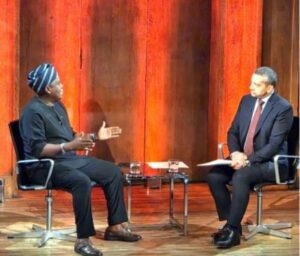
The interviewer, Mehdi Hasan, did not need a doctorate in editing technology to expose this contradiction. All he needed was the oldest tool in journalism: evidence. Out came the past statements: clear, documented, and inconvenient. Suddenly the conversation stopped sounding like a political discussion and began to resemble a courtroom cross-examination.
And that is where the trouble began.
Nigerian political communication has long flourished in a carefully managed ecosystem where interviews function less like interrogations and more like ceremonial praise sessions. Questions are gentle. Answers are rehearsed. Everyone smiles for the camera and goes home satisfied.
International journalism operates differently.
On global platforms, the past has a stubborn habit of appearing without invitation. Statements are archived. Videos are replayed. Tweets refuse to disappear. The result is that politicians accustomed to friendly domestic studios suddenly discover that the outside world operates on a different set of rules.
And when the collision happens, the first casualty is often credibility.
The “doctored interview” defence is particularly amusing because it assumes that editors possess supernatural powers. Somewhere in the editing suite of Al Jazeera, we are asked to believe that technicians were able to insert confusion where clarity existed, manufacture contradictions that were never spoken, and transform brilliant arguments into awkward silences.
If that technology truly exists, Nollywood should immediately hire the entire newsroom.
Editing can shorten a conversation. It can remove pauses. It can trim wandering sentences. But it cannot invent answers that a guest never gave. A camera may crop a frame, but it cannot crop credibility.
The irony is that this controversy is unfolding at a time when the Nigerian government itself is struggling under the weight of embarrassing administrative blunders that no editor could possibly manufacture.
Consider the recent confusion surrounding federal appointments. Nigerians woke up one morning to discover that the list of appointees included individuals who had long since departed this world. Yes, dead people, it appeared, had been offered positions in the living government of the Federal Republic.
One almost expects the next announcement to include historical figures from the nineteenth century.
If such an episode had appeared in a political satire, critics would have dismissed it as exaggerated fiction. Yet it happened in reality, revealing a troubling level of carelessness in the management of public appointments.
Then came another diplomatic embarrassment: the avoidable controversy surrounding the nomination of Nigeria’s ambassadors. Instead of a smooth confirmation process befitting Africa’s largest country, the exercise descended into confusion, delays, and public embarrassment. Names were proposed, objections surfaced, and the entire process became a spectacle that suggested inadequate vetting before the nominations were announced.
Diplomacy is supposed to project national dignity. What Nigerians witnessed instead looked suspiciously like administrative improvisation.
In that context, the claim that a television interview was “doctored” begins to sound like part of a larger culture of deflection. Whenever something goes wrong, the reflex is to blame an external force, the editor, the opposition, the media, the system, anyone except the individuals responsible.
But accountability cannot survive in such an environment.
If Bwala truly believes his interview was manipulated, the solution is remarkably simple: release the full recording. Nothing resolves disputes faster than evidence. If the editing was malicious, then the legal system, ironically populated by lawyers like Bwala himself, exists precisely to address such grievances.
Until that happens, the allegation of “doctoring” only escalates the misadventure and will continue to sound less like a legal claim and more like a convenient afterthought.
The deeper lesson from this episode is not about one interview or one spokesman. It is about the political culture that produces these excuses. In an age where every statement is archived, every video preserved, and every contradiction replayed, the past has become impossible to bury.
Politicians do not lose credibility because journalists ask difficult questions. They lose credibility when their own words refuse to cooperate with their present narratives.
Blaming editing for an uncomfortable interview, which he could have smartly ducked, is like blaming the mirror for a bad haircut. The mirror did not create the problem. It merely reflected it.
And in the digital age, mirrors are everywhere.