
By Anthony
Kindly share:
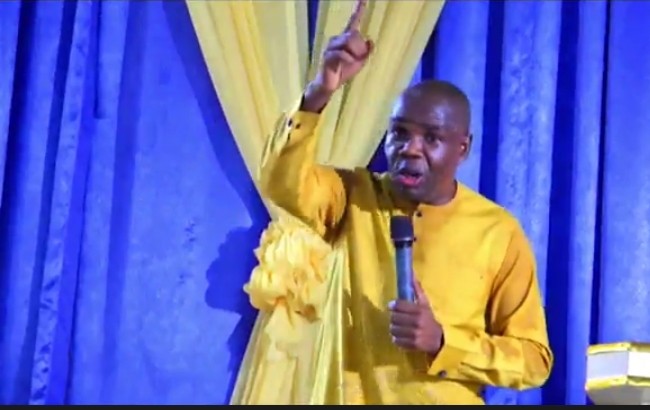
Worshippers at ARC Church gathered on Sunday, March 8, 2026, for a spiritually charged service marked by worship, prayer, and a stirring message delivered by the Lead Pastor, Rev. Paul Chikwem.
Preaching from Joel 2:7, the cleric delivered a sermon titled “God’s Marching Team,” emphasising the importance of order, purpose, and unity within the body of Christ.
Rev. Chikwem began by drawing a clear distinction between a crowd and a team, noting that while crowds are unstructured and chaotic, a team is organised and purposeful. According to him, the Church is not meant to function like a random gathering of people but as a disciplined army advancing the purposes of God on earth. “The kingdom of God moves like an army, not like a crowd,” he said, stressing that believers are not merely individuals attending church services but members of a divine team with specific roles to play.
He cautioned against the passive mentality of “let them do it,” warning that such an attitude undermines the collective mission of the Church. While acknowledging that the church is a place where people come seeking healing and restoration, he reminded the congregation that challenges exist even within sacred spaces. “People go to hospitals to be healed, yet some still die there,” he remarked, explaining that the church, though holy, is still populated by imperfect people striving toward spiritual maturity.
Using the imagery of an army drawn from Joel’s prophecy, the pastor declared that God is raising a disciplined force of believers who understand their place and function within His kingdom. In an army, he explained, soldiers maintain their ranks and do not switch lanes arbitrarily. Unlike a crowd that can easily push people down or create confusion, a well-organised army operates with structure, discipline, and shared purpose.
Expounding on this theme, Rev. Chikwem highlighted three major truths about God’s marching team.
First, he said everyone in God’s army has a position. In the kingdom of God, there are no spectators or cheerleaders, observing from the sidelines. Every believer has a divinely assigned place and must resist feelings of inferiority about their role. The pastor emphasised that before God, positions are not measured by human prestige. “The head pastor is no more important than the brother serving in sanitation department,” he noted, explaining that significance lies in obedience to one’s calling rather than in the visibility of the office.
To illustrate the danger of abandoning one’s position, he cited the biblical account of King Saul, who was instructed by the prophet Samuel to wait for him to offer sacrifice. Saul’s impatience led him to perform a priestly duty that was not his to undertake. By crossing the boundary of his assignment, Saul broke rank and suffered consequences. Rev. Chikwem used the example to urge believers to excel in the role God has given them rather than envying another person’s office.
The second point of the message centred on assignment. According to the pastor, many people engage in activities within the church without first seeking God’s direction concerning what He actually wants them to do. Some, he said, become consumed by the pressures of family responsibilities; spouses, children, or household demands, without understanding the spiritual mission God has entrusted to them.
He also observed that in many cases people serve God primarily because of their needs rather than genuine devotion. “In Nigeria, many serve God because they have needs, not necessarily because they love Him,” he remarked, adding that when believers relocate to environments where systems function more smoothly, some risk drifting away from the faith because they are not rooted. Knowing one’s assignment, he explained, provides stability and purpose. “An assignment not understood can never be realised,” he said, urging members to seek clarity from God about their divine responsibilities.
The third lesson focused on alignment. Rev. Chikwem stressed that God builds teams rather than individual heroes. Just as the beauty of the night sky lies in the presence of many stars rather than a single shining one, the strength of the church comes from collective harmony. He encouraged believers to celebrate each other’s successes and share in one another’s burdens rather than competing or pulling others down.
Drawing from 2 Timothy 2:3, he reminded the congregation that a soldier does not abandon his post in the midst of battle. Christianity, he said, is not a festive spectacle but a spiritual warfare. “Christianity is not a concert; it is a call to war,” he declared, pointing out that the enemy constantly seeks to disrupt homes and weaken the unity of the church because united families build a united church, which is formidable.
Rev. Chikwem further explained that in an army, different roles exist, strategists, medics, warriors, and support personnel, yet all work toward the same objective. Some believers may be prayer warriors, others may be generous givers, while others serve quietly behind the scenes like in the army. Each contribution is vital. He cautioned prayer warriors not to condemn those whose primary gift lies in giving, and likewise urged others to appreciate those dedicated to intercession. In the kingdom, he said, every role works together to advance the gospel.
He also warned against the danger of breaking ranks, describing it as an act of disobedience and a sign of a lack of submission. In a disciplined army, soldiers respect order and authority. However, he lamented that in modern Christianity many believers disregard structure under the claim that “the same Jesus saved us all,” thereby neglecting the importance of divine order.
Referencing the biblical account of Aaron and Miriam speaking against their younger brother Moses, Rev. Chikwem illustrated the seriousness of challenging God’s appointed order. Despite Miriam’s status as a prophetess, God rebuked her for undermining Moses’ leadership, demonstrating that spiritual gifting does not eliminate the need to respect divinely established authority.
The pastor urged believers to honour individuals serving in various capacities within the church, including those whose roles may appear modest. He noted that even an usher positioned at the door deserves respect because that placement is part of the structure God has permitted. When believers disregard such roles, they undermine the unity and discipline necessary for the church to function effectively.
Rev. Chikwem concluded by reminding the congregation that no part of the body can operate independently. Even the parts that seem less significant are often the ones God bestows with greater honour. He, therefore, encouraged members to seek God earnestly for understanding of their place within the spiritual army.
“Ask God to help you discover your assignment,” he urged. “When every soldier understands his place and maintains alignment, the army of God moves forward with unstoppable strength.”
The message left many congregants reflective and inspired, as the service concluded with prayers for clarity of purpose and renewed commitment to serving faithfully within God’s marching team.
The servant of God had earlier admonished the brethren from Luke 14:16; Luke 1:59
He reasoned that excuses are made, not given. So, urged them to stop making excuses but to make up their mind to succeed.
Speaking further, he said: “you are what they call you if you accept. Don’t argue with them, just work hard to prove them wrong. Stop arguing with people. Let them call you what they like but you know who you are. Believe in yourself and work to disprove them; time will silence them,” he advised.