By Amah
Kindly share:
Shocking U-turn: Bwala disowns his own anti-Tinubu words under Al Jazeera’s grilling
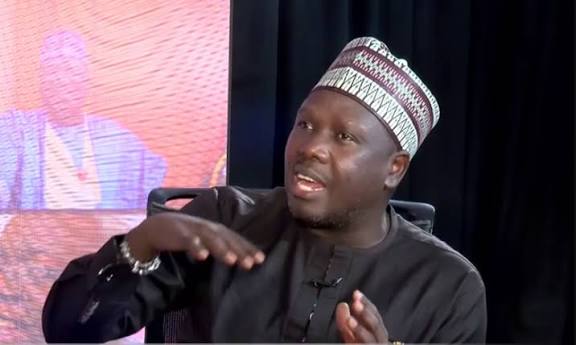
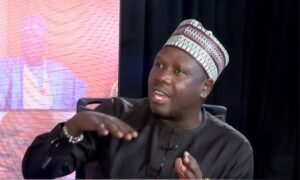
In a performance that has stunned many observers of Nigerian politics, presidential spokesman, Daniel Bwala, disowned several of his own past statements about Bola Ahmed Tinubu during a tense appearance on Head to Head, the flagship interview programme hosted by Mehdi Hasan on Al Jazeera.
Bwala, who now serves as Special Adviser to President Tinubu on Policy Communication, repeatedly denied making critical claims about the Nigerian leader that he had publicly aired during the 2023 election season when he served as a prominent spokesman for the presidential campaign of former Vice-President Atiku Abubakar.
The episode, themed “Nigeria: Renewed Hope or Hopelessness?”, examined the performance of the Tinubu administration under the banner of the government’s signature “Renewed Hope” agenda. What unfolded during the interview, however, was less a defence of policy and more a dramatic confrontation with political memory.
Hasan, known for his forensic interview style, confronted Bwala with video clips and previously published statements from the heated campaign season leading to the 2023 Nigerian presidential election.
At the time, Bwala had been one of the fiercest critics of Tinubu and the ruling All Progressives Congress. As a leading figure in the opposition campaign, he frequently appeared on television and social media accusing the then-APC candidate of electoral manipulation and other misconduct.
During the Al Jazeera programme, Hasan cited a specific allegation Bwala reportedly made on January 22, 2023, in which he accused Tinubu of creating a militia to corrupt the electoral process.
“You said Tinubu started a militia to sway the election corruptly,” Hasan stated while presenting the quote.
Bwala flatly rejected the claim.
“Tinubu didn’t create a militia, and I never said that,” he replied.
The denial immediately drew attention, given the existence of widely circulated clips from the period showing Bwala making strong accusations against the now-president.
Hasan did not stop there. He also referenced earlier comments attributed to Bwala concerning alleged suspicious cash movements into Tinubu’s residence during the election season.
Again, the presidential aide denied ever making such remarks.
“I never said that,” Bwala insisted.
The exchange grew increasingly tense as the interviewer repeatedly cited Bwala’s previous rhetoric while the presidential adviser dismissed the quotes as statements he never made.
The Al Jazeera host also raised another controversy that had trended widely on social media during the election period.
Clips circulated online showing Bwala claiming that Tinubu or figures within his political camp had threatened or intimidated him after he criticised the APC candidate.
When asked about those claims, Bwala again distanced himself from them.
“I never said that,” he responded when pressed.
The sequence of denials produced one of the most striking moments of the interview, as the discussion appeared to pit archived public statements against the speaker who made them.
Bwala’s transformation from outspoken critic to presidential defender has been one of the more dramatic political turnarounds since the 2023 elections.
Before the election, he was among the most visible legal and media advocates for Atiku Abubakar and the Peoples Democratic Party, regularly attacking Tinubu’s candidacy and questioning the credibility of the ruling party.
After Tinubu’s victory, however, Bwala later joined the administration and was eventually appointed as a communications adviser to the president.
The shift surprised many political watchers but was not entirely unprecedented in Nigeria’s fluid political landscape, where crossovers between rival camps are common after elections.
Attempting to explain the apparent contradiction during the interview, Bwala argued that his earlier comments should be understood within the context of political campaigning.
According to him, statements made while serving in the opposition are part of the normal rough-and-tumble of politics.
“At that time I was in the opposition,” he said. “The job of opposition is to oppose.”
He suggested that such remarks were political rhetoric rather than factual assertions, adding that they should not be considered relevant now that he serves in government.
Yet the explanation did little to quiet the sense of astonishment among viewers who watched the exchange unfold.
For many observers, the most startling element of the interview was not merely Bwala’s political conversion, something Nigerians have grown accustomed to, but the outright denial of statements that appear to exist in recorded form.
Political reversals are common. Political amnesia is something else entirely.
Across social media platforms after the broadcast, commentators circulated old clips and screenshots of Bwala’s earlier criticisms of Tinubu, contrasting them with the categorical denials he delivered during the Al Jazeera interview.
The spectacle left many viewers wondering whether the problem in Nigerian politics is not merely inconsistency but a deeper erosion of accountability for public statements.
In a media age where television appearances, tweets, and campaign speeches are archived indefinitely, public figures often find it difficult to escape their own words.
The confrontation on Al Jazeera illustrated that reality vividly.
When politicians cross from opposition to government, they often attempt to soften earlier rhetoric or reinterpret it. What rarely happens, at least so starkly, is a wholesale denial that the statements were ever made at all.
For critics, the episode raises questions about credibility in political communication.
A spokesman’s most valuable asset is trust. Once that credibility begins to wobble, every statement that follows risks being viewed through a cloud of doubt.
The controversy surrounding Bwala’s interview also reflects a broader culture in Nigerian politics where ideological consistency often yields to political convenience.
Campaign seasons produce fiery accusations. Post-election alliances produce equally dramatic reconciliations.
What remains less clear is where truth sits within this cycle.
The Al Jazeera exchange therefore became more than just a difficult television interview. It served as a mirror reflecting the elastic nature of political loyalty and memory in Nigeria’s public life.
For viewers who watched the encounter, the question lingering after the cameras stopped rolling was simple: if yesterday’s words can be denied today despite recorded evidence, what then becomes of political accountability tomorrow?