By Amah
Kindly share:
A new chapter in the long-running tensions within the global Anglican family unfolded in Abuja on Thursday as conservative church leaders unveiled a new international governing structure, signalling a deeper fracture within the worldwide Anglican Communion.
The announcement came during a gathering of the Global Anglican Future Conference (GAFCON), a coalition of predominantly African and Asian Anglican leaders who say they represent a significant portion of the Communion’s global membership. At the meeting, the group confirmed the establishment of a new body known as the Global Anglican Council, designed to coordinate and guide Anglican churches that share its conservative theological outlook.
For more than a decade, GAFCON has positioned itself as a rallying point for Anglican provinces that believe the historic teachings of the church are being undermined by what they see as doctrinal revisions in some Western branches of the Communion. Disputes over issues such as same-sex relationships, the ordination of women, and the authority of Scripture have steadily strained relations between churches in the Global South and those in Europe and North America.
Speaking at the Abuja gathering, Bishop Paul Donison, who will serve as secretary-general of the newly created council, said the decision reflected a growing belief among many Anglicans that existing global structures no longer adequately represent the convictions of the majority.
According to him, the traditional leadership mechanisms of the Anglican Communion have become insufficient for addressing the concerns of churches that insist on maintaining what they regard as biblical orthodoxy.
The Global Anglican Council will function as a representative body composed of bishops, clergy and lay members drawn from different provinces aligned with the movement. Each member will have voting rights, a structure GAFCON leaders say is meant to ensure broader participation in decision-making and strengthen cooperation among churches that share similar doctrinal positions.
Delegates at the conference elected Rwanda’s Archbishop Laurent Mbanda as chairman of the new council. His leadership, however, will differ from the traditional structure historically associated with the Anglican Communion. Rather than holding a position equivalent to that of the Archbishop of Canterbury—often described by the Latin expression primus inter pares, meaning “first among equals”—Mbanda will preside over the council as part of a collective leadership arrangement.
GAFCON spokesperson, Venerable Canon Justin Murff, made it clear that the council’s authority would revolve around the new body rather than the historical leadership structure centred in England.
“The Global Anglican Council recognises Archbishop Laurent Mbanda as its leader,” Murff told journalists at the event.
His remarks hinted at the widening gulf between GAFCON and the Church of England, which has long occupied a central symbolic role within the Communion. Traditionally, the Archbishop of Canterbury has been regarded as the spiritual focal point of the Anglican world, convening the Lambeth Conference and other gatherings that help maintain unity among the Communion’s many provinces.
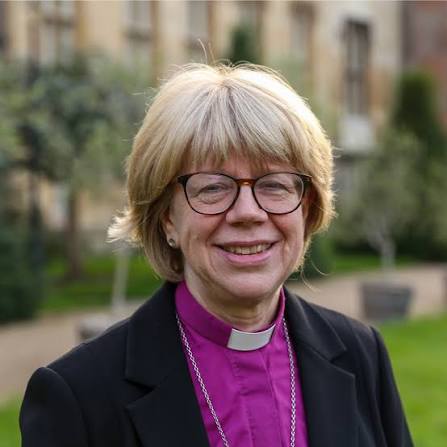
The timing of the announcement is particularly significant because it comes shortly before the formal installation of Sarah Mullally as the new Archbishop of Canterbury. Her appointment has drawn criticism from several conservative Anglican leaders who argue that episcopal leadership should remain restricted to men, based on their interpretation of biblical teaching.
Yet GAFCON representatives insist that the dispute extends far beyond the question of gender.
Murff said the core concern for many churches within the movement is the authority of Scripture in shaping Christian doctrine and moral teaching. According to him, debates over same-sex unions, clergy conduct, and church leadership ultimately reflect a deeper struggle over whether biblical texts or contemporary cultural trends should guide the life of the church.
He accused the new Archbishop of Canterbury of promoting what he described as revisionist interpretations of marriage and sexuality, particularly her support for blessings for same-sex couples within the Church of England.
Across much of the Global South, Anglican leaders maintain that traditional Christian teaching recognises marriage as a union exclusively between a man and a woman. They also insist that episcopal authority should follow long-standing biblical patterns.
Nigeria has become a central force in this global debate. The Church of Nigeria is one of the largest Anglican provinces in the world, with millions of members spread across hundreds of dioceses. Its leadership has consistently defended conservative theological positions, often putting it at odds with developments in Western churches.
Nigerian Anglican leaders have been among the most vocal supporters of GAFCON since its emergence in 2008. The movement itself was created after several bishops and archbishops accused parts of the Anglican Communion—particularly in North America and Europe—of drifting away from historic Christian doctrine.
Because Africa now accounts for a large share of the world’s Anglican population, churches on the continent have increasingly wielded influence in global discussions about theology and church governance.
Nevertheless, the continent’s Anglican community is not monolithic. Some African provinces have ordained women as bishops, reflecting internal diversity even within regions generally considered theologically conservative.
In London, officials at the Anglican Communion Office responded cautiously to the Abuja announcement. A spokesperson noted that the development appeared to diverge from ongoing discussions within the Communion about possible reforms to its leadership structure.
Those conversations have produced what are known as the Nairobi-Cairo Proposals, a framework that seeks to rethink the way authority and cooperation operate within the Anglican family. The proposals explore more collaborative approaches that could give greater voice to different regions of the Communion while preserving unity.
The spokesperson encouraged Anglican churches and networks to engage constructively with the proposals as part of a broader effort to strengthen relationships across the global church.
For observers of Anglican affairs, however, the emergence of the Global Anglican Council highlights the depth of the divisions that have been building for decades.
Conflicts over sexuality, biblical interpretation and ecclesiastical authority have repeatedly tested the bonds that hold the Communion together. While formal separation has so far been avoided, the creation of parallel structures suggests that parts of the Anglican world are increasingly prepared to chart their own course.
Archbishop Mbanda himself embodies the international character of the modern Anglican movement. Born in Rwanda, he spent part of his childhood as a refugee in neighbouring Burundi during the upheavals that gripped the region. He later studied theology in the United States before eventually returning to lead the Anglican Church of Rwanda.
His elevation to chair the new council reflects the growing influence of Global South churches in shaping the future direction of Anglicanism.
Although GAFCON leaders insist they are not formally establishing a rival to the Archbishop of Canterbury, the decision to form a separate leadership council underscores the widening ideological distance between conservative Anglican provinces and parts of the Western church.
What once appeared to be internal disagreements within a global Christian fellowship now increasingly resembles a struggle over who speaks for the Anglican tradition itself. As both sides continue to assert their vision for the church’s future, the question confronting Anglicans worldwide is whether the Communion can still hold together, or whether the fault lines will eventually produce a permanent division.