
By Amah
Kindly share:
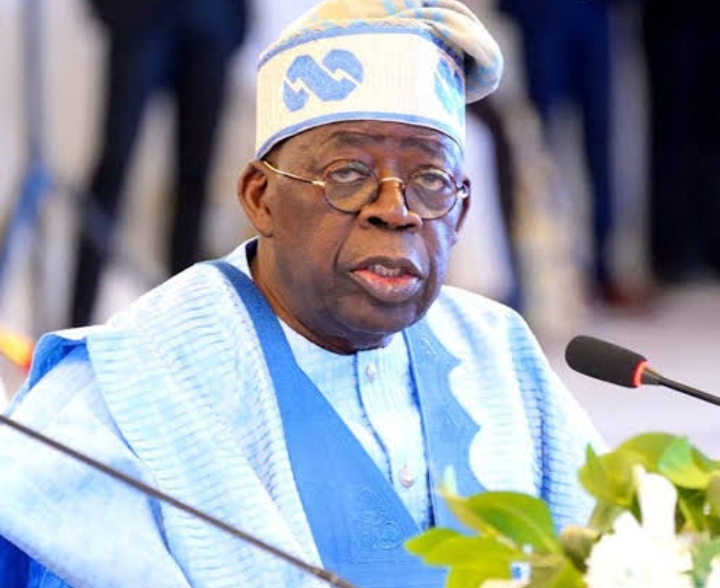
President Bola Ahmed Tinubu has declared that Nigeria is gradually stabilising after months of economic turbulence and heightened insecurity, unveiling plans to establish state police as part of a broader strategy to strengthen grassroots security.
The President made the remarks on Monday during an interfaith breaking of fast at the Presidential Villa in Abuja. The event brought together more than 20 governors, senior government officials and religious leaders at a symbolic moment when Muslims are observing Ramadan and Christians are in the Lenten season.
Since assuming office in May 2023, Tinubu’s administration has embarked on sweeping economic reforms, including fuel subsidy removal and exchange rate unification, measures that triggered inflationary spikes and public discontent but were defended by the government as necessary structural corrections. Simultaneously, the country has continued to grapple with banditry, insurgency, kidnapping and communal unrest across several regions.
Against this backdrop, Tinubu expressed confidence that the worst phase of economic and security strain was easing.
“We are out of the woods. We are out of the dark tunnel of uncertainty,” he said, acknowledging the sacrifices Nigerians have endured while insisting that reform-driven recovery is underway.
He urged political leaders to remain resolute, noting that “the result of hard work is more work,” and stressing that national recovery demands sustained collaboration between federal and state authorities.
A central highlight of the President’s address was his renewed commitment to decentralising policing, a long-debated constitutional issue in Nigeria.
“To those unemployed, what I promise, we will establish State Police to combat security in our Local Government,” Tinubu stated, signalling his administration’s readiness to empower sub-national governments to respond more swiftly to local threats.
The call for state police has gained traction in recent years amid criticisms that Nigeria’s centrally controlled policing structure is overstretched and insufficiently responsive to local security dynamics. Proponents argue that decentralisation would enhance intelligence gathering and rapid intervention, while critics warn of potential political misuse at the state level.
The President also drew attention to the rare convergence of Ramadan and Lent, describing it as a reminder of shared values across faiths.
“Discipline, sacrifice, faith, perseverance, strong determination for us to continue to bridge together, pray together and love one another,” he said, urging Nigerians to prioritise unity over ethnic and religious divisions.
He commended governors for maintaining cooperation with the Federal Government despite ongoing political activities in their respective states and encouraged them to extend development initiatives to grassroots communities, particularly focusing on youth empowerment.
Speaking on behalf of the Nigeria Governors’ Forum chairman, Hope Uzodinma, Governor of Imo State, described the coincidence of Ramadan and Lent as divinely significant and a call for national cohesion.
He praised Tinubu’s reform agenda and collaborative engagement with state governments, pledging continued partnership in implementing economic and tax reforms. Uzodinma also offered prayers for the President’s health and wisdom in steering the country through its reform phase.
The interfaith gathering marked the third consecutive year of Tinubu’s annual fast-breaking engagement, attended by Vice President Kashim Shettima, Chief of Staff Femi Gbajabiamila, members of the Federal Executive Council and governors from across the federation.
As debates over security restructuring intensify, the proposed establishment of state police is likely to dominate national discourse in the months ahead, particularly as Nigerians weigh its potential impact on restoring stability and deepening federalism.