

By James
Kindly share:
The Federal Government has initiated criminal proceedings against former Kaduna State governor, Nasir El-Rufai, over allegations of cybercrime and unlawful interception of sensitive communications involving the National Security Adviser, Nuhu Ribadu.
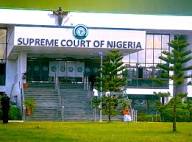
The case, filed before the Federal High Court of Nigeria in Abuja, is marked Charge No. J/CA/99/2026 and stems from statements allegedly made by El-Rufai during a recent televised interview.
The controversy traces back to an appearance by the former governor on Arise TV’s Prime Time programme on February 13, 2026.
During the interview, he was alleged to have made remarks suggesting knowledge of, and possible involvement in, the interception of the private phone communications of the National Security Adviser, Nuhu Ribadu.
The Department of State Services (DSS), acting through federal prosecutors, interpreted the comments as an admission of unlawful activity, triggering swift legal action.
According to court documents dated February 16, 2026, the prosecution has filed a three-count charge against El-Rufai.
Count One alleges that his televised admission amounts to an offence under Section 12(1) of the Cybercrimes (Prohibition, Prevention, etc.) Amendment Act, 2024, which criminalises unlawful interception of electronic communications.
Count Two contends that the former governor acknowledged knowing and associating with an individual responsible for intercepting the NSA’s communications but failed to report the act to relevant security authorities. Prosecutors argue this omission violates Section 27(b) of the same Act.
Count Three further accuses El-Rufai and unnamed associates, described as being at large, of using technical systems in 2026 to compromise public safety and national security by unlawfully intercepting communications. This count is said to fall under Section 131(2) of the Nigerian Communications Act, 2003.
The charge sheet asserts that the alleged conduct created “reasonable apprehension of insecurity” among members of the public.
The prosecution team, representing the DSS, includes M.E. Ernest, O.M. Owan, U.M. Bulla, C.S. Eze (PhD), and E.G. Orubor.
As of the time of reporting, no date had been fixed for arraignment. El-Rufai has yet to issue a formal public response to the charges.
The development marks a dramatic escalation in tensions within Nigeria’s political and security landscape.
El-Rufai, a prominent political figure and former cabinet minister, has long been known for his outspoken positions and influence in national discourse.
If pursued vigorously, the case could test the reach of Nigeria’s cybercrime and telecommunications laws, particularly in matters involving high-level political actors and national security officials.
Observers say the outcome may not only determine the legal fate of the former governor but also shape public confidence in digital privacy protections, accountability, and the limits of political speech in an increasingly surveillance-conscious era.