


By Amah
Kindly share:
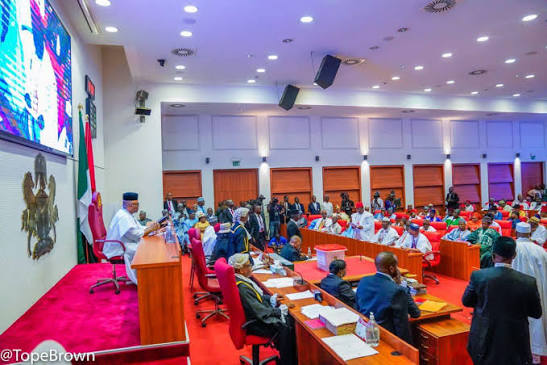
The Senate on Tuesday amended Section 60 of the Electoral Act to permit a dual system of election result transmission, allowing both electronic upload and manual submission of results from polling units to the Independent National Electoral Commission (INEC).
The amendment, adopted during an emergency plenary session, authorises presiding officers to electronically transmit results to INEC’s Results Viewing Portal (IREV) after the official result sheet, Form EC8A, has been duly signed and stamped at the polling unit.
Announcing the new procedure, Senate President Godswill Akpabio explained that electronic transmission would be the first option where technology permits.
“The presiding officer shall electronically transmit the results from each polling unit to the IREV portal after Form EC8A has been signed and stamped by the presiding officer, and/or countersigned by the candidates or polling agents where available,” Akpabio said.
However, the amendment also entrenches a fallback clause that elevates manual results in the event of technical challenges.
“Provided that if the electronic transmission of the results fails as a result of communication failure, the manually signed and stamped Form EC8A shall be the primary source of collation and declaration of results,” he added.
The provision, now adopted as Clause 60(3), was introduced through a motion by Senate Chief Whip Mohammed Monguno, who urged the chamber to revisit and reverse its earlier stance against real-time electronic transmission.
Background: A Return to a Familiar Fault Line
The issue of electronic transmission of results has remained one of the most contentious fault lines in Nigeria’s electoral reforms. In the build-up to the 2023 general elections, lawmakers watered down earlier proposals that would have made electronic transmission compulsory, opting instead for discretionary use “where practicable.”
That ambiguity became a major source of post-election disputes, as delays, missing uploads on IREV, and discrepancies between manual and electronic records fuelled widespread public mistrust, litigation, and allegations of manipulation.
Despite repeated calls from civil society groups, opposition parties, and election observers for mandatory real-time electronic transmission, the Senate had until now retained the 2023 framework, which critics argue gives room for human interference at collation centres.
Tuesday’s amendment marks a partial reopening of that debate, allowing electronic transmission but firmly anchoring the system to manual result sheets whenever technology fails.
Debate and Unease
The passage of the clause sparked debate on the Senate floor. Senator Enyinnaya Abaribe initially demanded a division to formally record individual votes on the matter, a move seen as an attempt to force accountability on a politically sensitive issue. He later withdrew the request, allowing the amendment to pass by voice vote.
While supporters argue that the hybrid model reflects Nigeria’s uneven technological infrastructure, critics warn that elevating manual forms as the “primary source” in cases of failure effectively recreates the loopholes that electronic transmission was designed to eliminate.
With Nigeria already under intense local and international scrutiny over electoral credibility, the Senate’s decision is likely to reignite concerns over whether the legislature is strengthening democracy, or merely managing distrust.