
By Amah
Kindly share:
The World Bank has given a strong endorsement to Nigeria’s ongoing economic reforms, describing the country as an emerging global template for credible and sustained economic transformation.
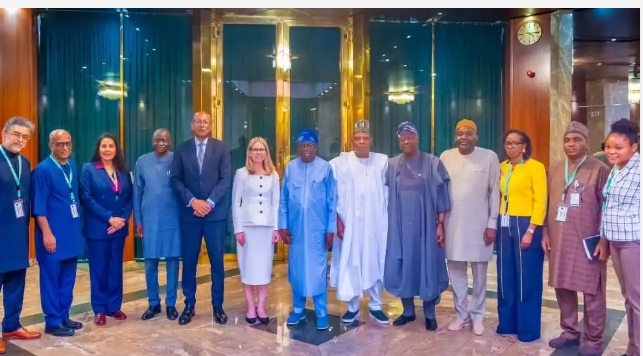
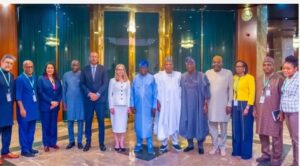
The commendation was delivered on Tuesday by the World Bank’s Managing Director of Operations, Ms. Anna Bjerde, during a meeting with President Bola Ahmed Tinubu and Vice President Kashim Shettima at the State House, Abuja.
Leading a delegation of senior World Bank Group officials, Bjerde praised the Tinubu administration for maintaining reform discipline over the past two years despite the political and social pressures associated with far-reaching economic adjustments.
According to her, Nigeria is increasingly cited in international policy circles as a reference point for how governments can pursue difficult but necessary reforms with consistency and resolve. She noted that the administration’s determination is beginning to produce measurable gains, rebuilding confidence among investors, development partners, and the private sector.
Bjerde disclosed that the World Bank’s forthcoming Country Partnership Framework (CPF) is tightly aligned with Nigeria’s development priorities, including the ambition to grow the economy to a $1 trillion GDP and sustain annual growth of about seven per cent.
President Tinubu, responding, reaffirmed his administration’s unwavering commitment to reform, stressing that there would be no policy reversal.
He acknowledged that the removal of fuel subsidies and the unification of the foreign exchange system initially triggered inflationary pressures but said recent indicators show clear improvement. Inflation, he noted, has moderated, while the naira has stabilised, strengthening investor confidence and improving the business climate.
The President said the reform agenda is anchored on transparency, accountability, and long-term policy stability, aimed at restoring credibility to Nigeria’s economic governance.
Highlighting agriculture as a central pillar of economic recovery, Tinubu disclosed that the government is investing in zonal mechanisation centres, improved seed development, and fertiliser availability, supported by the growing petrochemical industry.
These interventions, he said, are designed to boost productivity and move farmers from subsistence agriculture into structured, market-oriented cooperatives.
“Nigeria sits at the heart of Africa, and we must do what is necessary to strengthen our economy,” Tinubu said. “Our youthful population and vast arable land are strategic advantages. Mechanisation is critical, which is why we are establishing zonal mechanisation centres nationwide.”
He urged the World Bank to deepen its partnership with Nigeria by fast-tracking financing, reducing bureaucratic hurdles, sharing proven development models, managing reform-related risks, and strengthening local institutional capacity for inclusive growth.
In her remarks, Bjerde emphasised the need to expand access to finance for small, medium, and large enterprises, with special focus on mid-sized firms that generate significant employment.
She also commended Nigeria’s prioritisation of early childhood development, describing it as a vital investment in future productivity and economic resilience.
“Many countries, including middle-income economies, are grappling with rising levels of child stunting,” she said. “Placing early childhood development at the centre of policy is a strong foundation for long-term growth.”
Bjerde reaffirmed the World Bank Group’s commitment to supporting Nigeria’s reform agenda through coordinated interventions by the IDA, IBRD, and IFC.
Also present at the meeting were the Minister of Finance and Coordinating Minister of the Economy, Mr. Wale Edun, and the Deputy Chief of Staff to the President, Mr. Ibrahim Hassan Hadejia.