
By Anthony Iwuoma
Kindly share:
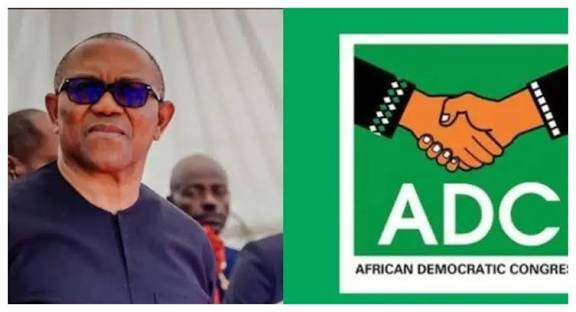
For too long, Okigwe Zone has remained trapped in a cycle of political loyalty without proportional reward, present at elections, absent in outcomes. As Nigeria’s political landscape quietly shifts and alternative platforms gain traction, a concerned constituent is compelled to ask uncomfortable but necessary questions. What options truly exist for a zone long marginalised within Imo State’s power structure? What lessons can be drawn from the political philosophy associated with Peter Obi? And could the African Democratic Congress (ADC) offer a more credible platform for serious-minded aspirants seeking renewal rather than repetition? These are not declarations of alignment, but questions that demand honest reflection before the next political season arrives. Mazi Ikem Ikwum spoke with Panorama News in Okigwe during the Yuletide.
As a concerned constituent from Okigwe Zone, why should we even be discussing Peter Obi, the ADC, and alternative platforms when there has been no formal engagement with our political leaders?
Because serious political thinking must precede formal engagement. This conversation is not about endorsement or declaration; it is about foresight. Okigwe Zone has spent decades reacting to decisions taken elsewhere. Considering figures like Peter Obi and platforms like the ADC is part of a long-overdue internal reflection on what kind of politics can genuinely serve the zone’s interests going forward.
What does Peter Obi represent in this conversation, especially for a zone like ours?
Peter Obi represents a disruptive political ethic, one rooted in credibility, prudence, and measurable governance outcomes. For Okigwe Zone, which has often been marginalised within Imo State’s power calculus, Obi’s politics offers a reference model rather than a promised alliance. It shows that a disciplined, issue-driven political approach can mobilise national attention without relying on godfathers or transactional politics.
Why is the African Democratic Congress (ADC) being projected so strongly in this discussion?
Because, objectively, the ADC stands out today as the most viable alternative platform for any serious-minded aspirant from Okigwe Zone. Unlike the dominant parties, the ADC is not suffocated by entrenched interests, pre-written tickets, or predatory political merchants. It offers space, real space, for credibility, negotiation, and collective bargaining. For an aspirant who intends to win with ideas, structure, and people, not with bribery and backroom deals, the ADC presents a cleaner and more strategic option.
Some argue that smaller parties lack structure and electoral muscle. Is this not a risk?
Structure is built; it is not inherited. The so-called “strong” parties derive their strength from patronage, not performance. Okigwe Zone has repeatedly invested its votes and loyalty in these parties with little to show for it. A platform like the ADC allows the zone to build its own structure, define its own agenda, and negotiate from a position of clarity rather than desperation. History shows that meaningful political shifts often begin on platforms once dismissed as fringe.
How does this apply to potential aspirants from Okigwe Zone?
Any serious-minded aspirant, one driven by vision rather than vanity, must ask hard questions: Where can I run without mortgaging my conscience? Where can the zone speak with one voice? Where can ideas compete fairly with money? At present, the ADC offers the best answers to these questions. It provides a platform where Okigwe Zone can rally around competence, integrity, and collective interest, rather than scatter its strength across hostile political terrains.
Is this a call for immediate realignment or defection?
No. It is a call for deliberate preparation. Political renewal does not begin on the day of declaration; it begins with sober evaluation. The Obi–ADC political current should be studied, interrogated, and strategically engaged, not worshipped, not feared. For Okigwe Zone, this is about positioning ahead of time, not rushing into another cycle of political miscalculation.
How does this lead to rediscovery and renewal for Okigwe Zone?
When a zone consciously chooses its platform, its narrative, and its negotiators, it regains dignity. The ADC pathway offers Okigwe Zone a concrete route to rediscovery, politically redefining itself,and renewal, re-entering Imo and national politics with coherence and purpose. It shifts the zone from being a footnote in other people’s calculations to becoming a factor in its own right.
What is the ultimate message to the ordinary constituent?
That the future of Okigwe Zone cannot be outsourced. Waiting for inclusion has failed; strategic thinking is now essential. Considering the ADC as a serious alternative platform, and understanding the political philosophy exemplified by Peter Obi, is not about personalities. it is about survival, relevance, and renewal. Zones that think early shape outcomes; those that don’t remain spectators in their own affairs.
Considering the evident failure of the APC in governance in the zone and the steady self-destruction of the PDP through internal wars and moral exhaustion, are you saying the ADC is the best platform for Okigwe Zone’s rediscovery?
Yes! When examined soberly and without sentiment, the ADC presently stands out as the most credible platform for Okigwe Zone’s political rediscovery. The APC has largely squandered public trust through poor representation and unkept promises, while the PDP has become trapped in cycles of internal sabotage, elite infighting, and ideological emptiness. For Okigwe Zone, continuing to invest political energy in these structures amounts to repeating a failed experiment. The ADC, by contrast, offers a relatively clean slate. It is not burdened by entrenched godfatherism, nor is it locked into pre-arranged power-sharing deals that routinely exclude zones like Okigwe. For a region seeking renewal, relevance, and a coherent political identity, the ADC provides the best available space to organise collectively, project credible aspirants, and negotiate its future from a position of principle rather than desperation. In this context, choosing the ADC is not an act of protest; it is a strategic step toward rediscovery.
Is this conversation simply about riding on the Peter Obi groundswell, or does Okigwe Zone need more than popular sentiment to move forward?
It is not, and must never be, just about the Obi groundswell. Movements create momentum, but they do not replace substance. For Okigwe Zone, symbolism alone cannot salvage years of marginalisation. Any hopeful candidate, regardless of platform or movement, must possess what it takes to genuinely rescue the zone: clarity of vision, personal credibility, political courage, grassroots connection, and the capacity to organise and negotiate effectively. The Obi movement may open doors and reshape national consciousness, but Okigwe Zone’s renewal depends on the quality of its own leadership. The candidate must understand the zone’s peculiar challenges, command respect across communities, resist godfather capture, and articulate a compelling case for Okigwe within Imo and Nigeria’s broader political equation. Without these attributes, no platform, ADC or otherwise, can deliver rediscovery. In the end, movements may inspire hope, but only prepared and principled leadership can convert hope into lasting progress for Okigwe Zone. The people already know who this caps fits.
Who could that be?
Not yet; with time he shall be unveiled and all shall see him and rejoice.