
By Anthony Iwuoma
Kindly share:
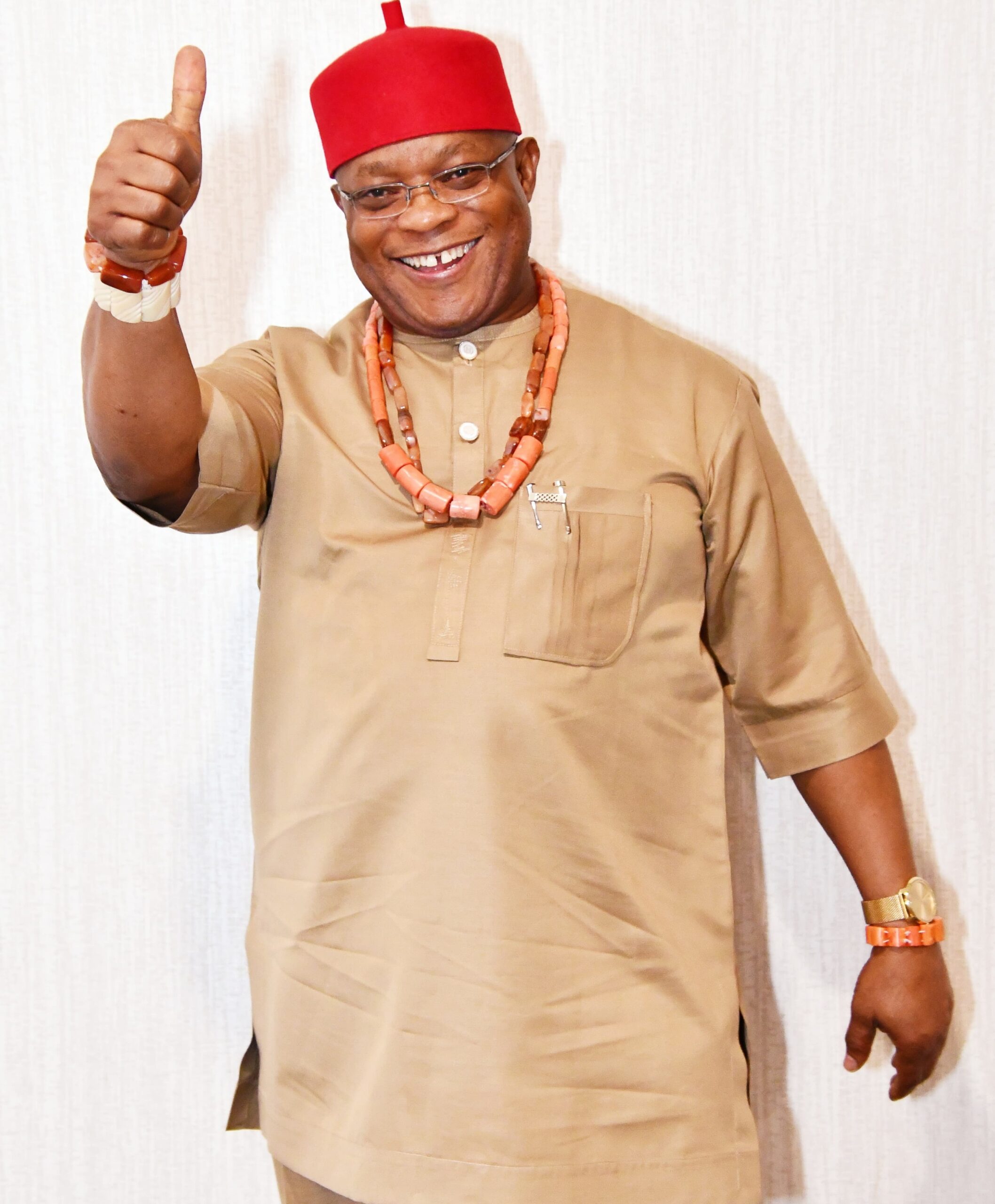
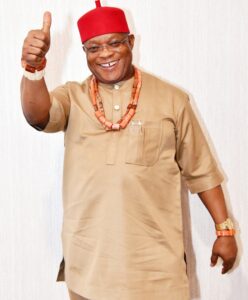
It was an accidental meeting at the airport departure lounge, no announcement, no entourage, no choreography. We were headed to different destinations but I couldn’t miss him even though I had never met with him. He was dressed casually but exuding charm and confidence, with his endearing gap-tooth.
When hands locked in a brief introduction, one could feel the verve and energy, and it became understandable why so much seems to be gravitating to Attorney Charles Onyirimba.
Prodded to talk, he hesitated, half-smiled, and said he really had just a minute. His flight was boarding. But persuaded, he agreed to share a few thoughts. Not a declaration. Not an interview in the formal sense. Just a few words, offered reluctantly, between boarding calls and the pull of duty elsewhere.
What followed while standing was brief, unpolished, and revealing, not the language of a man campaigning, but of one being called. He said he sees himself as a missionary in politics, and as missionaries bring good needs, his mission in politics is not different. However, he’s still weighing his options.
On the rising calls across Okigwe Zone
I think the persistence of the call says less about me and more about the moment Okigwe finds itself in. There is a growing sense that the zone needs a voice that is firm, informed, and strategic. People are tired of noise without results. Whether or not I am the answer, the fact that so many segments, elders, youths, professionals, are speaking in one direction suggests a deep hunger for purposeful representation.
On responsibility without declared ambition
Being called without asking for it is sobering. It imposes a moral burden. When your own people begin to speak your name repeatedly, you owe them honesty, restraint, and deep reflection. These calls are coming from people who know my worth and what I’m capable of doing. I don’t take that lightly. It means you must examine your motives carefully and ask whether you are being drawn by ego, or summoned by duty. One thing that I have always told people is that like missionaries bring good tidings, I am like a missionary in politics; I can only brig nothing but goodness to the people.
On legal depth and Diaspora exposure
Living and working in the Diaspora exposes you to systems where institutions matter more than individuals, and where preparation is not optional. As a lawyer, that perspective sharpens your respect for process and lawmaking. If I ever accept this call, it would be with the understanding that Okigwe deserves representation that combines global exposure with local loyalty, but I am still weighing whether that responsibility should rest on me.
On what would determine a yes or no
This is not a question of popularity; it is a question of conscience. I have seen Nigerian politics from close range and from a distance. What would determine my decision is whether I am convinced I can genuinely add value, and whether the environment allows for principled service without destructive compromise. Until I am clear on that, no decision should be rushed.
On effective representation beyond occupying a seat
Representation is not ceremonial; it is functional. It is about influence, consistency, and follow-through. Effective representation means Okigwe’s interests are defended at committee levels, in budgetary negotiations, and in legislative priorities. It means showing up prepared, speaking with authority, and staying engaged long after elections are over.
On non-negotiable values
There are lines I will not cross, integrity, accountability, and respect for institutions. Politics should not demand the abandonment of personal values. If service requires silence in the face of wrong or loyalty to mediocrity, then it is not service at all. Any decision I make will be anchored on these principles.
On generational urgency versus personal timing
I take that argument seriously. Leadership moments do not always wait for convenience. At the same time, timing without readiness can be disastrous. My task is to honestly assess whether this is a moment that calls for sacrifice, or patience. That balance is something I am prayerfully and thoughtfully considering.
On structural injustices in Okigwe
There are longstanding issues, inequitable infrastructure allocation, youth unemployment, weak institutional presence, that deserve legislative attention. As a lawyer, I am particularly concerned about how policy neglect quietly entrenches disadvantage. If I ever step in, it would be to confront such issues methodically, through law and advocacy, not rhetoric.
On hesitation and the fear of mediocrity filling the vacuum
Hesitation can be misread. Sometimes it is fear; other times it is responsibility. I would rather be accused of thinking too deeply than of rushing unprepared into public office. History shows that haste in leadership often costs communities more than delay. Still, I understand the concern, and it weighs heavily on me.
On the expected social contract
If I ever answer this call, the people should expect accessibility, transparency, and diligence. In return, I would expect engagement, patience, and honest feedback. Leadership should be a partnership, not a pedestal.
On past failed attempts and philanthropy being politically motivated
I have had past experiences where expectations did not translate into success. Those moments were humbling. They taught me that ambition alone is insufficient, and that public service is not entitlement. The reasons for that are all well known to Okigwe people. Entrenched demagogues and other extraneous issues have consistently robbed the people of competent representation. The result is obvious; that is why we are where we are today.
As for philanthropy, skepticism is understandable in our political climate. But the truth is simple: most of what I have done was done quietly, long before any renewed calls. Whether or not I ever run for office, helping people will remain a personal commitment, not a political strategy.
The final boarding call crackled over the public address system. He glanced once more at his watch with the easy urgency of a man who knew time was no longer negotiable. There was no handshake for the cameras, no parting promise, only a brief smile and a hurried “we’ll talk again.”
As he disappeared into the stream of departing passengers, what lingered in my mind was not certainty, but impression. This was not the posture of a man chasing office, but of one being quietly chased by responsibility, measured, reflective, unhurried by ambition yet alert to duty.
Whether he ultimately steps forward or not, the encounter left a question hanging in the departure lounge, unanswered but unavoidable: if leadership is judged not by eagerness to rule but by readiness to serve, then, perhaps, Okigwe is not asking the wrong man; it is asking the right one, at the right time, to make up his mind.
Nevertheless, I will hold tightly to that promise, “We’ll talk again”. There are certainly so many things in this man’s heart that need to be unravelled, and I will.