By Anthony Iwuoma
Kindly share:
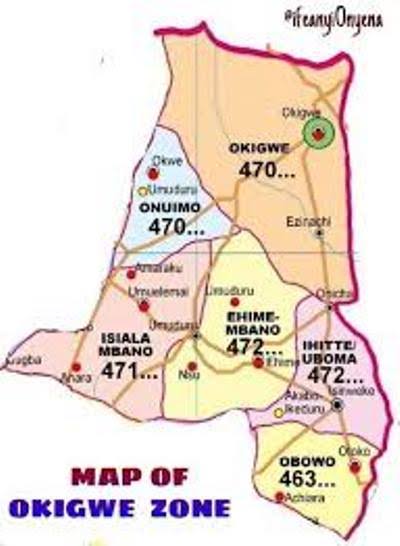
The Okigwe Peace and Unity Summit held in Obowo not long ago was convened out of urgency, not pageantry. It came at a moment when Okigwe Zone was dangerously fractured, politically weakened by internecine rivalries, deep-seated mistrust among its constituent local governments, and a persistent inability to act as a single bloc in the contest for relevance and fair representation within Imo State. The summit was thus imagined as a moment of reckoning: a deliberate pause to halt the drift, repair broken trust, and forge a shared political destiny.
In retrospect, however, the Obowo summit stands as a troubling paradox, heavy with promise, light on execution; rich in resolutions, poor in resolve. It spoke loudly, but it did not bind firmly.
Obowo was strategically chosen to symbolise balance and neutrality. The convergence of traditional rulers, elder statesmen, political actors, professionals, clergy, youth leaders, and civil society figures reflected a rare collective acknowledgment of an uncomfortable truth: Okigwe could no longer afford disunity, particularly in the handling of strategic offices, such as the Okigwe Senate seat. The cost of fragmentation had become too high to ignore.
The summit’s objectives were unambiguous and widely applauded, even though it was lampooned by perennial pessimists. It sought to heal long-standing political and communal fractures, institutionalise peaceful political engagement, entrench equity and fairness in the distribution of political opportunities, and put an end to the cycle of self-inflicted electoral defeats. Importantly, there was a shared admission that Okigwe’s recurring marginalisation was not primarily the result of external conspiracy, but the predictable outcome of internal disorder.
On paper, the summit got the diagnosis right.
Several key resolutions emerged, either formally adopted or strongly affirmed by consensus: Participants agreed that personal and partisan ambitions must give way to the collective survival and advancement of Okigwe Zone. The summit favoured a consensus-driven approach to elections, rejecting the destructive tradition of multiple candidacies that fragment votes and weaken negotiating power. Elder statesmen and traditional institutions were entrusted with the responsibility of safeguarding agreements and enforcing moral discipline.
At that moment, Obowo felt like a turning point. There was a genuine belief that Okigwe had finally acquired the political maturity to subordinate ego to collective interest.
Yet, the summit’s true test lay in the most consequential issue before it: the emergence of a common candidate for the Okigwe Senate seat. It was here that the summit lost its nerve. While agreement existed in principle, there was no clear, binding, and transparent mechanism for candidate selection. No criteria were formally documented. No timelines were fixed. No covenant was signed. No enforcement structure was established.
Predictably, ambiguity bred opportunism despite covert and overt endorsements. Political parties reclaimed unilateral control. Influential actors quietly pursued personal preferences. What should have been a zone-wide decision degenerated once again into a political free-for-all. Unity was reduced to a slogan, not a strategy.
Perhaps, the most damaging failure of the Obowo summit was the complete absence of structured follow-up. Once the speeches ended and communiqués were issued, the process simply evaporated.
There was no standing body to monitor compliance.
No periodic stakeholder reviews. No sanctions for defiance.
No accountability framework to protect the resolutions.
In politics, agreements without institutions are invitations to betrayal. The Obowo summit produced lofty resolutions but failed to build durable systems. Momentum was lost, and old rivalries predictably resurfaced.
The immediate casualty was political leverage. By failing to present a unified position on the Senate seat, Okigwe once again weakened its bargaining power within Imo State and beyond. More damaging still, the summit failed to recalibrate the political culture of the zone, allowing ambition to once again outrun discipline.
Yet, the summit was not entirely in vain. It exposed the core truth with brutal clarity: unity cannot be improvised in the heat of elections; it must be institutionalised long before them. It also demonstrated that dialogue is possible and that a collective yearning for progress still exists.
The Obowo summit should not be treated as a closed chapter, but as an unfinished assignment. Revisiting it is not an admission of failure; it is an act of political responsibility.
A renewed Okigwe Peace and Unity Summit must move decisively from rhetoric to rules. It must produce clearly documented, enforceable agreements; establish a permanent Okigwe Political and Development Council; define transparent criteria and procedures for candidate emergence; separate elder mediation from partisan ambition; and institutionalise follow-up, review, and dispute resolution mechanisms.
Without this, Okigwe will remain trapped in a self-destructive cycle of hope, betrayal, and loss.
It is imperative that Okigwe approaches the next senatorial election in 2027 with uncommon seriousness. The zone can no longer afford complacency or lethargic representation. It is evident that the current occupant of the Senate seat has not met the urgency the moment demands, not necessarily out of failure alone, but from an evident lack of hunger and drive required to reposition the zone. Okigwe cannot afford a laid-back approach to representation at a time that demands aggressive advocacy and strategic visibility.
Unsurprisingly, the vacuum created by the failure to actualise the Obowo resolutions has emboldened new aspirants. This is their democratic right. However, Okigwe must now rise above sentiment and subject every aspirant to rigorous scrutiny, interrogating their antecedents, loyalty to the zone, capacity for sacrifice, and history of engagement.
It would be a grave mistake to reward, with the senatorial ticket, anyone who has previously undermined Okigwe’s collective interest for backfired personal gain. Political office must no longer be a consolation prize for ambition, but a mandate earned through commitment, credibility, and courage. I have a hunch, however, that there is a much more serious and credible candidate on the way, and, evidently, Okigwe will embrace him , having known his pedigree and worth.
The Obowo summit asked the right questions but stopped short of delivering binding answers. Peace was proclaimed but not defended. Unity was celebrated but not secured.
Okigwe now stands at a crossroads. It can continue to organise summits that momentarily soothe consciences but change nothing, or it can revisit Obowo with steel in its resolve, turning lessons into institutions and promises into enforceable commitments.
The future of Okigwe’s political relevance will not be determined by another meeting alone, but by the courage to make unity binding, ambition accountable, and representation truly purposeful.
Anthony Iwuoma, a newspaper columnist and public affairs analyst wrote from Owerri, Imo State