


By Anthony Iwuoma
Kindly share:
In the theatre of Nigerian politics, representation is measured not by office or title but by resonance, the power of a leader’s voice to stir hope, demand accountability, and defend the dignity of the governed.
In Okigwe, this resonance has long been faint, almost ritualistic. The “our Natasha” exists, but often as a shadow, a name on letterheads, a face in occasional parades, yet a presence eclipsed by the economy of delivery.
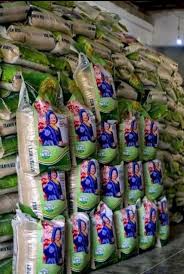
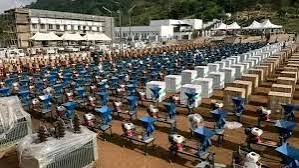
Rice palliatives are parceled like scarce treasures, roads like Eke Ahiara are announced with fanfare only to vanish into bureaucratic limbo, and citizens have grown accustomed to disappointment wearing the cloak of inevitability.
Then comes “their Natasha,” a figure from afar, yet impossible to ignore. Senator Natasha Akpoti-Uduaghan does not just speak; she acts. And when she acts, she acts extravagantly, constituency deliverables so visible, so transformative, that even the blind could see and hail their impact. Schools renovated, health centres equipped, roads repaired, water projects delivered, empowerment programs executed, her footprint in the lives of the people is unmistakable.
This is leadership that transcends rhetoric; it is the politics of tangible change, measured not in press releases or social media photoshoots but in lives improved, hope restored, and dignity preserved.
Her boldness has provoked envy. Less performing colleagues, threatened by the clarity and magnitude of her service, resorted to political sabotage, suspending her unfairly for six months. Yet Natasha returned, undaunted, recharged, and more determined than ever. Her grace, resilience, and unwavering commitment make her not only a formidable politician but a beautiful woman with a much more beautiful soul, a living example of courage fused with compassion.
The contrast is painfully clear. Okigwe’s custodians have mastered the art of absence. Where voices should rise, there is a murmur; where action should follow words, there is delay; where the people should be nourished, they are counted in grains of rice. Contentious palliatives are distributed like breadcrumbs, barely enough to calm the hunger of expectation, while roads remain phantom arteries, announced in press releases yet lifeless in reality.
Eke Ahiara, the artery that could connect lives and commerce, exists more in rhetoric than in tar and concrete. Infrastructure dies quietly here, not with fanfare but in a slow erasure, and citizens have long learned to measure hope in millimetres.
Yet, in this landscape of muted governance, hope glimmers. The loud Natasha from afar becomes more than a figure of admiration; she is a mirror, reflecting the possibilities that Okigwe has neglected to explore. She forces the question: why should representation be timid, economised, or performative? Why should leadership be measured by appearances and announcements rather than by tangible change? Her example reminds Okigwe that leadership is not inherited; it is earned, wielded, and performed in service, not in self-preservation.
This glimmer of hope suggests a horizon where Okigwe’s politics could be transformed. Imagine leaders whose compass is the welfare of the people rather than the optics of office. Imagine a leadership that is unapologetically people-centric: rice palliatives visible and distributed with dignity, roads constructed with urgency, public resources managed with transparency. Imagine a constituency where advocacy is loud, accountability is relentless, and the voice of the people is not negotiated but respected.
Such a future is possible. It requires courage, vigilance, and a deliberate shift away from leaders who economise empathy toward those who invest in action. The lesson is unambiguous: Okigwe cannot afford to linger in the shadow of stillborn promises while models of assertive, impactful leadership exist just beyond its borders. The loud Natasha reminds us that silence at home is no virtue; absence is no achievement. Advocacy, courage, and visibility are the true currencies of service.
Okigwe’s story has been written in absence and restraint, but it need not remain so. Change begins with recognition: that citizens deserve leaders who do not measure their commitment in crumbs or press statements or convert their Whatsapp spaces to annoying photo albums.
Okigwe needs a change. This change begins with courage: a refusal to tolerate mediocrity disguised as stewardship. Change begins with action: mobilising a constituency to demand accountability, reward integrity, and replace inertia with purpose.
The promise on the horizon is not abstract. It is anchored in what leadership looks like when it is unapologetically committed to the people. It is visible in every bold speech, every uncompromising demand for fairness, every transformative project, and every refusal to let neglect define a community.
Okigwe need not envy the distant Natasha; it must cultivate its own, nurtured from among those who see governance as service rather than ceremony. Leaders who act decisively, speak boldly, and distribute resources with justice and compassion are not mythical; they are attainable, if only citizens insist on their presence.
Consider the lessons etched in Okigwe’s recent history. Rice palliatives, ostensibly meant to nourish, are rationed with an arithmetic that prioritises optics over impact. Roads, promised or claimed in press statements, remain phantom arteries. Projects are declared in ceremony, only to vanish into the slow decay of bureaucracy.
In every mismanaged project, in every economised gesture of leadership, there is a lesson: the people have tolerated too much absence, too much silence, too much half-life governance. But in the mirrored roar of a distant Natasha, there is also a prescription: leadership must be fearless, visible, and accountable.
Hope, then, is not passive. It is a clarion call to action. The citizens of Okigwe can no longer afford to accept perfunctory stewardship. They must demand advocacy that echoes through halls of power, resource allocation that honours dignity, and infrastructure that connects life, commerce, and opportunity. Silence may endure, but courage cannot be silenced. Absence may persist, but the insistence of the governed will eventually compel presence.
Our Natasha, their Natasha, one is a reminder of potential, the other a reflection of tolerated inertia. Yet, the horizon is generous. It offers the possibility of a renewed Okigwe, a constituency that refuses to accept crumbs, phantom projects, or economised promises. It offers leaders who see the people not as statistics but as stakeholders, whose actions are measured in impact rather than press releases, whose advocacy is as loud as the need demands, and whose stewardship is a reflection of empathy, urgency, and vision.
The choice is stark. Okigwe can linger in shadows, counting rice grains and echoing with the silence of stillborn roads. Or it can rise, insisting on leaders whose compass is compassion, whose drive is decisive action, and whose vision is people-centred. The loud Natasha is not just a distant figure; she is a benchmark, a mirror, and a challenge. The quiet Natasha that cannot roar must make way for those who will.
Hope, after all, is not the absence of challenge but the courage to rewrite the narrative. In Okigwe, that rewrite begins with leadership that refuses to economise on advocacy, that refuses to ration dignity, and that refuses to allow silence to masquerade as service. The horizon waits, wide and luminous, for a new generation of leaders, people-centric, compassionate, relentless, and unafraid to claim the voice that has long been muted.
Okigwe: our Natasha, their Natasha. One shows what is possible; the other reveals what must be replaced. And somewhere in between lies the promise of a constituency awakened, demanding more than shadows, more than crumbs, more than stillborn infrastructure, a constituency determined to see its potential reflected in those it entrusts with its future.
Anthony Iwuoma is a newspaper columnist. He wrote from Owerri, Imo State.