
By Amah
Kindly share:
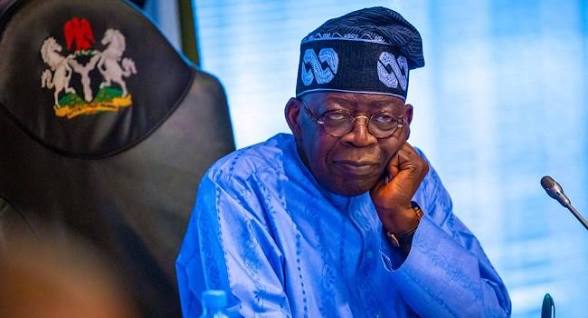
The Presidency has dismissed claims that the administration of Bola Ahmed Tinubu is undermining opposition parties, insisting instead that Nigeria’s political rivals must take responsibility for what it described as “self-inflicted crises”, threatening their survival ahead of the 2027 elections.
Speaking during an appearance on Channels Television, presidential spokesman, Sunday Dare, made it clear that the ruling government would not intervene to stabilise embattled parties, such as the African Democratic Congress (ADC) and the Peoples Democratic Party (PDP).
His remarks came amid rising political tension, following protests by the ADC over the decision of the Independent National Electoral Commission (INEC) to suspend recognition of rival leadership factions within the party. The move was triggered by conflicting court rulings, including a March Court of Appeal judgment, which deepened the leadership tussle and cast uncertainty over the party’s structure.
The ADC has alleged that the development is part of a broader scheme to edge it out of the 2027 political contest. However, the Presidency has strongly rejected that narrative, arguing that Nigeria’s political space remains open and competitive.
“There are about 20 registered political parties in Nigeria today. None has been shut down,” Dare stated, adding that the ruling All Progressives Congress (APC) cannot be blamed for the instability rocking opposition platforms.
He accused opposition figures of resorting to emotional rhetoric rather than doing the painstaking work required to build viable political institutions. According to him, the APC itself emerged through years of strategic coalition-building, internal discipline, and political sacrifice, qualities he suggested are lacking among its rivals.
The controversy also highlights the fragile state of Nigeria’s opposition landscape. The ADC, which has struggled with factional leadership disputes involving figures, such as David Mark, is not alone. The PDP has similarly battled internal divisions in recent years, raising concerns about the ability of opposition parties to present a united front in future elections.
Dare further argued that the very fact that opposition parties can organise protests and openly criticise the government underscores the presence of democratic freedoms under Tinubu’s administration.
“It is not the responsibility of the president to organise or strengthen opposition parties,” he said. “If political actors fail to build strong platforms, they should not shift blame.”
As Nigeria gradually inches toward the next electoral cycle, the deepening cracks within major opposition parties may ultimately shape the political battlefield, potentially giving the APC a strategic advantage if its rivals fail to resolve their internal conflicts.
With legal battles, leadership disputes, and accusations of political interference dominating the discourse, the unfolding drama signals a turbulent road to 2027, one where the strength of parties may depend less on external forces and more on their ability to survive themselves.