
By Bose
Kindly share:
The deepening leadership crisis within the African Democratic Congress (ADC) has taken a dramatic twist after factional national chairman, Nafiu Bala, admitted he was present at the event where former Senate President David Mark emerged as interim leader, while firmly denying that his attendance signified support.
The ADC has been embroiled in a protracted internal conflict since July 2025, when an opposition coalition adopted the party as a political platform ahead of future elections. What began as a strategic alliance quickly degenerated into a fierce struggle for control, splitting the party into two rival factions, one aligned with Bala and the other with Mark, both claiming legitimacy.
The crisis escalated further after the Independent National Electoral Commission (INEC), acting on a March 12 judgment of the Court of Appeal, withdrew recognition from both factions, leaving the party in a state of uncertainty and raising questions about its participation in upcoming elections.
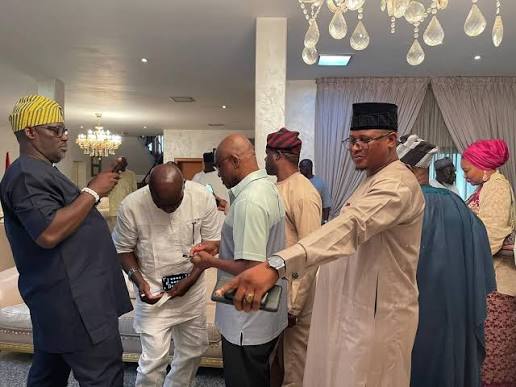
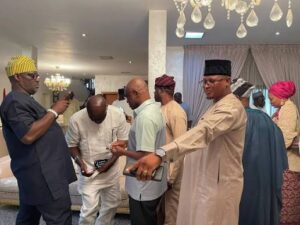
Controversy intensified following the circulation of viral videos showing Bala seated among party stakeholders during the unveiling of the Mark-led leadership at the Shehu Musa Yar’Adua Centre in Abuja. The footage, widely shared across social media, appeared to contradict his earlier stance distancing himself from the process that produced the rival leadership.
In his response, Bala acknowledged attending the July 2, 2025 meeting but insisted the gathering was originally convened as a coalition engagement to adopt the ADC as a common political platform, not to install new party leaders. According to him, the event took an unexpected turn when the then national chairman, Ralph Okey Nwosu, announced his resignation during his address.
Bala alleged that Nwosu proceeded to unilaterally issue party membership cards to Mark and former Osun State governor Rauf Aregbesola, declaring them acting national chairman and national secretary respectively — a move he described as shocking and unconstitutional.
He argued that the action violated key provisions of the ADC Constitution (2022, as amended), specifically Articles 8(2) and 9(4), which outline the procedure for replacing party leadership. According to Bala, no provision of the constitution empowers an outgoing chairman to appoint his successor, stressing that there was neither a formal vote nor consensus among party stakeholders.
The factional chairman further revealed that members of the National Working Committee (NWC), including himself, were not informed beforehand, adding that the situation worsened when the party’s then national secretary, Sa’id Baba Abdullahi, also resigned shortly after the announcement without prior consultation.
Bala maintained that his presence at the event and his engagements with coalition partners between April 2024 and July 2025 should not be interpreted as endorsement of what he termed “irregular appointments,” noting that his clarification became necessary in light of the misleading impression created by the viral videos.
With both factions stripped of official recognition and internal divisions hardening, the ADC’s crisis continues to expose the fragility of coalition politics in Nigeria and the high stakes involved in the struggle for political relevance ahead of future electoral contests.