
By Amah
Kindly share:
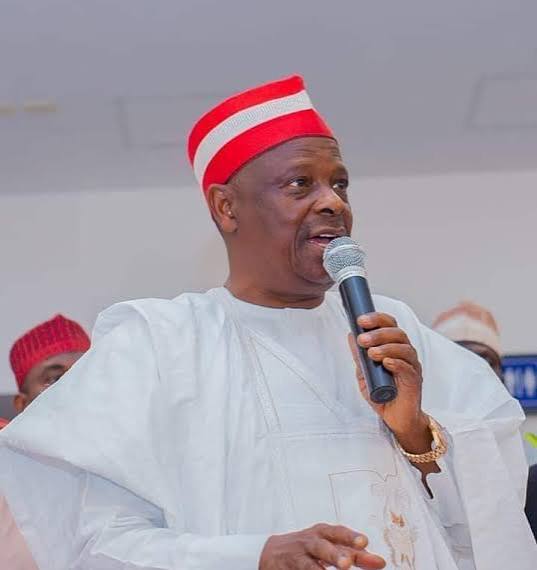
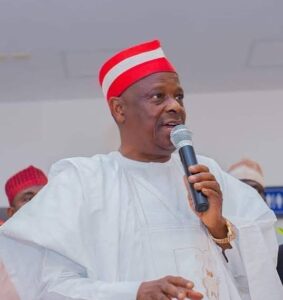
Nigeria’s political landscape appears set for a major shake-up as the Kwankwasiyya Movement has officially announced that former Kano State governor, Rabiu Musa Kwankwaso, will defect to the African Democratic Congress (ADC) on Monday, March 30, confirming days of intense speculation and backroom negotiations.
The announcement, released Saturday night, disclosed that the high-profile defection ceremony will take place at Gidan Kwankwasiyya on Miller Road, Bompai, Kano State, beginning at 12 noon. The move signals a potentially decisive turn in the political permutations already building toward the 2027 general elections.
Significantly, sources within the movement reveal that Kwankwaso had earlier instructed loyalists within the Kwankwasiyya fold to begin aligning with the ADC, an indication that Monday’s defection is not a sudden shift, but the culmination of a carefully orchestrated political migration.
Kwankwaso, who contested the 2023 presidential election under the New Nigeria Peoples Party (NNPP), finished fourth with 1,496,687 votes, trailing behind President Bola Ahmed Tinubu of the APC, Atiku Abubakar of the PDP, and Peter Obi of the Labour Party. His planned switch to the ADC follows a strategic meeting with Atiku in Abuja, further fueling speculation of a broader opposition realignment.
Beyond Kwankwaso’s defection, fresh political alignments are quietly gaining momentum. The ADC is reportedly in advanced talks with elements of the Nigeria Democratic Congress (NDC), as well as influential figures across party lines, in a bid to form a formidable coalition against the ruling APC.
Among those linked to the emerging alliance are Oyo State Governor Seyi Makinde, Bauchi State Governor, Bala Mohammed, and former Bayelsa State governor, Seriake Dickson. Insiders suggest that segments of the PDP, particularly factions aligned with Tanimu Turaki, may also gravitate toward this bloc, strengthening its bargaining power.
According to sources, the strategy is to consolidate opposition strength under a unified negotiating platform rather than fragmented individual defections. The goal: to construct a viable electoral machine capable of mounting a serious challenge to President Tinubu in 2027.
One insider described the effort as a “collective survival strategy,” noting that the alliance aims to harmonize interests across political divides while presenting a single, credible alternative to the current administration.
The ruling APC, however, has dismissed the unfolding developments as politically insignificant. The party’s National Secretary, Ajibola Basiru, downplayed both Kwankwaso’s influence and the potential impact of the emerging coalition.
While acknowledging Kwankwaso’s right to political association, Basiru questioned the former governor’s electoral weight, pointing to his limited success in the 2023 elections and lack of widespread institutional backing.
According to him, the APC remains focused on governance and unperturbed by opposition maneuverings, insisting that the party’s structure and performance will ultimately determine the outcome of the next election cycle.
Yet, beneath the dismissals lies a growing reality: Nigeria’s opposition may finally be inching toward the kind of coordinated front that has long eluded it. If successfully consolidated, the ADC-led coalition could reshape the electoral battlefield, turning 2027 into a high-stakes contest defined less by party labels and more by strategic alliances.
For now, all eyes turn to Kano on March 30, where Kwankwaso’s formal entry into the ADC may well mark the opening move in what promises to be a fiercely contested political chess game.