
By Amah
Kindly share:
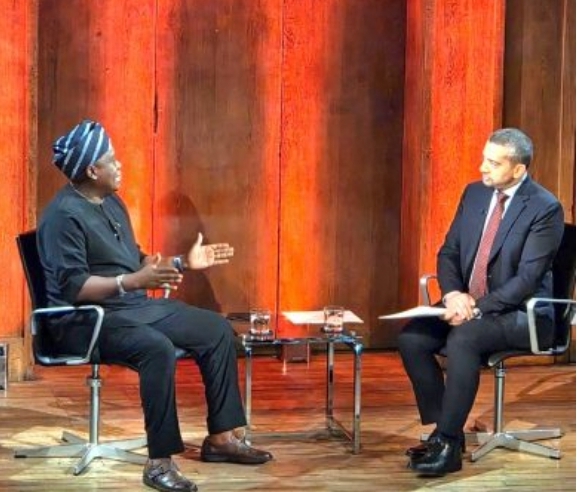
Presidential aide, Daniel Bwala, has broken his silence following the storm that trailed his recent interview on Al Jazeera’s Head to Head, insisting he was unaware that the programme would confront him with his past criticisms of President Bola Ahmed Tinubu.
In a lengthy statement reacting to the backlash that erupted across social media, Bwala said the interview had triggered “varied opinions” over the last 24 hours but maintained that he stood firmly by his performance and the role he now plays in the Tinubu administration.
“In the last 24 hours, social media has exploded over my interview with Mehdi Hassan, albeit with varied opinions. Let me set the record straight,” Bwala said.
The Special Adviser to the President on Media and Policy Communication defended his decision to appear on the programme, stressing that promoting and defending the government was part of the responsibility attached to the office he accepted.
“When I signed on to the privileged job granted to me by Mr. President, I was well aware of its implications. Selling ice cream, looking fine, and seeking the praises of men were never part of it,” he stated.
The controversy followed a tense exchange between Bwala and Al Jazeera host, Mehdi Hassan, during which the journalist reportedly confronted him with statements he had made in the past, criticising Tinubu before joining the current administration.
Bwala argued that the programme’s producers did not inform him beforehand that his past remarks would become a focal point of the discussion.
According to him, the interview invitation centred on broader issues, confronting Nigeria.
“Head to Head contacted me, requesting an interview, stating that they wanted to challenge our government on security, the economy, and corruption. Nowhere in our almost six months of communication did they mention that they were going to challenge my past,” he said.
He added that professional ethics required the programme to inform him in advance if such a line of questioning was planned.
“If that had been their plan, ethically and professionally, they were supposed to inform me so I could prepare my response. But that’s okay; ethically, that is on them, not on me,” Bwala said.
Despite the heated exchange, the presidential aide accused the interviewer of relying on what he described as “opposition research-style journalism,” claiming some of the quotes cited during the programme were inaccurate.
“If you carefully compare what he read as quotes from organisations and groups, you will see that many were inaccurate and some were outright fake news,” he alleged, adding that he would address those claims at a later time.
Bwala also openly acknowledged that he had indeed criticised Tinubu in the past, but dismissed the issue as a normal part of political evolution.
“As for what I said about President Tinubu in the past, I am glad those were things I said when I was in the opposition saddle with such zeal. It is all politics,” he said.
To justify the shift in his political stance, Bwala cited the example of former U.S. President Donald Trump, noting that many members of Trump’s cabinet had once criticised him before later serving in his government.
“Half of Donald Trump’s cabinet is made up of people who once spoke against him, and quite a number of people in our own cabinet also spoke against President Tinubu in the past,” he argued.
The presidential spokesman also dismissed critics celebrating the interview, describing them largely as members of the political opposition who, he said, lacked credible alternatives for governing Nigeria.
“Their temporary excitement over the interview has not lasted and will not last… they have no path to victory and no alternative policies or program for the Nigerian people,” he said.
Bwala challenged opposition figures to subject themselves to similar scrutiny on the programme.
Quoting a Hausa proverb, he said: “As the saying in Hausa goes, ‘Ga fili Ga doki.’”
Despite the controversy, Bwala expressed respect for Mehdi Hassan, describing him as “arguably the best debater on the planet,” while indicating readiness for another round of engagement.
“I still have admiration and respect for Mehdi Hassan… I look forward to part two of the Head to Head interview,” he said.
The interview has continued to generate heated debate online, particularly because Bwala had previously been a vocal critic of Tinubu before his appointment into the administration, a reversal critics say illustrates the fluid loyalties that often characterise Nigeria’s political landscape.
However, Bwala insisted the debate over his past statements should no longer overshadow the government’s policy agenda.
“By then questions about my past will no longer be news so that we can focus on our administration’s policies, programmes and what we have achieved so far,” he said.
The episode has added another dramatic chapter to the increasingly heated public discourse surrounding the Tinubu administration and its defenders in the media arena.