


By James
Kindly share:
In a decisive move that reflects both fiscal recalibration and the realities of Nigeria’s troubled electricity sector, the Aso Rock Presidential Villa will disengage completely from the national grid before the end of the first quarter of 2026.
The announcement was made by the Permanent Secretary of the State House, Temitope Fashedemi, during the 2026 budget defence session before the Senate Committee on Special Duties at the National Assembly. He disclosed that the installation of a dedicated solar mini-grid for the nation’s seat of power was completed in late 2025 and is now undergoing final testing and performance assessments.
Once fully operational, the Presidency will rely predominantly on solar energy, sharply reducing its dependence on the Abuja Electricity Distribution Company (AEDC) and diesel-powered generators.
Government officials insist the transition is rooted in economic necessity rather than symbolism.
The Federal Government committed ₦10 billion to the solar project in the 2025 budget and is seeking an additional ₦7 billion in the 2026 Appropriation Bill to finalise the rollout. Authorities argue that the capital expenditure will significantly reduce recurring electricity bills previously described as financially unsustainable.
The Director-General of the Energy Commission of Nigeria, Mustapha Abdullahi, had earlier revealed that the Villa’s annual electricity costs were estimated at ₦47 billion — a revelation that amplified public scrutiny over energy spending within the corridors of power.
According to Fashedemi, the State House Medical Centre has already demonstrated the viability of the project, operating largely on solar power since May 2025 with minimal reliance on diesel or grid supply. The broader Villa complex, he said, is expected to follow the same path.
Prior to the renewable transition, the Presidential Villa was listed among top government debtors to AEDC. In February 2024, the distribution company claimed the Villa owed ₦923.87 million in unpaid electricity bills.
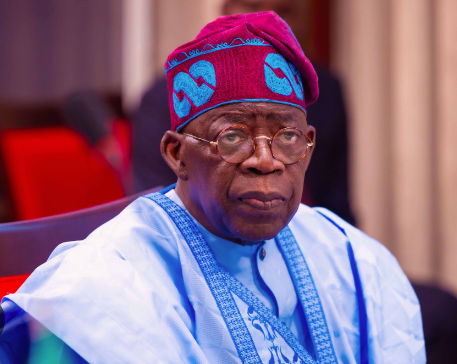
Following reconciliation, the figure was revised downward to ₦342.35 million, which President Bola Tinubu directed to be settled.
Fashedemi disclosed that internal reviews during the solar transition uncovered instances of alleged overbilling, including charges for electricity not supplied. Discussions are ongoing with AEDC to address what he termed “legacy liabilities.”
He further indicated that several ageing generators within the Villa complex, once scheduled for replacement, may no longer require costly upgrades once the solar system becomes fully functional. A few will be retained strictly for emergency backup.
The development has generated mixed reactions.
Critics argue that disconnecting the Presidential Villa from the national grid sends an uncomfortable message in a country where millions of citizens endure chronic blackouts and rising tariffs. Some interpret the move as an implicit admission of the grid’s fragility.
Supporters, however, view it as strategic governance and an example of responsible energy diversification. Presidential spokesman Bayo Onanuga defended the initiative by referencing renewable installations at the White House, describing the shift as consistent with global best practices.
The controversy reflects Nigeria’s broader energy paradox: abundant renewable potential, yet persistent structural dysfunction in grid-based supply.
During the same budget defence session, the Chairman of the Senate Committee on Special Duties, Senator Kaka Lawan (Borno Central), raised concerns over ₦127 million allocated for sport utility vehicles in the State House budget proposal.
He described the amount as insufficient, arguing that it would not cover the cost of a single bulletproof vehicle required for official engagements and visiting dignitaries. He urged the Budget Office to revisit the figure.
Nonetheless, Lawan commended the State House team for appearing promptly to defend its estimates, calling it an example other government agencies should follow.
As Nigeria continues to wrestle with erratic grid performance, mounting debts, and reform debates within the power sector, the Presidency’s decision to operate off-grid marks a significant institutional pivot.
Whether interpreted as fiscal prudence, environmental responsibility, or strategic insulation from systemic inefficiencies, the move signals a new chapter in how the nation’s highest office intends to power itself, and possibly a preview of a broader energy transition yet to come.