
By Anthony
Kindly share:
It was a Sunday of profound spiritual awakening, prophetic declarations and renewed consciousness of God’s unfailing faithfulness at Acts of Restoration and Compassion Church, also known as Church Without Borders, on November 15, 2026. The service was characterised by an atmosphere of intense worship, scriptural revelation, soul-searching admonitions and powerful prayers, leaving the congregation with a deeper understanding of divine preservation and the responsibility that comes with being God’s own.
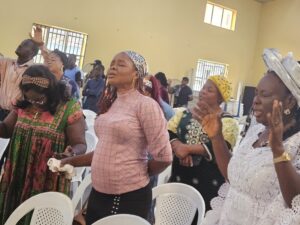
The service opened on an ecstatic note with an inspirational praise and worship session led by the choir. Through uplifting songs and spirit-filled ministrations, the choir prepared the hearts of worshippers and ushered the congregation into an atmosphere of reverence, gratitude and spiritual expectation.
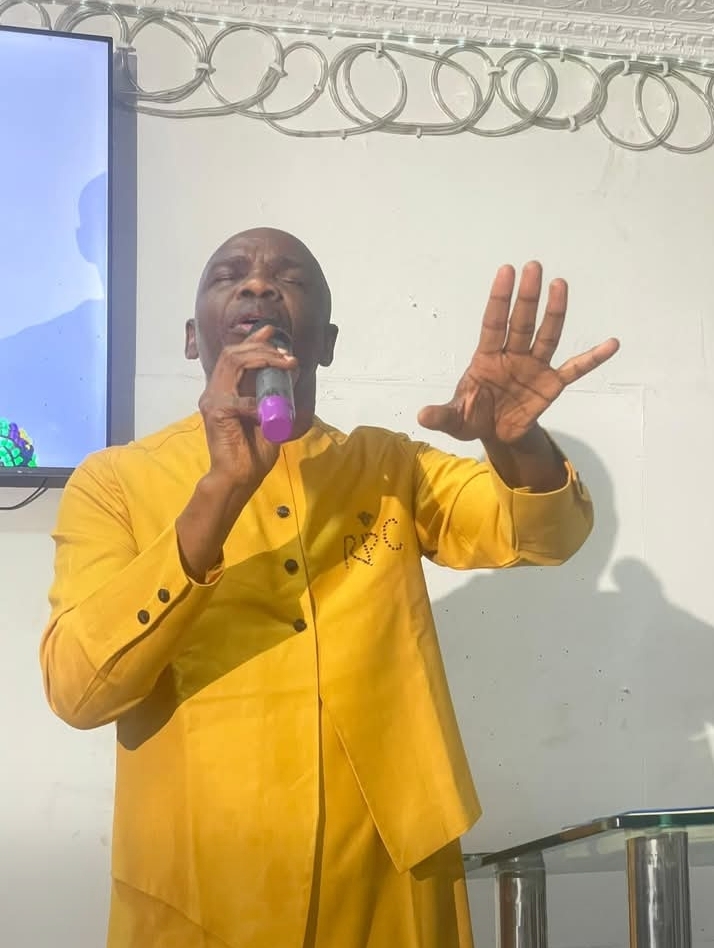
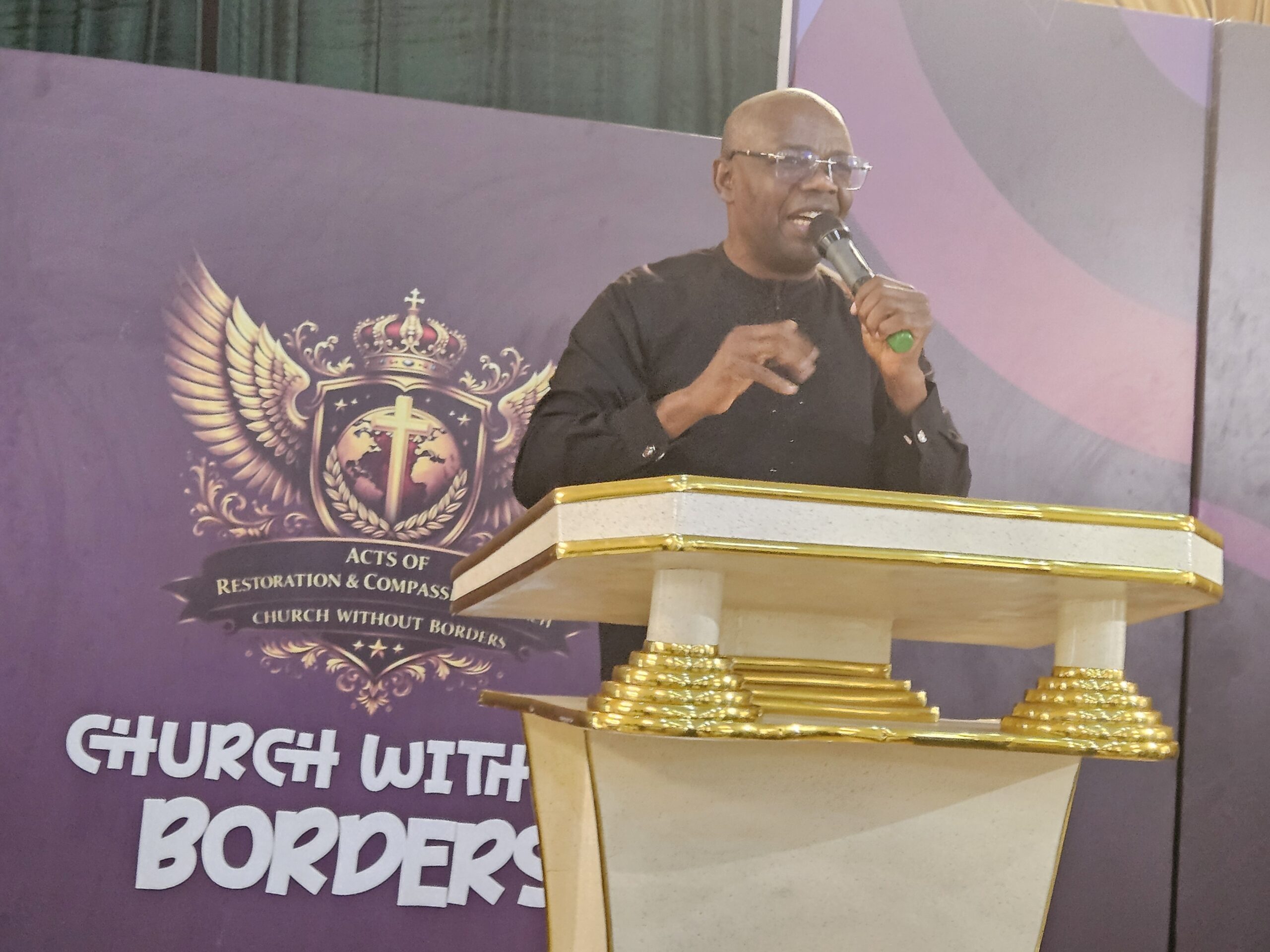
Thereafter, Pst. Emeka Success ushered in the Lead Pastor, Rev. Paul Chikwem, whose characteristic approach to worship immersed the congregation in an atmosphere of Holy Ghost-inspired adoration. It was a moment of spiritual surrender and communion, as worshippers were drawn into a deeper appreciation of God’s presence and majesty.
The atmosphere became even more charged with prophetic declarations that spoke to the deepest aspirations of the human spirit:
“I will not be busy achieving nothing!”
“I will not eat what will later eat me!”
“You will not miss your set time!”
“God, do not allow me to experience what You have destined me to overcome!”
These declarations went beyond emotional expressions. They conveyed a profound spiritual message about purposeful living, divine alignment, protection from destructive choices and the importance of arriving at one’s God-ordained destination. They challenged believers to recognise that not every activity produces progress, not every opportunity is beneficial and not every seemingly attractive choice deserves acceptance.
Taking his message from Psalm 17:8–9 and John 10:27–29, Rev. Chikwem ministered on the theme, “Divinely Preserved.”
At the heart of his teaching was the assurance that divine preservation is God’s covenant commitment to keep, sustain, protect and secure those who genuinely belong to Him. Drawing from the words of Jesus in John 10, he emphasised that Christ knows His sheep, His sheep hear His voice and follow Him, and no power can snatch them from His hands.
He underscored the supremacy of God’s preserving power, reminding the congregation that the Father, who gave the sheep to Christ, is greater than all. Consequently, the security of the believer rests not on human strength, influence or circumstances but on the unfailing power of God.
Unlike human beings, who may break covenants, abandon commitments and disappoint expectations, God remains faithful to His Word. His covenant faithfulness is not determined by the changing circumstances or inconsistencies of humanity.
Referring to God’s covenant with Noah after the flood, the pastor highlighted the enduring nature of divine promises and the certainty that the foundation of the Lord stands sure.
However, he introduced a sobering distinction: divine preservation must not be confused with mere religious affiliation or institutional membership. Being a church member, occupying an ecclesiastical position, attending services regularly or having one’s name in a church register does not automatically establish a genuine relationship with God.
The critical question is not how long one has been in church but whether one truly knows the God of the Church.
In a particularly penetrating admonition, he directed attention to the Book of Life, stressing that one’s eternal identity cannot be established by religious titles, financial contributions, personal influence or ecclesiastical recognition. The Book of Life is not in the custody of pastors or elders, and nobody can bribe their way into it.
He reminded the congregation that divine records will be opened and that the ultimate consideration is whether one’s name is written in the Book of Life. What value is religious prominence if one’s name is missing from the most important record of eternity?
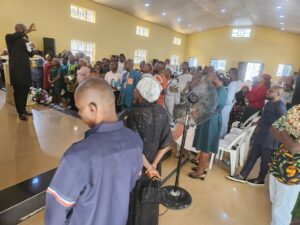
He challenged worshippers to undertake an honest examination of their spiritual lives: How many years have you spent in church without genuinely knowing the God you profess to serve?
His prayer was that none of those present would miss the most important qualification for eternity: having their names written in the Book of Life.
Expounding further, Rev. Chikwem described divine preservation as God’s supernatural covering over His children. It is His ability to hide, protect and sustain those who trust Him against forces and circumstances designed to destroy them.
To be divinely preserved is to be kept where others are falling, protected where danger exists and sustained when survival appears humanly impossible. It is God’s intervention that frustrates the designs of destruction and turns situations intended for shame into testimonies of favour.
He made an important observation that preservation becomes most evident in the presence of danger. There can be no meaningful testimony of deliverance without a threat from which one needs to be delivered.
Illustrating this truth, he recalled the experience of the three Hebrew men thrown into the fiery furnace. Those who carried them into the furnace were consumed by its heat, yet the men thrown into the fire emerged unharmed. What was intended to destroy them became an occasion for the manifestation of God’s glory.
That, he explained, is the mystery of divine preservation: God may not always prevent His children from encountering difficult circumstances, but He possesses the power to keep them through what should ordinarily have consumed them.
Divine preservation, therefore, is God’s ability to incapacitate whatever has been designed to destroy a believer, sustain the individual when circumstances are pulling them down, preserve their relevance and fruitfulness despite opposition, and ensure that they arrive at their divinely ordained destination.
He further observed that anything carrying God’s hand may attract the opposition of the enemy. The presence of resistance does not necessarily signify the absence of divine purpose. Believers must, therefore, learn to distinguish between opposition that tests their faith and circumstances that demand a reassessment of their choices.
The message subsequently took another challenging turn as the pastor connected divine preservation with Christian responsibility, service and kingdom commitment.
He reminded the congregation that God does not preserve people merely to keep them alive but also to make their lives meaningful, fruitful and impactful. Divine protection should inspire commitment, not complacency; gratitude, not entitlement; and service, not spiritual inactivity.
In a particularly memorable admonition, he declared: “If your presence is not noticed, your absence will not be felt.”
He challenged those who enjoy the privileges of church membership but contribute little or nothing to the work of the ministry. Some expect God to intervene in their affairs, open doors, grant breakthroughs and answer prayers, yet demonstrate little willingness to commit their time, resources, abilities or energy to His work.
He questioned the attitude of believers who are reluctant to participate in church activities, support the ministry or demonstrate practical commitment to the advancement of God’s kingdom.
His message was unequivocal: “If you are not ready to serve, you are not ready to be serviced.”
The church, Rev. Chikwem explained, is not a platform for personal exhibition, status acquisition or self-promotion. It is a place of service, sacrifice, spiritual development and usefulness in the hands of God. It is where ordinary and imperfect people surrender their inadequacies and become instruments for divine purposes.
He challenged worshippers to understand that Christianity is not simply about what God can do for them but also about what they are willing to do for God and fellow human beings.
A person may be physically alive yet spiritually unproductive, socially irrelevant and completely disconnected from the purpose for which God preserved them. Life must, therefore, transcend mere existence. Believers must discover their gifts, identify opportunities for service and make themselves available for kingdom assignments.
Another striking observation from the message was that one’s service could become one’s point of introduction. Genuine commitment, consistency and faithful participation can establish credibility and open doors that personal ambition, connections or self-promotion may never unlock.
The underlying lesson was that divine preservation and kingdom responsibility are inseparable. God preserves lives for a purpose, and those who enjoy His protection must be willing to make themselves useful in His hands.
The service reached its climax as Rev. Chikwem rounded off the ministration with powerful, declarative prayers over the congregation. The prayers addressed evil forces, destructive schemes, untimely afflictions and every power working against the fulfilment of God’s purposes in the lives of His people.
The congregation was led in prayers for supernatural covering, protection, preservation, victory and the grace to overcome every challenge standing between them and their divine appointments.
The service left behind a compelling spiritual message: divine preservation is both a privilege of grace and a call to purposeful living. God does not preserve His children merely for the celebration of survival but for the fulfilment of destiny, the advancement of His kingdom and the manifestation of His glory.
To be divinely preserved is to enjoy God’s covering in dangerous places, His strength in difficult seasons and His faithfulness in uncertain times. But it is equally to recognise that the life God preserves must become an instrument of service, compassion and positive impact.
May we never become too busy to fulfil destiny, too careless to recognise danger, too distracted to hear God’s voice or too comfortable to serve His kingdom. May we never miss our appointed seasons, and may the very things designed to destroy us become testimonies of God’s preserving power.
We are divinely preserved, not merely to survive, but to fulfil destiny, serve faithfully and leave enduring footprints of God’s goodness.