

By Anthony Iwuoma
Kindly share:
Apparently, providing water is no longer the business of government. In Lagos, government may have discovered a more innovative approach to public administration: if you cannot provide the people with water, simply tax them for finding their own!
What a brilliant economic innovation! Why spend billions building waterworks, rehabilitating public infrastructure and ensuring that residents have access to potable water when citizens can conveniently shoulder the responsibility themselves and government can subsequently collect a dividend from their desperation?
Welcome to the new philosophy of governance: government fails, citizens improvise, government taxes the improvisation!
One can only admire the ingenuity behind this remarkable thinking. Citizens who have spent their hard-earned money drilling boreholes, installing pumping machines, laying pipes and treating water have apparently overlooked one important consideration: they have created another potential revenue stream for government!
How inconsiderate of them!
After all, why should anyone enjoy the satisfaction of providing water for their family without first making a financial contribution to the government that failed to provide it?
Perhaps, the next phase of this revolutionary tax regime will include a generator tax for households that have escaped government-provided darkness, a solar energy tax for those who have found alternatives to unreliable electricity, and a private road maintenance tax for communities that have repaired roads abandoned by public authorities.
Indeed, the possibilities are endless!
In this era of government of tax, by taskmasters and for the tax-privileged, Lagosians would do well to prepare for the inevitable expansion of this ingenious fiscal philosophy. An air tax for breathing Lagos air may soon become fashionable. A toilet tax for answering the call of nature could be the next big revenue opportunity. And, for the avoidance of doubt, a life tax for the audacity of being alive may eventually complete the package.
After all, if citizens must pay for finding water, why should breathing, using the toilet and simply remaining alive be exempt from taxation? Perhaps, the government could introduce a monthly survival subscription, with different tariff categories for breathing, sleeping, eating and existing. Those who cannot afford the premium package may have to apply for a survival waiver!
Of course, there may be one activity that government will be reluctant to tax: voting or, perhaps, the manipulation of votes through which some political officeholders seemingly acquire the licence to act as though the people exist merely to be taxed, commanded and exploited. Apparently, the privilege of determining who governs may be too sacred to attract a levy, even when the consequences of electoral choices become a lifetime subscription to governmental insensitivity.
The public water system may be gasping for life, but the revenue-collection machinery appears to be in excellent working condition!
The joke, unfortunately, is on the citizens.
Let us be serious for a moment. Borehole drilling does have legitimate environmental implications. Unregulated abstraction of groundwater can deplete aquifers, encourage contamination and threaten long-term water security. Government has every right, indeed an obligation, to establish reasonable standards, monitor groundwater exploitation and protect the environment.
But environmental regulation is not the same thing as opportunistic taxation. There is a world of difference between ensuring that boreholes are properly constructed and turning citizens’ attempts to access water into another opportunity for revenue extraction.
If the concern is environmental sustainability, let the government demonstrate it through scientific evidence, transparent regulations and responsible monitoring. Let it explain the environmental objectives, the proposed charges and how the revenue will be utilised. Let it distinguish between large-scale commercial exploitation and an ordinary family trying to secure water for domestic use.
Above all, let it explain why residents must continue spending their own money to obtain a basic necessity that public infrastructure ought to provide.
There is something particularly offensive about asking citizens to pay twice for the same public responsibility. They pay taxes to sustain government, yet must privately finance their access to water. Now, if the proposed borehole tax proceeds, they may have to pay yet again for the privilege of compensating for government’s shortcomings.
This is taxation by instalments on the misfortune of the governed!
And what happens to the poor tenant living in a compound where the landlord has drilled a borehole? Will the landlord absorb the additional cost out of patriotic enthusiasm, or will the burden conveniently find its way into the next rent increase? What happens to small businesses that depend on boreholes to remain operational? Will they simply absorb the charge, or pass it on to consumers already battling rising prices?
The people are not bottomless ATMs. They are not responsible for financing every administrative imagination that crosses the desk of a revenue consultant.
Government should be asking why so many residents depend on privately drilled boreholes. It should be investigating the state of public waterworks, the adequacy of water distribution networks, the effectiveness of previous investments and the reasons potable water remains inaccessible to many households.
But, perhaps, that is too much work. It is considerably easier to identify a borehole, calculate a levy and issue a demand notice.
What a shameless, convenient way to turn governmental embarrassment into a revenue opportunity!
The Lagos authorities must understand that citizens’ ingenuity in overcoming public infrastructure deficiencies should be encouraged, not penalised. People who provide themselves with water are not enemies of environmental sustainability. They are simply trying to live.
A government that has failed to provide water should approach the borehole question with humility, sensitivity and a commitment to fixing the underlying problem, not with the enthusiasm of a tax collector who has discovered another unsuspecting customer.
If the proposed tax is about protecting groundwater, regulate responsibly. If it is about raising revenue, have the honesty to say so and justify why citizens should bear another financial burden.
But please, do not dress up governmental failure in the beautiful garment of environmental protection.
The ultimate tragedy is that in this emerging school of governance, government does not provide the water; citizens provide the boreholes, and government provides the tax bill!
What a country! What a philosophy! What an achievement in the art of making citizens pay for the consequences of public failure.
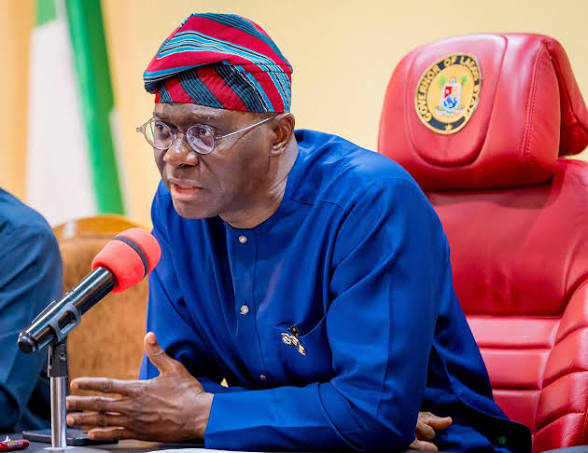
Perhaps, the Lagos government under Babajide Sanwa-Olu, should first drill a borehole of accountability before attempting to drill another hole in the pockets of its citizens.
Anthony Iwuoma is a newspaper columnist