
By Anthony
Kindly share:
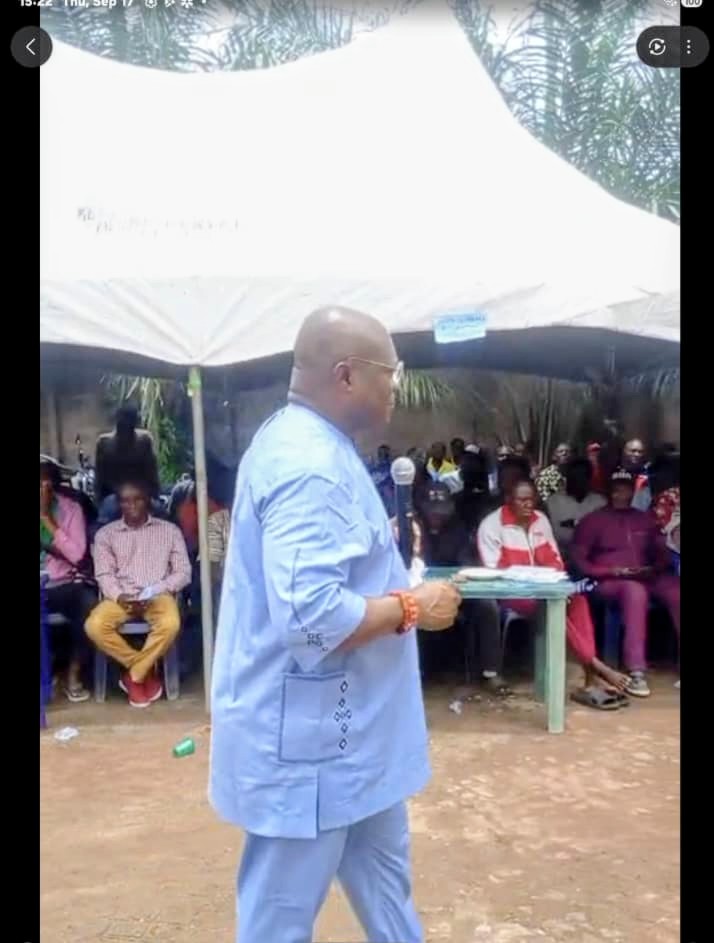
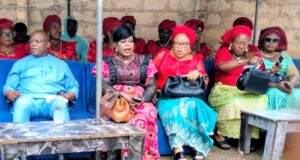
Attorney Charles Chibuike Onyirimba on Wednesday took his grassroots mobilisation to a new level in Ehime Mbano as political leaders, youths, transport workers, village chairmen, ward coordinators and former Presidents-General converged to engage with the Action Democratic Party (ADP) senatorial candidate.
The meeting,coordinated by Chief Magnus Orjiako, brought together representatives of key grassroots constituencies in a show of growing interest in Onyirimba’s 2027 Senate bid.
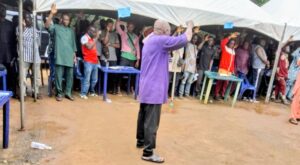
The event was marked by songs, chants and declarations of support, with participants repeatedly identifying with Onyirimba as “our own” and expressing their desire for a representative who, in their view, combines competence, experience, empathy and the ability to connect Okigwe Zone with wider opportunities.
Youths at the meeting pledged their support while firmly rejecting political thuggery and violence. They maintained that the youths of Ehime Mbano should be mobilised for development, not used as instruments of intimidation, asking any potential recruiters to first bring their own children to lead the thugs.
Transport workers similarly declared their readiness to contribute to the political process, while village chairmen, who also trooped out in large numbers to receive Onyirimba, spoke in t g e same vein. Former Presidents-General pledged their support and prayers, as ward coordinators called for direct engagement with the candidate.
The Director-General of the campaign organisation, Mrs. Favour Nwelue, commended the people for their impressive turnout, describing their presence as an indication of the importance they attach to the political future of their communities.
She urged the various grassroots structures to remain organised, focused and committed to the campaign’s development-oriented message.
Addressing the gathering, Onyirimba said his decision to return to the political arena was driven by a sense of responsibility to his people.
He explained that, despite having spent decades in the United States where he had access to comfort and opportunities, he chose to leave that environment and return home because he believed his experience and international connections could be deployed to improve the circumstances of the people.
Drawing a parallel with Nehemiah’s biblical mission to rebuild the broken walls of Jerusalem, Onyirimba said he saw his own assignment as contributing to the rebuilding of Okigwe Zone.
He recalled his upbringing and early experiences, including attending school as a day student and fetching water and firewood, saying those experiences had helped him understand the struggles of ordinary families.
According to him, leadership must begin with empathy.
He urged the people to “send their own” to Abuja — someone who understands their needs, understands the law, possesses the capacity to negotiate across political and institutional boundaries, and can use established relationships to attract opportunities to the zone.
Onyirimba also outlined aspects of his proposed transformation agenda, including the establishment of economic clusters across the six LGAs of Okigwe Zone.
He explained that the clusters would identify the strengths and skills available within communities, provide training and equipment, facilitate access to power and capital, and encourage local production and patronage.
He also proposed stronger interventions on hunger and food insecurity, particularly for widows, vulnerable families and indigent persons.
He suggested that campaign structures could be converted, where appropriate, into community food distribution centres, with grassroots leaders helping to identify beneficiaries and local workers engaged in packaging and distribution.
Onyirimba emphasised that communities should not depend entirely on government before addressing urgent local needs, stressing the importance of enterprise, empowerment and community-driven development.
He described the central theme of his agenda as transformation, urging the people to join what he described as a movement for a new direction in Okigwe Zone.
“I am not here to be called a leader,” he said, explaining that he regarded himself as a missionary on a mission to contribute to the good of his people.
He maintained that capability must be matched with capacity, competence and empathy, and pledged to work in synergy with relevant authorities, including the state government, in pursuit of the people’s interests.
The leader of the Ehime political leaders forum subsequently gave Onyirimba the name “Ihe nke anyi” — “our own,” explaining that the forum was created to protect the interests of the people and resist attempts by individuals to impose political stooges on the grassroots.
He urged coordinators across the communities to take ownership of the political project and remain focused on the search for competent representation.
The meeting ended on a spiritual note, with the Ehime leader leading prayers against those he described as seeking to exploit the political fortunes of the people.
Participants raised their hands towards heaven and chorused “Amen”, bringing the grassroots engagement to a close.